
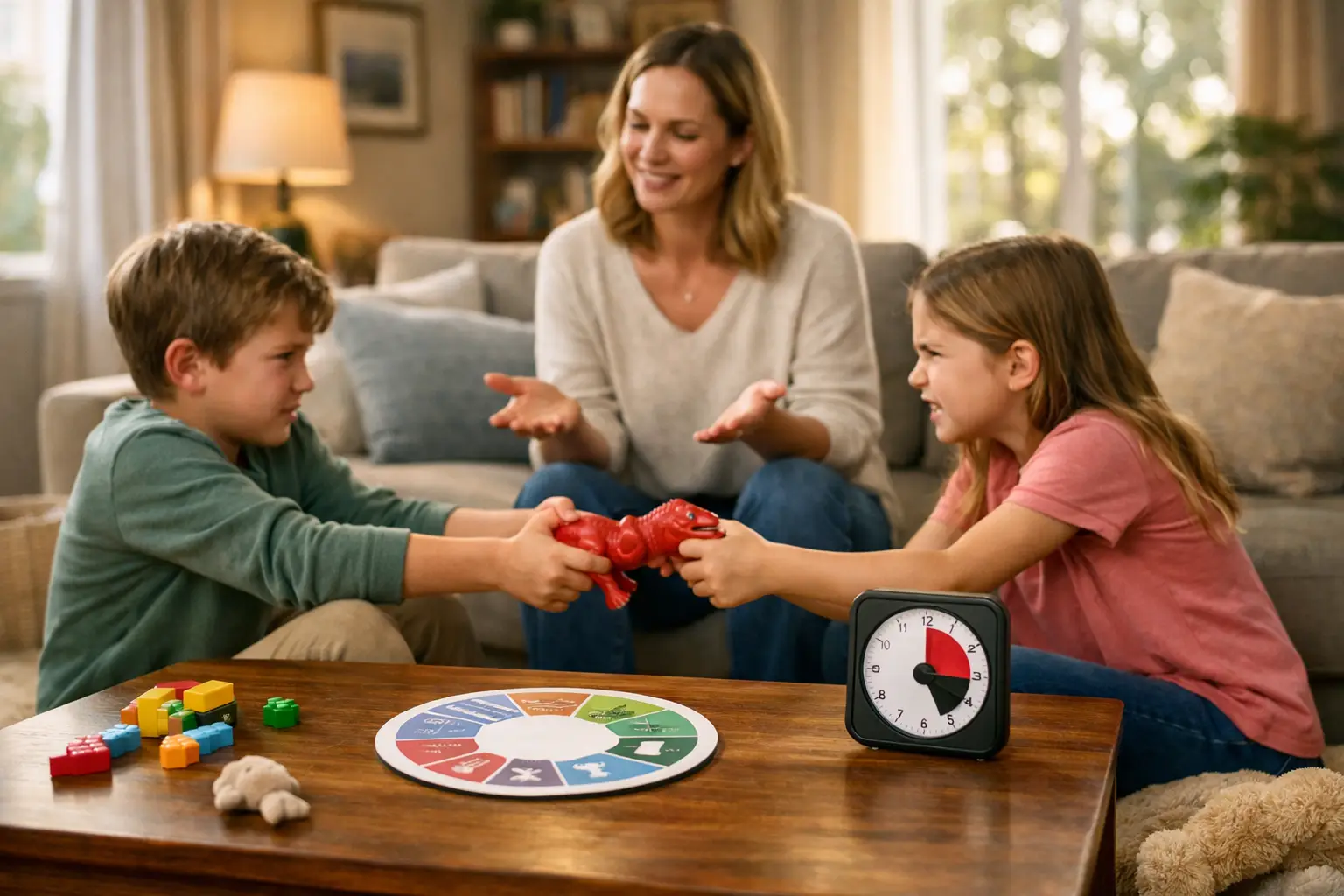
One child is melting down because the baby got a bigger hug, and another is suddenly acting wild every time their sibling gets praised. If you are wondering how to manage sibling jealousy, you are not dealing with a small or unusual problem. You are seeing a very normal reaction to change, attention, and the fear of being replaced.
Sibling jealousy can show up in loud ways, like fighting, tattling, or grabbing toys. It can also show up quietly through clinginess, regression, or a child who suddenly seems extra sensitive. The goal of how to manage sibling jealousy is not to make siblings feel equal every second; it is to help each child feel secure, seen, and confident that there is still a place for them in the family.
Why sibling jealousy happens
Jealousy between siblings is usually less about the toy, the seat, or who got to stir the pancake batter. More often, it is about connection. Children notice who gets time, who gets help, who gets praise, and who seems to have power in the moment.
A new baby is one of the most obvious triggers, but it is not the only one. Jealousy can spike when one child hits a milestone first, needs more support, struggles in school, gets more privileges, or seems to get more positive attention. Even good changes can stir it up. A child may love their sibling and still feel threatened by them.
Temperament matters too. Some children are naturally more sensitive to fairness, change, or competition. Age gaps also shape the dynamic. A toddler may not understand why the baby needs so much of mom. An older child may resent being expected to “know better” all the time. That is why learning how to manage sibling jealousy often starts with looking beneath the behavior instead of reacting only to the surface conflict.
How to manage sibling jealousy without making it worse
When jealousy shows up, parents often feel pressure to stop the behavior fast. That makes sense, especially during a busy day. But rushing to lecture, compare, or force quick apologies can actually intensify the problem.
A more helpful first move is to name what you see without shaming it. You might say, “You wanted me all to yourself,” or “It felt hard to wait while your sister needed help.” This does not mean you approve of hitting or yelling. It means you are showing your child that you understand the feeling underneath it.
That distinction matters. Children calm down faster when they feel understood. They also become more open to correction. You can be warm and firm at the same time: “You are upset, and I will help you. I will not let you push your brother.”
Try to avoid labels like jealous, mean, dramatic, or spoiled. Children can start to live inside those words. Focus on the moment and the skill they need instead: waiting, asking, taking turns, using words, or handling disappointment.
Give each child one-on-one connection
Many sibling problems ease when each child gets regular, predictable time alone with a parent. It does not have to be long or elaborate. Ten focused minutes can go a long way when it happens consistently.
What matters most is the feeling of full attention. Put down the phone. Let the child choose a simple activity. Follow their lead for a short stretch without teaching, correcting, or multitasking. This kind of connection helps refill a child who feels emotionally crowded out.
If your schedule is tight, attach one-on-one time to parts of the day that already happen, like bedtime, a school pickup walk, or a quick breakfast chat before siblings wake up. Some parents find that naming it helps: “This is our special time.” That makes the attention feel real and dependable.
The trade-off is that one-on-one time does not solve everything overnight. A child who has been feeling insecure may still act out for a while. Stay steady. Consistency usually matters more than intensity.
Must Read: Top Indoor Activities for Kids to Spark Creativity and Fun
Avoid the fairness trap
Parents often try to reduce jealousy by making everything equal. Sometimes that helps, but not always. Equal is not the same as fair.
One child may need extra bedtime support. Another may need more help with homework. A baby will naturally need more hands-on care than an older child. Pretending every child gets the exact same amount of everything can feel false, especially to kids who notice reality very clearly.
Instead of saying, “I love you both exactly the same,” which can sound abstract in a heated moment, try something more concrete: “Right now your brother needs help with his shoes. You matter too, and I will be with you next.” This teaches children that needs can differ without changing their worth.
It also helps to stop comparing siblings, even in positive ways. “Why can’t you be easy like your sister?” is obviously hurtful, but “Your brother is such a great helper” can sting too if another child already feels less capable. Praise each child for their own growth, effort, and strengths.
Teach children what to do instead
Telling kids not to be jealous rarely works because jealousy is a feeling, not a choice. What they can learn is what to do when the feeling shows up.
For younger children, keep it simple and repeatable. Teach phrases like “Can I have a turn when you’re done?” or “I want mom time too.” Practice these during calm moments, not only during conflict. Role-play with stuffed animals if that helps.
For older children, you can be more direct. Help them notice the link between thoughts and reactions. A child who thinks, “She always gets everything,” may need help checking whether that story is fully true. This is not about arguing them out of their feelings. It is about helping them build a more balanced view.
Family routines can support this learning. A turn-taking system, visual schedule, or clear household expectations can reduce the uncertainty that often feeds jealousy. Kids cope better when they know what to expect.
Must Read: Indoor Stuff to Do When You’re Stuck At Home With Kids
Protect the sibling relationship during conflict
When siblings fight, it is tempting to figure out who started it and assign blame quickly. Sometimes that is necessary, especially if safety is involved. But if every conflict becomes a courtroom, children may focus more on winning your approval than solving the problem.
Whenever possible, move from blame to coaching. Separate children if needed, calm everyone down, and then help them say what happened. Keep it short. “You wanted the game. She wasn’t done. You grabbed it. Now both of you are upset.” From there, guide them toward repair.
Repair will look different by age. A preschooler may bring an ice pack or help rebuild a block tower. A school-age child may need to say what they will do differently next time. A forced “sorry” with no understanding behind it usually does little.
It also helps to notice and protect good moments between siblings. When you see cooperation, humor, or kindness, name it. Not in an over-the-top way, but enough to reinforce it: “You made room for her on the couch. That was thoughtful.” Children need to know they are more than their worst interactions.
When one child always seems jealous
Sometimes jealousy feels less occasional and more like a pattern. One child may constantly interrupt, compete, or react strongly whenever a sibling gets attention. If that is happening, zoom out.
Ask yourself whether this child has had a recent disruption, like a new school year, a move, a new baby, a sleep issue, or less time with you. Also consider whether the child has been placed in a role that creates pressure, like always being the helper, the peacemaker, or the one who should be mature. Even positive roles can become heavy.
You do not need to fix the child’s personality. You are looking for unmet needs and repeated triggers. In some families, a small change in routine makes a big difference. In others, it helps to give the child more private chances to succeed and connect without their sibling nearby.
If jealousy is intense, ongoing, or paired with severe aggression, anxiety, or major behavior changes, extra support can help. A pediatrician, child therapist, or family counselor can offer guidance that fits your child’s age and needs.
What parents can say in the moment
The words you use during sibling tension can lower the heat fast. Short, calm phrases work better than long speeches.
You might say, “You wish it was your turn,” “I am helping your sister, and you are safe,” “I won’t let you hurt him,” or “Tell me what you need with words.” These responses communicate empathy, boundaries, and confidence.
What usually helps less is minimizing the feeling. “You’re fine,” “Don’t be jealous,” or “Stop acting like a baby” can make a child feel both upset and alone. A child who feels dismissed often escalates.
If you lose your patience, you are not the only one. Parenting siblings can be exhausting. Repair with your child when you can. A simple “I was frustrated, and I should have spoken more calmly” teaches a powerful lesson about relationships.
Sibling jealousy does not mean your children are failing, and it does not mean you are. It means your children are learning how to share love, space, attention, and identity inside the same family. That is big work. With steady connection, clear limits, and room for each child to be fully seen, the rivalry usually softens and something stronger has space to grow.
Must Read: Fun Things to Do with Kids Near Me: Best Family Experience
Frequently Asked Questions
How do I manage sibling jealousy without making it worse?
Start by naming the feeling underneath the behavior instead of shaming it, then set a warm but firm limit. Rushing to lecture, compare, or force apologies usually intensifies the jealousy rather than calming it.
Why does sibling jealousy happen in the first place?
It’s rarely about the toy or the seat and almost always about connection: who gets time, help, praise, and attention. Triggers include a new baby, a sibling hitting a milestone, or one child needing more support.
Is treating my kids exactly equally the best way to reduce jealousy?
Not always: equal is not the same as fair, since a baby or a struggling child genuinely needs more hands-on care. Try concrete reassurance like “Your brother needs help now, and I’ll be with you next” instead of promising everything is identical.
What can I say in the moment to calm sibling tension?
Short, calm phrases work best, like “You wish it was your turn” or “I won’t let you hurt him.” Avoid minimizing lines such as “You’re fine” or “Don’t be jealous,” which tend to make a child escalate.
What if one child always seems jealous of the others?
Zoom out and look for a recent disruption or a pressuring role, like always being the helper or peacemaker. You’re hunting for unmet needs and repeated triggers rather than trying to fix the child’s personality.
When should I get outside help for sibling jealousy?
If the jealousy is intense, ongoing, or paired with severe aggression, anxiety, or major behavior changes, extra support is worth it. A pediatrician, child therapist, or family counselor can offer guidance suited to your child’s age.
