

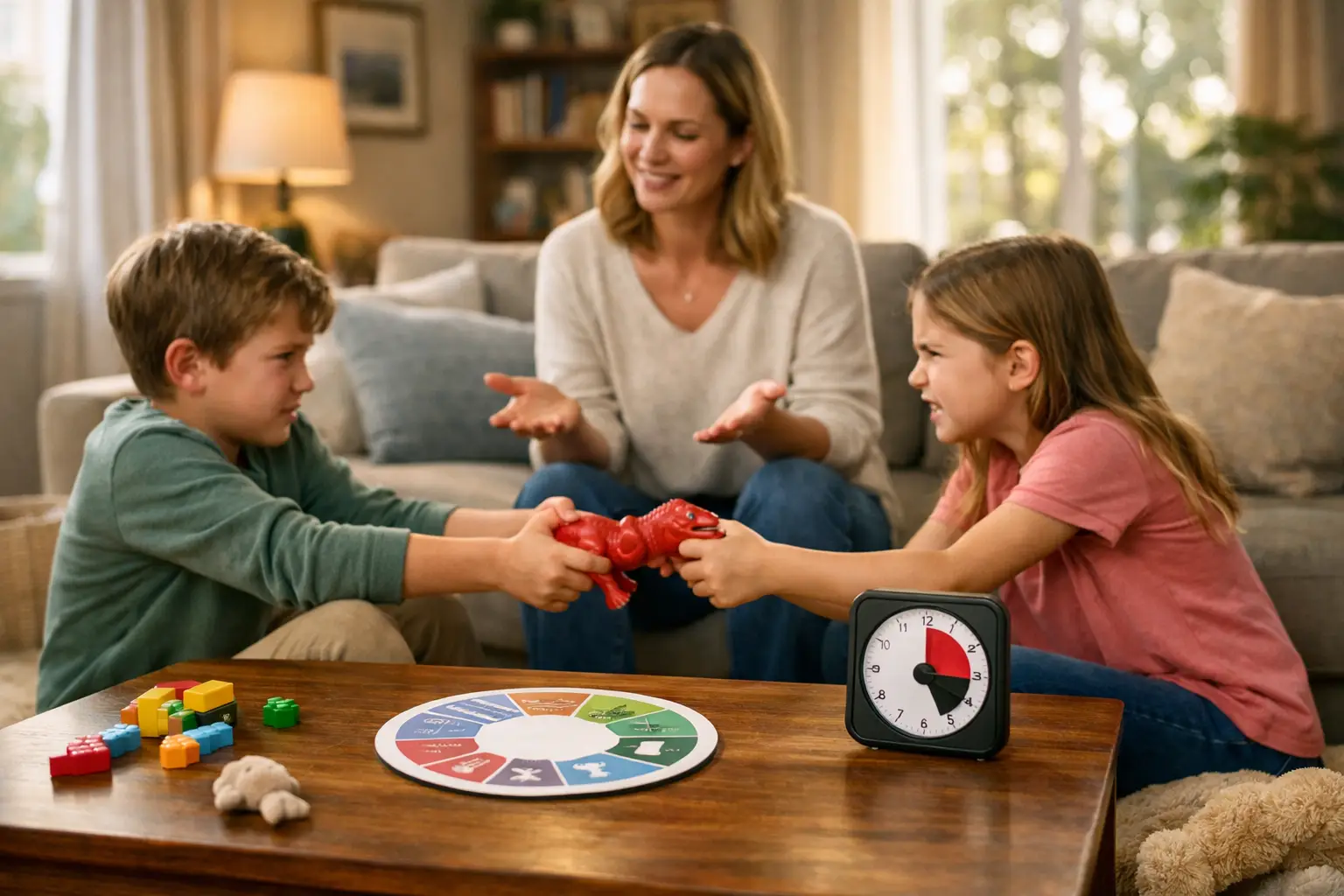
You can be pouring juice, answering a work message, and reminding one child about shoes when the shouting starts again. One sibling grabbed a toy, the other pushed back, and suddenly the whole house feels tense. If you are wondering how to reduce sibling fighting without turning into a full-time referee, the good news is that small shifts in your routines and responses can make a real difference.
Sibling conflict is normal, and living closely with another child means competing for space, attention, control, and sometimes the last blue cup. That does not mean constant fighting is something you just have to accept, and learning how to reduce sibling fighting usually means your children need more support with skills they have not fully learned yet. Those skills include waiting, negotiating, recovering from frustration, and repairing after hurt feelings.after hurt feelings.
Why sibling fights happen so often
Many sibling arguments look like they are about one toy or one comment, but the real cause is often bigger. Children fight more when they are tired, hungry, overstimulated, bored, or rushed. They also fight when roles get stuck, like one child always being labeled the bossy one and the other always being treated like the baby.
Development matters too. A preschooler is impulsive. An elementary-age child may care deeply about fairness. A tween might want more privacy and control. When children are at different stages, their needs naturally clash. That is why what works for a 3-year-old and 5-year-old may not work for siblings who are 8 and 11.
It also helps to remember that sibling conflict is not always a sign of a bad relationship. Sometimes it is a sign that your children feel safe enough to show big emotions at home. The goal is not a perfectly peaceful house. The goal is helping your kids handle conflict without constant chaos or cruelty.
How to reduce sibling fighting before it starts
Prevention is often more effective than stepping in after everyone is already upset. If your children tend to fight at predictable times, look at the pattern first. Many families notice more conflict before dinner, during transitions, or when one child is interrupting the other’s play.
Start by protecting the pressure points in your day. A snack after school, a little quiet time before dinner, or a clearer bedtime routine can lower the emotional temperature. Children who are regulated fight less. That sounds simple, but it is one of the most practical ways to change the dynamic at home.
Another helpful shift is reducing unnecessary competition. If everything feels scarce, children are more likely to battle over it. That could mean taking turns choosing the family movie, setting a timer for high-interest toys, or avoiding comparisons like, “Why can’t you be more patient like your sister?” Even positive comparisons can fuel resentment.
One-on-one attention matters too. Kids who feel they have to compete for your notice often do exactly that. A few minutes of focused connection with each child can ease this. It does not need to be elaborate. Ten minutes to color, read, talk, or fold laundry together can go a long way.
Must Read: Discover Kid Friendly Activities Near You for Family Fun
Set family rules that are easy to follow
Children do better with clear limits than with repeated lectures. Instead of saying, “Stop fighting,” give specific family rules they can remember. In many homes, three work well: keep hands to yourself, use respectful words, and ask for help before things get out of control.
Short rules are easier to enforce consistently. They also help children know what you expect in the moment. If your child is upset, they may not process a long explanation, but they can understand, “I won’t let you hit. Try again with words.”
What to do in the middle of a fight
When conflict flares up, your first job is not to investigate every detail. It is to bring the intensity down. If children are yelling, hitting, or escalating fast, separate them calmly and briefly. That is not a punishment so much as a reset.
Then resist the urge to play detective right away. Parents often get pulled into deciding who started it, but that can keep kids focused on blame instead of problem-solving. If one child was clearly unsafe or aggressive, address that directly. Still, once everyone is calmer, shift toward what needs to happen next.
You might say, “You’re both upset. We’re going to calm down first, then we’ll figure it out.” This communicates two important things. Feelings are allowed, and hurtful behavior is not.
If your children are old enough, coach them through a simple process. Let each child say what happened without interruption. Reflect what you hear in a neutral way. Then ask what would help now. Sometimes the answer is a turn with the toy. Sometimes it is space apart. Sometimes it is an apology and a do-over.
Avoid taking sides too quickly
Children notice when a parent assumes one sibling is always the problem. Over time, that can harden the conflict. One child may feel picked on, while the other may avoid accountability because they are used to being seen as the victim.
This does not mean ignoring patterns. If one sibling consistently intimidates or hurts the other, that needs firm intervention. But in everyday conflict, neutral language helps. Try, “I hear two kids having a hard time,” instead of, “Your brother is always bothering you again.”
Teach the skills your kids are missing
A lot of sibling fighting comes from skill gaps, not bad intentions. Children may not know how to enter play, handle losing, wait for a turn, or speak up without sounding harsh. Those are learnable skills, but they are easier to teach outside the heat of the moment.
Practice useful phrases during calm times. “Can I have a turn when you’re done?” “I don’t like that.” “Please move back.” “Do you want to trade?” These sound basic, but many kids need repeated coaching before they can use them under stress.
You can also coach repair. After a conflict, children often need help making things right in a meaningful way. A forced “sorry” may end the moment, but it does not always rebuild trust. Better options include asking, “What can you do to help your sister feel better?” or “How can you fix this?” That invites responsibility instead of just compliance.
Create more chances for siblings to get along
If siblings only interact when they are competing, correcting, or irritating each other, the relationship can start to feel negative by default. Shared positive experiences help balance that out.
This does not mean forcing them to be best friends or making them do everything together. In fact, too much togetherness can increase friction. It is more helpful to create short, low-pressure opportunities for connection. Baking cookies, building a blanket fort, watering plants, or doing a quick scavenger hunt can give them a reason to cooperate.
Notice the moments that go well. Parents understandably focus on stopping the problems, but children also need to hear when they handled each other kindly. A simple comment like, “You two solved that without yelling,” or, “That was thoughtful the way you included him,” reinforces the behavior you want to see more often.
Must Read: Outdoor Activities for Kids That Build Memories
When one child seems to start every fight
Sometimes the conflict really is more one-sided. One child may be more reactive, more controlling, or more likely to provoke. In that case, equal treatment is not always the same as fair treatment.
You may need to give that child more active coaching, more supervision, or clearer consequences. You may also need to look underneath the behavior. A child who constantly picks fights may be struggling with jealousy, anxiety, sensory overload, or a need for attention they do not know how to express well.
At the same time, be careful not to make the other sibling responsible for keeping the peace. A quieter child can still contribute to the pattern through teasing, excluding, or needling in subtle ways. Try to see the whole dynamic while still protecting the child who is being hurt.
How to reduce sibling fighting in the long term
If you want lasting change, think less about stopping individual arguments and more about shaping family habits. Calm routines, predictable limits, emotional coaching, and regular connection all work together. Progress usually comes in waves. You may have a smoother week, then a rough weekend, then improvement again.
That does not mean your efforts are failing. Children learn through repetition. They need many chances to practice better ways of handling frustration. Your consistency matters more than your perfection.
If conflict becomes intense, frequent, or physically aggressive, it may help to talk with your pediatrician or a child therapist. Extra support can be especially useful if one child seems unusually explosive, fearful, or distressed by the sibling relationship.
Most siblings will still argue sometimes. They are sharing a home, your attention, and a lot of growing up. But with steady guidance, the fighting can become less harsh, less constant, and easier for everyone to recover from. Some of the most meaningful family progress starts not when kids stop clashing completely, but when home begins to feel safe enough for them to learn a better way.
Must Read: Best Board Games for Kids for Easy Family Fun
Frequently Asked Questions
How can I reduce sibling fighting without becoming a constant referee?
Focus on preventing problems before they start. Protect stressful parts of the day, such as after-school time, meals, quiet time, and bedtime routines. Kids who feel rested, fed, and emotionally calm are less likely to argue. In many cases, small routine changes work better than stepping in after emotions explode.
Why do my kids fight so much?
Many sibling fights happen because children are tired, hungry, bored, or competing for attention — not simply because of a toy or game. Different ages and personalities also create conflict because each child has different needs and expectations.
Is constant sibling conflict a sign of a bad relationship?
Usually, no. In some families, frequent arguments can mean children feel safe expressing strong emotions at home. Rather than aiming for a perfectly quiet household, focus on teaching kids how to handle disagreements respectfully and safely.
What should I do during a sibling fight?
Start by calming the situation instead of searching for someone to blame. If necessary, separate the children for a short time so everyone can cool down. After emotions settle, allow each child to explain what happened and discuss better ways to solve the problem.
Should I figure out which child started the fight?
Trying to identify who started the argument often keeps children focused on blame instead of solutions. Address unsafe or hurtful behavior immediately, but once things calm down, guide your children toward repairing the relationship and moving forward.
How do I handle one child who seems to start every fight?
Some children may need extra guidance, closer supervision, or clearer rules and consequences. Underneath the behavior, they may also be dealing with jealousy, frustration, or anxiety. At the same time, avoid expecting the quieter sibling to always keep the peace.
How can I reduce sibling fighting in the long term?
Long-term improvement usually comes from healthy family habits rather than solving each argument individually. Consistent routines, clear limits, emotional support, and regular one-on-one time with each child can make a big difference. Progress may happen slowly, but steady parenting matters more than perfection.
