

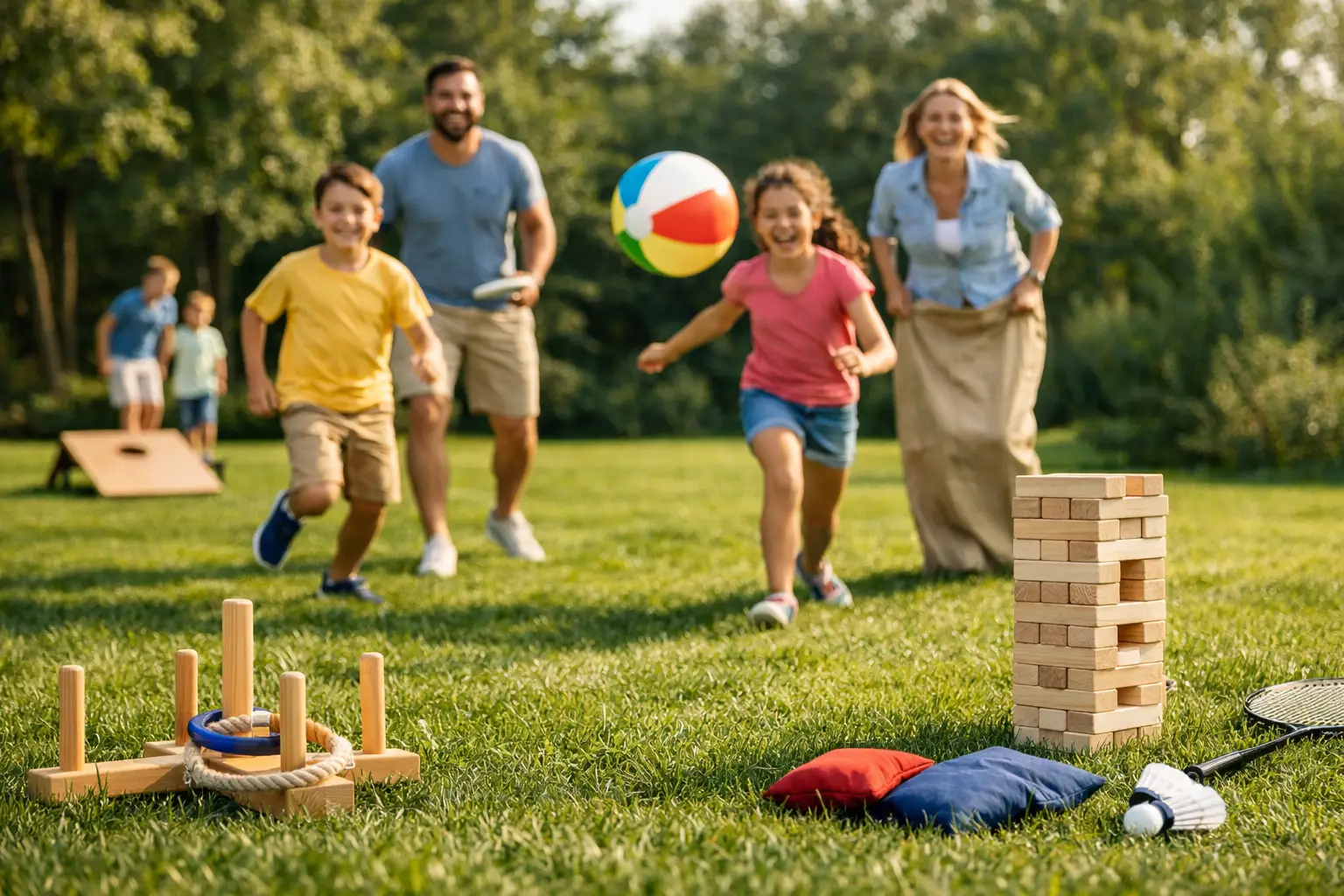
Some of the best family moments happen when nobody is trying too hard. A ball rolls into the grass, someone changes the rules halfway through, a toddler insists on being the referee, and suddenly your afternoon feels lighter. That is why outdoor games for family fun work so well – they give everyone a reason to connect without the pressure of planning something elaborate.
For parents, especially on full days with mixed ages and mixed moods, outdoor play can also reset the tone of the whole house. Kids get movement, fresh air, and a natural outlet for energy. Adults get a chance to step out of chore mode and join in without needing a perfect setup. The key is choosing games that fit your space, your children’s ages, and your own bandwidth.
Why outdoor games for family fun matter
Outdoor play is not just a way to fill time before dinner. It supports gross motor skills, turn-taking, flexible thinking, and emotional regulation, especially for younger children who often process big feelings better through movement than through conversation.
It also helps families reconnect in a way that feels more natural than forcing a board game after a long day. Outside, kids can wiggle, run, pause, and rejoin. That freedom makes participation easier for children who struggle with sitting still, losing gracefully, or waiting their turn.
There is a trade-off, of course. Outdoor family games can get loud, messy, and a little chaotic. But for many families, that is part of the value. Not every meaningful activity has to look calm to be successful.
How to choose the right outdoor game
Before you pull everyone outside, it helps to think about who you are planning for. A game that thrills an 8-year-old may frustrate a preschooler. A toddler-friendly activity may bore a tween unless you add a challenge or a leadership role.
It also helps to match the game to your energy level. Some days you may be ready for relay races and tag. Other days, a slower activity like nature scavenger hunt or sidewalk target games will be a better fit. There is no prize for picking the most ambitious option.
If you have siblings with different ages, choose games with adjustable rules. That might mean giving younger kids a shorter distance, letting older kids carry extra challenges, or pairing children and adults as teams. Flexibility usually keeps the peace better than trying to make everything perfectly equal.
15 outdoor games for family fun that actually work
1. Classic tag with small twists
Tag is simple for a reason. It needs almost no setup, works in most yards or parks, and gets everyone moving fast. If standard tag feels too repetitive, try freeze tag, flashlight tag at dusk, or animal tag where each player has to move like a chosen animal.
For younger kids, shorten the boundaries and rotate who is “it” often. For older kids, add safe zones or team rounds to keep it interesting.
2. Obstacle course challenge
An obstacle course can be as basic or creative as you want. Use chalk lines to jump over, cones to weave through, hula hoops to hop into, and a towel or stick as a balance beam.
What makes this a strong family option is how easy it is to adjust. Little kids can crawl under chairs while older kids race against a timer. Parents can join or act as course designers, which still keeps them involved without needing Olympic stamina.
3. Water balloon toss
On hot days, this one is hard to beat. Start close together and take a step back after each successful catch. Eventually, someone gets soaked, and nobody is usually too upset about it.
If you do not want balloon pieces in the yard, a sponge toss gives a similar effect with less cleanup. That swap is often worth it for families trying to keep things simple.
4. Sidewalk chalk games
Chalk turns a driveway into a full activity zone. You can draw hopscotch, create a winding path to follow, make shape-jumping prompts for younger children, or set up a target game where players toss beanbags onto numbered spaces.
This is a particularly good choice for parents with toddlers and early elementary kids because it blends movement with just enough structure. It also works well when you need outdoor time without full-speed chaos.
5. Relay races
Relay races are useful because they can absorb a lot of family personalities. You can keep them traditional with running, or make them silly with hopping, balancing a beanbag, or carrying a cup of water without spilling.
If competition tends to trigger meltdowns in your house, try beating the clock together instead of racing against each other. Cooperative play often lands better than direct rivalry, especially for siblings.
6. Scavenger hunt in the yard or park
A simple scavenger hunt can calm the pace while still keeping children engaged. Ask kids to find something smooth, something yellow, a leaf bigger than their hand, or a rock with an unusual shape.
This kind of game is especially helpful for children who do not love rough-and-tumble play. It gives them a way to participate, observe, and feel successful without needing to run the fastest.
7. Kickball or backyard baseball
If you have enough open space, kickball is one of the easiest group games to adapt for families. Younger kids can kick from closer in, older kids can field farther out, and adults can help keep the game flowing.
Do not worry too much about official rules. In real family life, the best version is usually the one where everybody gets turns and nobody argues for ten minutes about whether the runner was safe.
8. Capture the flag
Older kids and tweens often love a game with strategy, and capture the flag delivers that without requiring expensive equipment. Use bandanas, towels, or even mismatched socks as the flags.
This one works best with enough people to form teams, so it is great for extended family get-togethers or neighborhood play. With younger children, it may need simplified boundaries and fewer rules.
9. Red Light, Green Light
This game is ideal when you need something quick and low-prep. One person calls out “green light” for movement and “red light” to freeze. If someone moves after red light, they go back to the start.
Preschoolers usually love the stop-and-go rhythm, and older siblings can help lead rounds. It is also a good option when you have limited yard space.
10. Sack races or pillowcase races
If you have old pillowcases, you already have what you need. Sack races are funny, energetic, and short enough to hold attention. They are not the easiest for very young kids, but school-age children usually find them hilarious.
To make it more inclusive, let younger kids do a two-foot jump race without the sack while everyone still finishes at the same line.
11. Frisbee games
A frisbee can support more than one kind of play. You can simply toss it back and forth, aim for a target, or create point zones in the yard.
The challenge is that some kids get discouraged if catching is hard. If that sounds familiar, use a softer flying disc or count successful attempts as a team total instead of focusing on mistakes.
12. Nature bingo
Nature bingo adds just enough direction to an outdoor afternoon. Make simple cards with things like bird, ant, pinecone, flower, cloud, or butterfly. Kids move around looking for each item and mark what they find.
This works well for quieter children, mixed-age groups, or parents who want an activity that feels engaging without becoming overly competitive.
13. Duck, Duck, Goose outdoors
This classic still works, especially with younger kids who benefit from familiar, predictable games. The outdoor version simply gives them more room to run and less chance of bumping into furniture.
If your family has a wide age range, older kids can help guide the little ones through the rules instead of dominating the game.
14. Balloon keep-up
The goal is simple: keep the balloon from touching the ground. You can play as one big group or assign teams. It sounds easy, but it usually turns into lots of laughter very quickly.
This is one of the better choices for families with toddlers because it is slower, softer, and easier to join without advanced coordination.
15. Parent-kid Olympics
When you want something memorable, create a mini family Olympics with three or four quick events like a jump contest, beanbag toss, sprint, and obstacle course round. Keep it short enough that excitement stays high.
This can be a good fit for birthdays, holiday weekends, or summer evenings when you want a little more structure. Just remember that younger children often care more about feeling included than about keeping score.
Simple ways to make family outdoor games go more smoothly
A little setup can make a big difference. Start before kids are already cranky, hungry, or overtired if you can help it. Keep water nearby, explain the rules in one or two sentences, and begin with an easy win instead of a complicated challenge.
It also helps to stay flexible. If one game flops, that does not mean the whole afternoon is ruined. Sometimes the best pivot is letting the kids invent their own version, even if the rules stop making sense to adults.
For families with very young children, shorter rounds usually work better than long games. For older kids, giving them ownership over the rules or setup can increase buy-in. And if one child needs a break halfway through, that is okay too. Family fun does not require perfect participation from every person at every moment.
When outdoor play feels hard to pull off
Some seasons of parenting make outdoor activities feel harder than they sound. Maybe you have a baby in one arm, a child who gets frustrated easily, or a schedule that leaves only twenty free minutes before bedtime. In those cases, think smaller.
You do not need a picture-perfect backyard or a two-hour block of free time. Ten minutes of chalk games in the driveway counts. One fast round of tag before dinner counts. A scavenger hunt while a sibling rides a scooter counts too. At Mom Kid Friendly, that practical kind of family rhythm matters more than making every activity feel special.
What children tend to remember is not whether the game was impressive. They remember that you came outside, said yes to play, and made room for a little joy in an ordinary day.
