
Some days, your toddler needs an activity right now – not after a store run, not after a big setup, and not after you find the perfect craft supply. That is exactly why the best sensory bins for toddlers tend to be the ones that are simple, safe, and easy to pull together from what you already have. They work best when they feel easy for you and fun for your child.
Sensory bins can do a lot of quiet heavy lifting in family life. They give toddlers a chance to scoop, pour, sort, and explore while building fine motor skills, early language, attention span, and problem-solving. Just as importantly, the best sensory bins for toddlers can buy you ten focused minutes to drink your coffee while it is still warm, as long as you choose fillers and themes that match your child’s age, habits, and supervision needs.
What makes the best sensory bins for toddlers?
Not every cute sensory bin idea online is actually toddler-friendly. For this age group, the best options are less about aesthetics and more about safety, simplicity, and how your child naturally plays.
A good toddler sensory bin is made with larger, low-risk materials when possible, especially for children who still mouth objects. It should be easy to contain, quick to clean up, and interesting enough to invite repetition. Toddlers often love doing the same action again and again, so the best bins support basic motions like scooping, dumping, pinching, hiding, and transferring.
It also helps to think about your own bandwidth. A beautifully themed bin is not automatically the best one if it takes 45 minutes to prepare and stresses you out. In real family routines, the best sensory bins are often the ones you can set up in five minutes and reuse all week.
Must Read: Sensory Bins for Toddlers That Keep Little Hands Busy At Home
10 best sensory bins for toddlers to try at home
1. Water bin
If you want the highest interest with the lowest prep, start here. A shallow bin with water, measuring cups, spoons, and a few floating toys can keep many toddlers engaged longer than more elaborate setups.
Water play supports pouring skills, hand-eye coordination, and cause-and-effect learning. It is also easy to adjust. On a warm day, take it outside. On a busy day, lay a towel under the bin and keep the water level low. The trade-off is mess, so this one works best when you can embrace a little splashing.
2. Oat bin
Dry oats are a favorite for parents who want something budget-friendly and soft-textured. They are great for scooping and burying toys, and they usually feel less chaotic than rice.
For younger toddlers, oats can be a more forgiving choice because they are less slippery underfoot if they spill. You can add cups, funnels, toy animals, or large scoops. If your child still puts everything in their mouth, close supervision matters, but many families find oats a gentler starting point.
3. Pom-pom bin with large tools
A bin filled with oversized pom-poms can work well for toddlers who enjoy sorting by color and practicing grasping skills. Add muffin tins, large spoons, or toddler-safe tongs if your child is ready.
This option is especially good for building fine motor control without using edible fillers all the time. Still, size matters. Choose larger pom-poms for younger toddlers, since small craft materials are not a fit for every child.
4. Cooked pasta bin
Cooked pasta offers a very different sensory experience – squishy, cool, slippery, and easy to manipulate. It can be especially fun for children who like messy play but are hesitant with sticky textures like slime or paint.
Short pasta shapes usually work best. You can leave it plain or tint it with food coloring. This bin needs to be used the same day and cleaned up promptly, so it is not the most convenient reusable option, but it can be a strong choice when your toddler wants something novel.
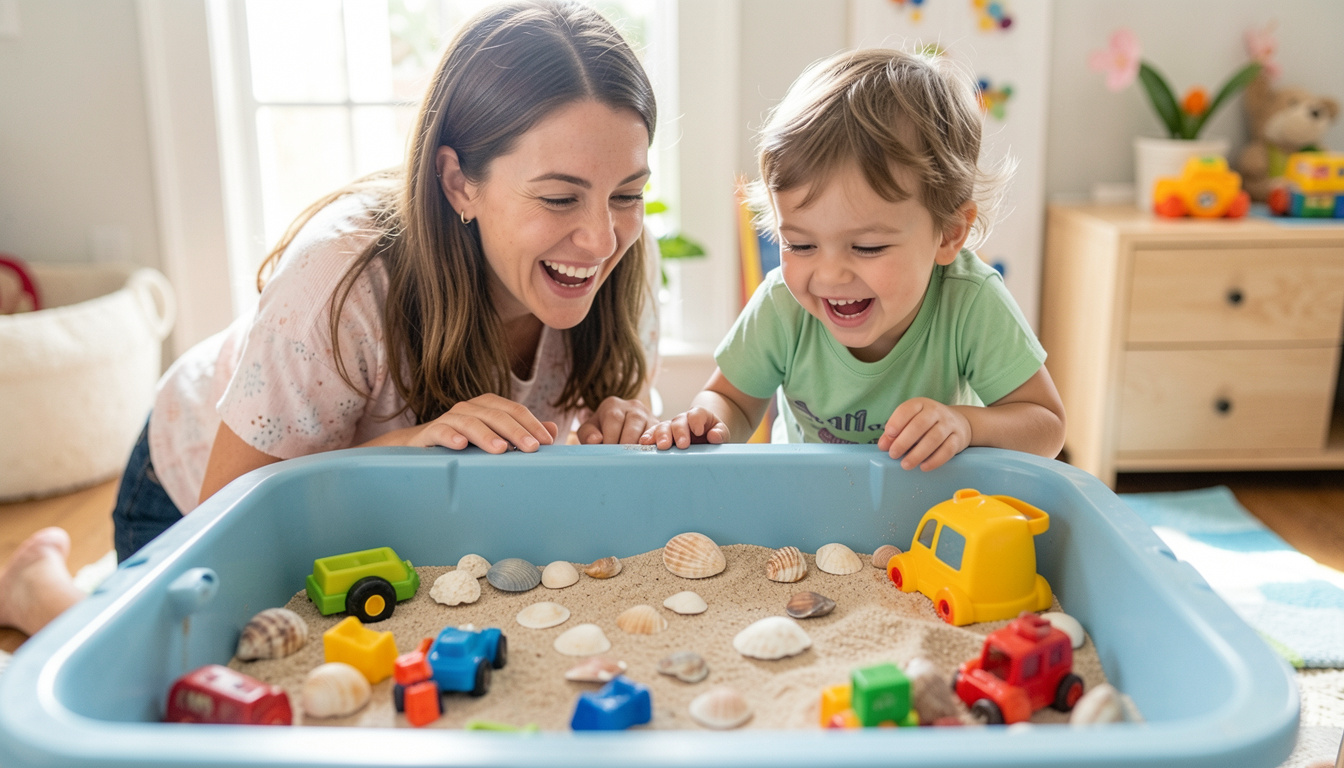
5. Kinetic sand bin
For many families, kinetic sand earns a permanent spot in the activity rotation. It is satisfying to mold, crumble, scoop, and press, and it tends to hold a toddler’s attention well.
This is one of the best sensory bins for toddlers who like construction toys, digging, or repetitive hand play. Cookie cutters, small cups, and chunky toy trucks all work well here. The downside is texture preference. Some toddlers love it instantly, while others dislike the dry, crumbly feel.
6. Bean bin for older toddlers
Dried beans can create a wonderful scooping and pouring experience, but this one depends heavily on age and supervision. For toddlers who still mouth objects, it is better to skip it for now.
For older toddlers who no longer put nonfood items in their mouths, a bean bin can be rich in sound, weight, and fine motor practice. Large spoons, containers with lids, and toy animals make it more engaging. Think of this as a better fit for the child who can follow simple safety limits.
7. Ice bin
An ice sensory bin can feel almost magical, especially if you freeze small toys in larger ice chunks or add warm water for melting play. It introduces temperature, texture, and simple science in a very toddler-friendly way.
This works well when your child is restless or needs something different from the usual indoor routine. You do not need a complicated setup. A bowl of ice cubes, a little water, and a spoon can be enough. It is brief play for some toddlers, but that can still be a win.
8. Dirt or potting soil bin
For toddlers who always want to dig in the yard, bringing that interest into a contained bin can be a smart move. Clean potting soil or outdoor dirt with toy shovels, cups, and plastic bugs gives children a chance to dig, fill, and explore natural textures.
This one is usually best outdoors or on a washable surface. It can look messy, but many toddlers find it deeply calming and absorbing. If your child prefers real-world play over bright themed setups, this may hold their attention longer than more polished sensory ideas.
9. Paper shred bin
A bin full of paper shreds or torn tissue paper is lightweight, inexpensive, and surprisingly fun. Toddlers can hide toys, toss handfuls, and practice pulling objects apart and out.
It is not as long-lasting as some other fillers, but it is useful when you need a fast indoor setup. This can also be a nice lower-mess alternative to sand or rice. Just keep an eye on children who are tempted to tear and scatter everything immediately.
10. Taste-safe yogurt or pudding bin
For very young toddlers, taste-safe sensory play can take a lot of pressure off. A small bin or tray with yogurt, pudding, or applesauce lets your child smear, scoop, and explore without the same worry that comes with nonedible materials.
This is especially helpful during the mouthing stage. The cleanup is not always glamorous, but the peace of mind can be worth it. If your child is new to sensory play and tends to taste first, this is often one of the best places to begin.
How to choose the right sensory bin for your toddler
Start with your child, not the theme. A toddler who loves baths may respond best to water or ice. A child who avoids sticky hands may prefer pom-poms or kinetic sand. A toddler who constantly explores kitchen cabinets may enjoy dry scooping materials like oats.
Age and safety come first. If your child still mouths objects, choose taste-safe play or larger materials and stay close. If your toddler gets overwhelmed easily, keep the bin visually simple and skip too many tools. If they lose interest fast, try hiding familiar toys inside the filler to create a small challenge.
It also helps to match the bin to the moment. High-energy afternoon? Water or dirt can work well. Quiet indoor morning? Oats or pom-poms may feel easier to manage. There is no single best sensory bin for every toddler because play style, temperament, and family routines all matter.
Must Read: Sensory Toys for Toddlers That Keep Them Engaged
Simple setup tips that make sensory play easier
Use a low, wide container so your toddler can reach comfortably. Put the bin on a washable mat, towel, or shower curtain if mess is a concern. Offer just a few tools at first, since too many options can distract from the play itself.
You do not need a themed masterpiece. Often, one filler and two tools are enough. Rotating materials every few days can make old bins feel new again without asking you to reinvent the activity every time.
If cleanup tends to stop you from trying sensory play at all, make that part easier too. Keep a small broom, towel, or handheld vacuum nearby. At Mom Kid Friendly, we know the best activity is usually the one you can actually repeat without dreading the aftermath.
Must Read: 15 Sensory Bin Ideas That Actually Keep Kids Busy
When sensory bins are not the best fit
Sensory bins are helpful, but they are not magic for every child or every day. Some toddlers dump everything out immediately and walk away. Others get frustrated by unfamiliar textures or need more movement than a bin provides.
That does not mean you are doing it wrong. It may just mean your child prefers water tables, playdough, outdoor digging, finger painting, or simple practical life tasks like pouring during snack prep. Sensory play counts in many forms.
If you try one of the best sensory bins for toddlers and your child is not interested, adjust one variable before giving up. Change the texture, reduce the tools, shorten the session, or join in for a minute to model how to play. Sometimes the right fit is a small shift, not a whole new plan.
A sensory bin does not need to look perfect to support your toddler’s growth. If it helps your child explore, focus, and enjoy a few calm minutes of hands-on play, it is doing exactly what it needs to do.
Frequently Asked Questions
What are the best sensory bins for toddlers?
The best sensory bins for toddlers are simple, safe, and easy to set up. Good options include water bins, oat bins, pom-pom bins, cooked pasta bins, kinetic sand bins, ice bins, and taste-safe yogurt or pudding bins.
What is the safest sensory bin filler for toddlers?
Taste-safe fillers are often the safest choice for younger toddlers who still put things in their mouths. Yogurt, pudding, applesauce, oats, and water can be good starter options with close supervision.
Are sensory bins good for toddler development?
Yes, sensory bins can help toddlers build fine motor skills, focus, early language, problem-solving, and hand-eye coordination. They also give children a calm way to explore textures, tools, and simple actions.
How do I choose the right sensory bin for my toddler?
Start with your child’s age, habits, and texture preferences. If your toddler mouths objects, use taste-safe or larger materials. If your child dislikes mess, try pom-poms, oats, or kinetic sand first.
How long should toddlers play with sensory bins?
Some toddlers may play for five minutes, while others stay engaged much longer. A short session still counts, especially if your child explores, scoops, pours, sorts, or transfers materials.
What should I do if my toddler dumps the sensory bin right away?
Try using fewer tools, a smaller amount of filler, or a wider container. You can also sit beside your toddler for a minute and show simple actions like scooping, pouring, or hiding toys.
Can I make sensory bins without buying supplies?
Yes, many of the best sensory bins for toddlers use items you may already have at home. Water, oats, paper shreds, cooked pasta, cups, spoons, and toy animals can all work well.
Are sensory bins messy?
They can be, but the mess depends on the filler and setup. Use a towel, mat, shower curtain, or outdoor space to make cleanup easier.
