
Some afternoons fall apart fast. One sibling grabs a toy, someone is overtired, dinner is half-started, and suddenly your child is crying, yelling, or spiraling in a way that feels bigger than the moment. In those times, the best calming activities for kids are not about stopping emotions, but about helping children move through them with a little more safety, rhythm, and support.
That distinction matters because calming activities work best when they are not used as a punishment or a demand to “settle down right now.” Kids regulate better when they feel connected first, and the best calming activities for kids can create that small opening. A simple activity can create just enough pause for a child’s nervous system to shift out of overload and back toward balance.
What makes calming activities actually work?
Not every quiet activity is calming, and not every child relaxes the same way. One child might melt into a coloring page, while another needs to push, squeeze, jump, or rock before they can listen or talk. Age, temperament, sensory preferences, and the reason behind the upset all play a role.
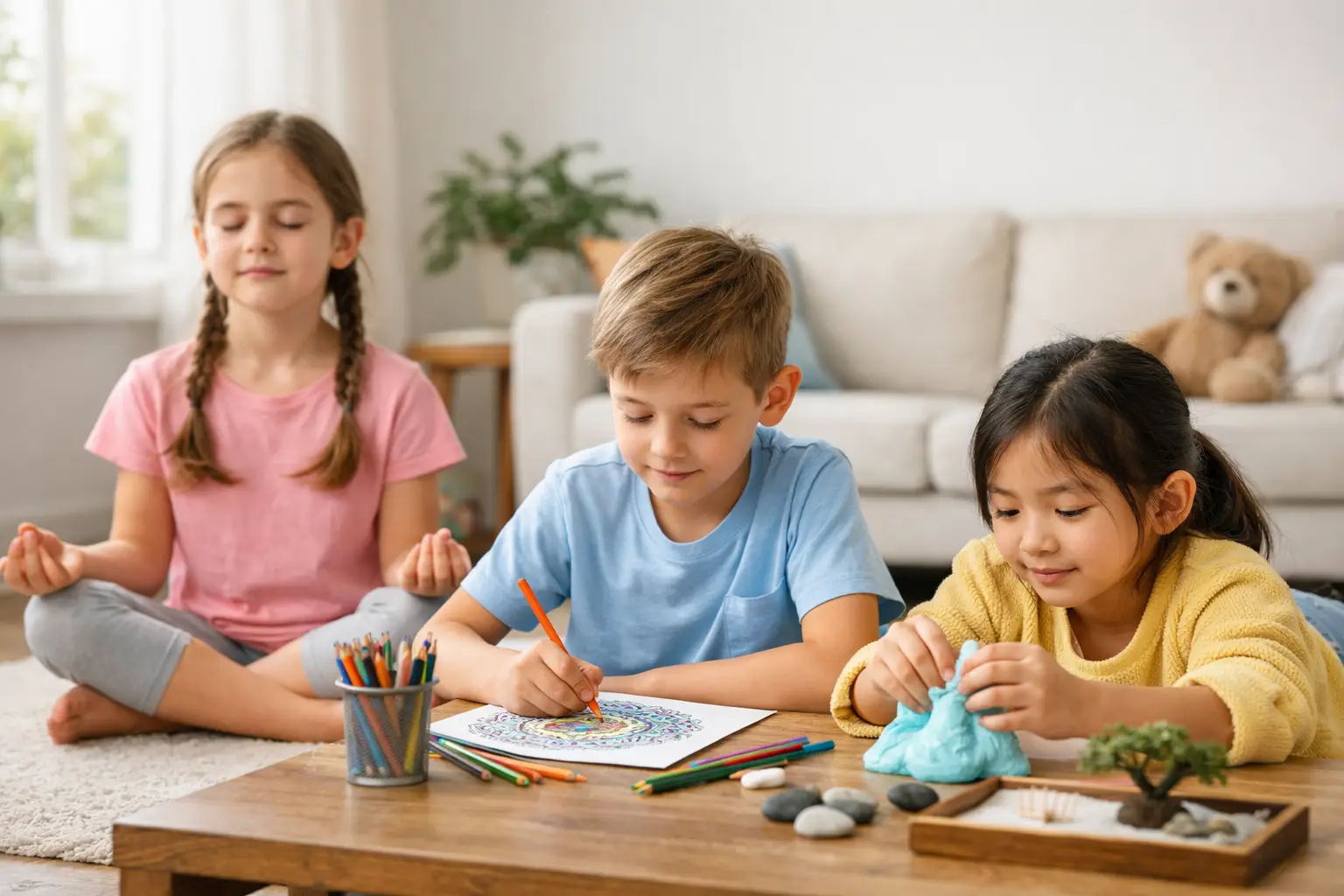
In general, the most effective calming activities do one of three things. They slow the body down, organize the senses, or offer a predictable focus. That might look like deep breathing, repetitive movement, soft sensory play, or a simple task the child can complete without pressure. The goal is not perfect behavior. The goal is helping the child feel more in control of their body and emotions.
Must Read: Discover Kid Friendly Activities Near You for Family Fun
Best calming activities for kids at home
1. Balloon breathing
Breathing exercises can be helpful, but only if they feel concrete. Telling a child to “take a deep breath” often gets nowhere when they are upset. Asking them to pretend their belly is a balloon is usually easier to understand.
Have your child place a hand on their stomach and slowly breathe in to fill the balloon, then breathe out to let it deflate. Younger kids often respond well if you model it with them instead of instructing from across the room. If your child resists breathing exercises during a meltdown, try practicing this at calm times first so it feels familiar later.
2. Wall pushes or animal pushes
Some kids calm down faster through heavy work than through quiet sitting. Pushing against a wall, doing slow bear crawls, or pretending to be a strong animal moving across the floor gives the body useful input. This kind of movement can be especially helpful for children who seem more wild than weepy when they are dysregulated.
It is a good choice when your child needs to discharge energy but a full outdoor play session is not realistic. The main trade-off is timing. If a child is already highly escalated, they may need you to join in before they can follow the idea.
3. Water play
Water has a naturally soothing quality for many children. A sink full of cups, a warm bath, a bowl of water with spoons, or even washing a few toy animals can shift the mood quickly.
This works because water combines sensory input with repetitive action. It also gives busy hands something to do while emotions settle. For some kids, especially toddlers and preschoolers, this is one of the most reliable resets. Just keep expectations low. The point is calm, not a spotless bathroom.
4. Play dough or putty
Squeezing, rolling, pinching, and flattening can be surprisingly regulating. Play dough gives children a way to release tension physically without needing many words.
If your child is upset about something specific, you can gently invite them to make their feeling. Maybe they roll an angry snake or flatten a big worried pancake. If they do not want to talk, that is fine too. The sensory action alone may be enough.
5. Calming jars or slow visual focus
A glitter jar, snow globe, lava timer, or any slow-moving visual tool can help a child focus on one thing long enough for the body to soften. These are especially useful for kids who become overwhelmed by too much talking.
That said, calming jars are not magic. Some children love them, and some lose interest immediately. They tend to work best as one option in a bigger calming toolkit rather than the only strategy you rely on.
6. Coloring or repetitive art
Coloring, tracing shapes, dot markers, sticker scenes, and simple watercolor painting can provide a predictable rhythm. Repetition matters here. Activities that do not require lots of decisions are often more soothing than open-ended crafts when a child is already stressed.
If your child is easily frustrated, skip anything that feels too complicated or messy in the moment. A single page and a few crayons may help more than an elaborate art setup.
Best calming activities for kids who need movement
7. Swinging or rocking
Rhythmic movement can help children organize their bodies and feel secure. A porch swing, indoor sensory swing, rocking chair, or even gentle rocking in your lap may bring quick relief.
This tends to work well for younger children and for kids who seek motion when they are tired or overstimulated. Still, it depends on the child. Some children calm with gentle movement, while others get more revved up if the motion is too fast.
8. A short obstacle course
When emotions are stuck, movement with structure can help. A simple obstacle course with couch cushions to step over, tape lines to jump across, and a tunnel made from chairs and blankets gives a child a clear sequence to follow.
That structure matters because it turns chaotic energy into purposeful action. Keep it short and repeatable. You are not planning a birthday party activity. You are offering the nervous system a path back to center.
9. Stretching with imagery
Stretching works best for kids when it feels playful. Reach like a tree, curl like a turtle, stretch long like a cat, or fold small like a seed. Pairing movement with imagination makes it more inviting and less like a chore.
This can be especially helpful before bed, after school, or after a conflict when a child is willing to reconnect but still carrying tension in their body.
Must Read: Top Activities for 3 Year Olds to Boost Development
Best calming activities for kids at quiet times
10. Reading together in a cozy spot
A familiar book and a small cozy space can do a lot. Reading gives a child closeness, predictability, and a gentle focus point. Even older kids who would never call it a calming strategy often settle when they can sit beside you and listen.
The key is choosing the right kind of book for the moment. Save exciting or silly books for another time if your child is already wound up. Soft, familiar, and low-stakes works better.
11. Listening to calm music or nature sounds
Sound can shift the emotional tone of a room faster than we sometimes realize. Quiet instrumental music, lullabies, white noise, or nature sounds can help lower stimulation, especially if your home has reached that loud late-day point.
Some children like headphones, while others prefer music in the background. You may need to experiment. If your child is sound-sensitive, even soothing music can feel like too much when upset.
12. A simple calm-down basket
Sometimes the most effective strategy is having a few trusted tools in one place. A calm-down basket might include a soft stuffed animal, a fidget, a coloring book, a sensory bottle, a small blanket, or a favorite book.
What matters is not how cute the basket looks. What matters is that your child knows it is a safe, familiar option. Introduce it during calm moments so it does not feel like a consequence when emotions run high.
How to choose the right calming activity for your child
If you are trying to figure out which of the best calming activities for kids will actually help your child, start by noticing patterns. Does your child get louder and more physical when overwhelmed, or quieter and more tearful? Do they seek touch, avoid it, need movement, or want space? Those clues tell you more than any one-size-fits-all list.
It also helps to think about timing. A child in the early stages of frustration may be able to color, breathe, or listen to a story. A child in full meltdown usually needs fewer words, more co-regulation, and something simpler like rocking, water play, or firm physical work. After they are calm, that is the time for talking, teaching, or problem-solving.
You do not need a perfect calm-down routine. You just need a few realistic options you can reach for without creating more stress for yourself.
Must Read: Top Indoor Activities for Kids to Spark Creativity and Fun
When calming activities are not enough
There will be days when none of these ideas land well. That does not mean you are doing anything wrong, and it does not mean your child is choosing chaos. Hunger, lack of sleep, transitions, anxiety, sensory overload, and developmental stage all affect how much support a child needs.
If your child has frequent intense reactions, trouble recovering, or clear sensory challenges, it may help to talk with your pediatrician or another child development professional. Extra support can make everyday parenting feel much more manageable.
A calm activity is not a magic fix, but it can become a steady part of family life – one small way to tell your child, “You are having a hard time, and I know how to help you through it.” Often, that is the part they carry with them most.
Frequently Asked Questions
What are the best calming activities for kids?
The best calming activities for kids include balloon breathing, water play, play dough, coloring, rocking, stretching, calm music, and calm-down baskets. These activities help children slow down, feel safe, and manage big emotions.
How do calming activities help children?
Calming activities help children regulate their bodies and emotions. They give kids a simple way to pause, focus, and move out of stress or overwhelm.
What calming activity works best during a meltdown?
During a meltdown, simple activities usually work best. Rocking, water play, wall pushes, or quiet sensory tools may help because they do not require too many words or choices.
Are movement activities calming for kids?
Yes, movement activities can calm many kids. Wall pushes, bear crawls, stretching, swinging, and short obstacle courses can help children release energy in a safe way.
What can I put in a calm-down basket?
A calm-down basket can include a soft toy, fidget, coloring book, crayons, sensory bottle, small blanket, or favorite book. Choose items your child already finds comforting.
When should I use calming activities with my child?
Use calming activities before emotions get too big, during stressful moments, or after a hard day. They work best when your child already knows the activity from calm times.
Do calming activities work for toddlers?
Yes, calming activities can work well for toddlers. Water play, rocking, simple books, sensory bottles, and soft toys are often good choices for younger children.
What if calming activities do not work?
If calming activities do not work, your child may need food, sleep, space, or more support. Frequent intense reactions may also be worth discussing with a pediatrician.
