

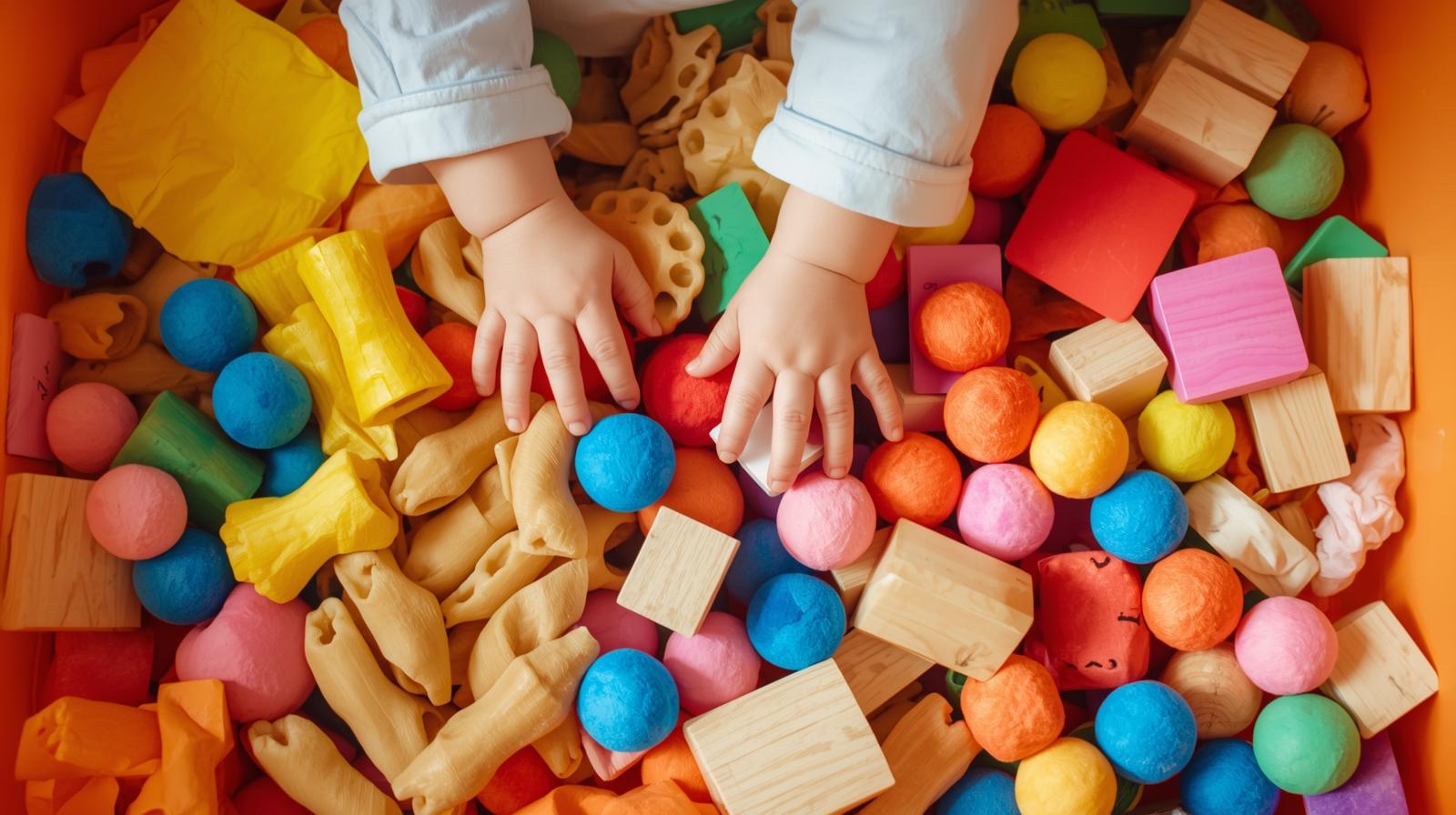
It’s 10 AM, and your toddler has already pulled every cushion off the couch. You just need five minutes to drink your coffee while it’s actually hot. This is where sensory bins for toddlers quietly save the morning.
Toddlers are naturally curious and need to touch everything to learn. When they get bored, they usually start making their own “fun,” which often means a big mess for you. Sensory bins for toddlers are the magic trick you need up your sleeve.
Here at Mom Kid Friendly, we know you don’t have time for complicated setups. We are all about easy, practical wins that make the day go smoother. Let’s dive into how these simple bins can change your daily routine.
Join our community of moms! Sign up for our newsletter to get easy activity ideas sent straight to your inbox.
Why toddlers get bored fast and what parents usually try first
Toddlers have very short attention spans. Their brains are wired to explore, move, and test boundaries constantly. If they aren’t given a job to do, they will find one.
Usually, parents try to rotate toys or turn on a show. While screens have their place, they don’t always burn off that restless energy. Toys often lose their appeal after a few minutes of play.
Sensory bins offer a different kind of engagement. They invite your child to explore without a specific “right” way to play. This open-ended fun keeps them interested for much longer.
What sensory play actually does for toddler development
Sensory play is more than just making a mess. It actually helps build nerve connections in your child’s brain. This supports their ability to complete more complex learning tasks later on.
It encourages scientific thinking and problem-solving. They learn about gravity, volume, and texture through hands-on experience. It is learning disguised as pure fun.
It also supports language development. You can introduce new words like “squishy,” “rough,” “smooth,” and “cold.” Talking about what they feel helps expand their vocabulary.
Must Read: Choosing the Perfect Childrens Play Kitchen
What sensory bins are and why they work so well for toddlers
A sensory bin is simply a container filled with materials that stimulate the senses. It usually involves touch, sight, and hearing. Sometimes, it even involves smell or taste.
They work well because they contain the mess in one spot. The defined space helps toddlers feel secure and focused. It gives them a “yes” space where they can dump and scoop freely.
Toddlers crave independence. A bin allows them to control the play entirely. This autonomy is huge for their confidence.
When to start sensory bins and what age works best
You can start simple sensory play as soon as your baby can sit up. However, true sensory bins are usually best for toddlers around 12 to 18 months. This is when they start to enjoy scooping and pouring.
Always consider your child’s stage of development. If they still put everything in their mouth, avoid small items. You want to choose edible or taste-safe bases for younger toddlers.
As they get older, the bins can get more complex. A three-year-old might enjoy a themed bin with small figurines. A one-year-old just wants to feel the texture.
How sensory bins support fine motor skills, focus, and calm play
Sensory bins are a workout for little hands. Picking up small items helps develop the pincer grasp. This is the same skill they will need later to hold a pencil.
Scooping and pouring builds hand-eye coordination. They have to steady their hands to transfer materials from one cup to another. It takes a surprising amount of focus.
The repetitive nature of sensory play is also very calming. Sifting sand or water through their fingers can regulate their nervous system. It is a great activity for quiet time.
What you really need to make a sensory bin at home
You do not need to buy expensive kits. You likely have everything you need in your kitchen or closet. The goal is to keep it low-cost and low-stress.
First, you need a container. A clear plastic storage bin works perfectly. Even a large baking dish or a cardboard box can work in a pinch.
Next, you need a filler material. This is the “base” of your bin. Finally, you just add a few tools for exploration.
Safe base materials parents already have in the kitchen
The kitchen is a goldmine for sensory bases. Uncooked rice is a classic favorite because it makes a great sound. Just be sure to supervise so it stays in the bin.
Dry pasta comes in fun shapes and sizes. Rotini, penne, and bow ties are easy for little hands to grab. You can even dye them different colors with vinegar and food coloring.
Oats are another fantastic, taste-safe option. They are soft and dusty, providing a different texture. If your toddler sneaks a taste, it is perfectly safe.
Here are a few other kitchen staples to try:
- Dried beans or lentils
- Cornmeal or flour
- Water (the easiest one!)
- Cereal that has gone stale
Simple tools and toys toddlers love inside sensory bins
You don’t need fancy sensory tools. Go raid your utensil drawer. Measuring cups and spoons are absolute hits with toddlers.
Funnels add an element of excitement. Watching rice or water disappear through the hole is fascinating. Tongs or large tweezers are great for older toddlers.
Add in some of their existing toys. Plastic animals, cars, or blocks can give the bin a theme. Suddenly, the oatmeal bin becomes a construction site.
Easy clean-up tips that save your sanity
The fear of mess is the biggest reason moms avoid sensory bins. But a little preparation goes a long way. Always put a large towel or sheet under the bin.
If you have a splash mat for under the high chair, use that. When playtime is over, you can just shake the sheet outside. It makes cleanup take seconds rather than minutes.
Keep a handheld vacuum or dustpan nearby. Teach your toddler that spills are part of the process. Let them help you sweep up the wayward rice grains.
Set clear boundaries before you start. Tell them, ” The rice stays in the bin.” If they throw it, the bin goes away for the day.
Must Read: Toddler Toys for Boys That Actually Get Played with
Sensory bin ideas for toddlers who love to pour and scoop
Some kids are obsessed with transferring things. For these toddlers, you want loose materials that flow easily. A rice bin is the ultimate pouring station.
The Rainbow Rice Bin:
Dye some white rice with food coloring. Let it dry completely. Mix the colors together for a vibrant, happy bin. Add cups, spoons, and an empty egg carton for sorting.
The Lentil Construction Site:
Dried green or brown lentils look just like little rocks. Add in some small toy dump trucks and excavators. Let your toddler scoop the “rocks” and dump them out.
The Water Station:
Fill a bin with a few inches of water. Add plastic cups, a ladle, and a whisk. This is the cleanest option and toddlers love it.
Sensory bin ideas for toddlers who like textures and mess
Some toddlers crave strong sensory input. They want to squish, smash, and get their hands dirty. These bins are great for tactile seekers.
The Oobleck Bin:
Mix cornstarch and water until it feels like a solid and a liquid. It is messy but fascinating science. It wipes up easily with a wet cloth.
The Shaving Cream Cloud:
Spray a can of shaving cream into a bin. Let them smear it around and hide plastic toys inside. It smells clean and feels like a cloud.
The Mud Kitchen:
This is best for an outdoor day. Use potting soil and water to make mud. Give them old pots and pans to make “mud pies.”
Sensory bin ideas for toddlers who need calm, quiet play
Sometimes you need a bin that brings the energy down. These ideas are soothing and quiet. They are perfect for that pre-nap window.
The Cotton Ball Cloud:
Fill a bin with soft cotton balls. Give them tongs to gently move the “clouds.” It is silent and soft to the touch.
The Water Bead Bin:
Note: Only use these with older toddlers who do not put things in their mouths. Water beads are slippery and smooth. They are incredibly relaxing to run your hands through.
The Kinetic Sand Castle:
Kinetic sand sticks to itself, so it is less messy than real sand. It moves slowly and feels very therapeutic. Add a few cookie cutters for stamping shapes.
How long toddlers should play with sensory bins
There is no set rule for time. Some days, your toddler might engage for forty minutes. Other days, they might be done after five.
Don’t force the play. If they lose interest, pack it up. Short bursts of focused play are better than forcing it.
Follow their lead. If they are deeply concentrated, step back and drink that coffee. If they start throwing things, they are likely done.
Common sensory bin mistakes parents make
The biggest mistake is overcomplicating it. You see beautiful bins on social media and think you need to match that. Your toddler honestly doesn’t care about aesthetics.
Another mistake is giving too many options. A bin with too many toys can be overwhelming. Keep it simple with just a base and two tools.
Parents also often interfere too much. We want to show them how to play. But the magic happens when they figure it out themselves.
Sit nearby for safety, but let them lead. Let them discover that the rice falls through the funnel. Don’t correct them unless it’s a safety issue.
How to rotate sensory bins so toddlers stay interested
Novelty is key for toddlers. If you leave the same bin out every day, they will ignore it. Treat your sensory bins like a toy rotation.
Have two or three plastic tubs with lids. Fill one with pasta, one with rice, and one with pom-poms. Keep them on a high shelf or in a closet.
Bring one out for a few days. Then, pack it away and bring out a different one. The “new” bin will keep them entertained all over again.
Sensory bins for toddlers that work indoors and outdoors
We love versatility here at Mom Kid Friendly. Most dry bins work perfectly indoors on a mat. They are great for rainy days or cold winters.
Water and mud bins are best kept outside. The fresh air combined with sensory play is a recipe for a great nap. Plus, you don’t have to worry about the carpet.
If you don’t have outdoor space, put the messy bins in the bathtub. Let them play with shaving cream or water there. When they are done, just rinse it all down the drain.
Sensory bins for toddlers are a simple tool for your parenting toolbox. They foster independence, calm the chaos, and give you a moment to breathe. You don’t need to be perfect; you just need a plastic tub and some dry pasta.
Start small and see what your child loves. You might be surprised at how long a little rice can keep them busy. Enjoy the quiet moments!
What is your favorite easy activity? Leave a comment below and share your best sensory bin ideas with other moms!
Must Read: Sensory Activities for Infants To Boost Early Learning
Frequently Asked Questions
What are sensory bins for toddlers?
Sensory bins for toddlers are containers filled with materials like rice, pasta, or water that let kids explore through touch and play.
Are sensory bins safe for toddlers?
Sensory bins for toddlers are safe when you supervise closely and avoid small items that toddlers could put in their mouths.
What age are sensory bins best for?
Sensory bins for toddlers usually work best from around 12 months and up, depending on your child’s development.
How long should toddlers play with sensory bins?
Sensory bins for toddlers can hold attention anywhere from five minutes to forty minutes, depending on the child and the setup.
Do sensory bins really help toddler development?
Sensory bins for toddlers help build fine motor skills, focus, language, and calm, independent play.
What can I use as a base for sensory bins?
Common bases for sensory bins for toddlers include rice, oats, pasta, beans, water, or cereal you already have at home.
How do I keep sensory bins from getting too messy?
Using a mat, towel, or bathtub helps keep sensory bins for toddlers contained and easier to clean up.
