

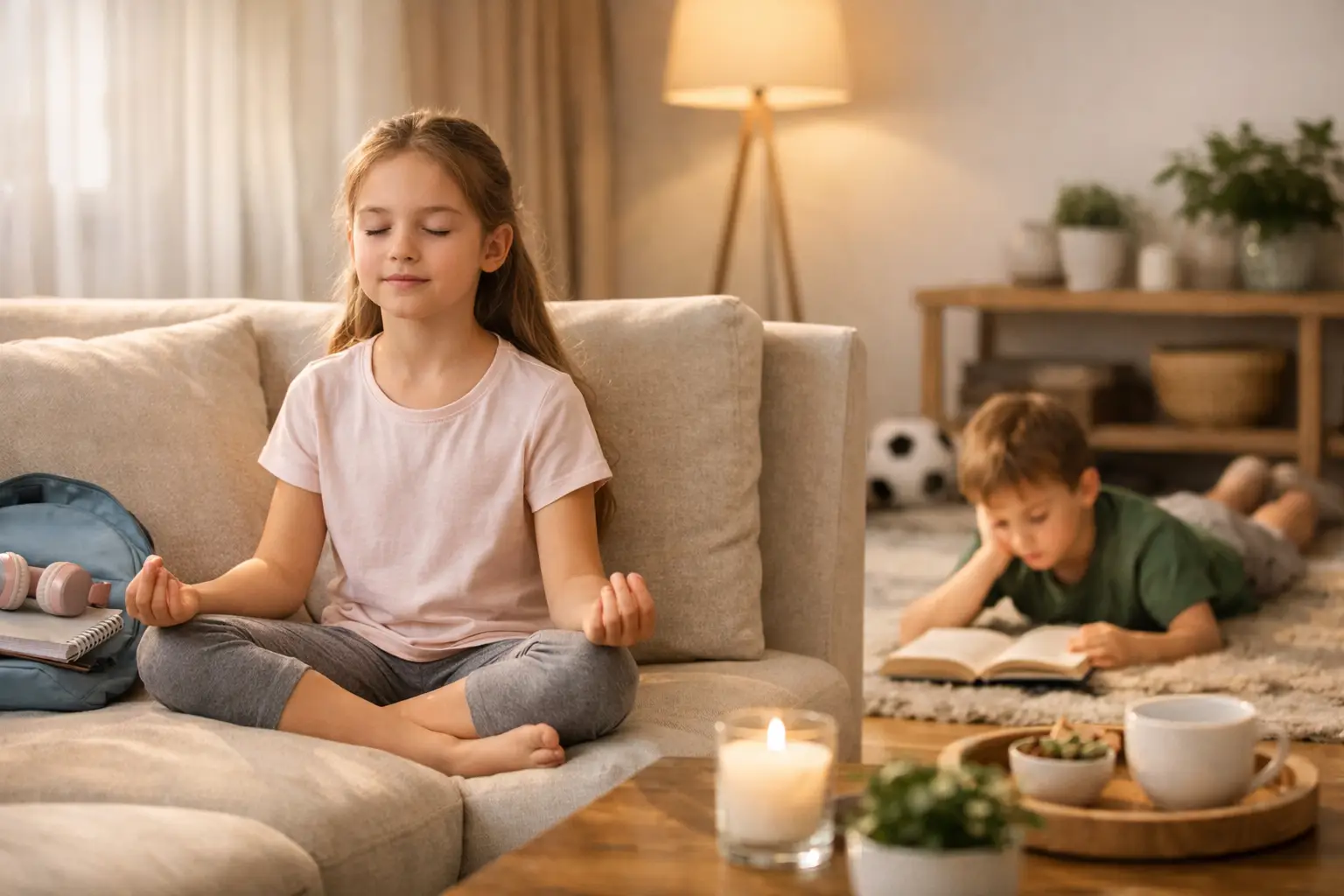
The hardest part of the day often starts right after pickup, which is why a thoughtful after school routine for kids can change the mood of the entire afternoon. Kids walk in hungry, tired, overstimulated, and full of everything they held together at school. A good after school routine for kids does not need to be strict or picture-perfect; it just needs to help your child decompress, reconnect, and move into the rest of the day with less stress.
For many families, afternoons feel chaotic because everyone needs something at once, and a parent is juggling snacks, homework, sports, dinner, and texts from school while a child is either talking nonstop or falling apart over the wrong cup. Routine helps because it removes some decision-making from a time when kids are already running low. It also gives parents a clearer rhythm to lean on when energy is fading.re already running low. It also gives parents a clearer rhythm to lean on when energy is fading.
Why an after school routine for kids matters
School asks a lot of children. Even kids who love school spend hours following directions, managing noise, handling social pressure, and staying on task. By the time they get home, self-control is often worn thin. What looks like crankiness or defiance may really be exhaustion.
A predictable afternoon routine supports regulation before expectations pile on. When children know what happens first, next, and later, they are less likely to push back over every step. That predictability can lower power struggles around snack time, homework, screen use, and bedtime because the flow of the day feels safer and more familiar.
That said, the best routine depends on your child. A kindergartner usually needs more hands-on guidance than a fourth grader. A child with ADHD may need movement before homework. A highly social child might need time to talk, while another needs quiet before answering a single question. Routine works best when it fits the child in front of you, not an ideal schedule on paper.
Must Read: Top Indoor Activities for Kids to Spark Creativity and Fun
The four parts of a healthy afternoon rhythm
Most successful afternoons include the same basic sequence: reconnect, refuel, reset, and re-engage. The order matters more than perfection.
Reconnect comes first. Many kids need a soft landing before they are asked to do anything productive. That might look like a hug, a few minutes in the car without questions, or a simple welcome home ritual. Some children want to tell you every detail right away. Others need space before they can talk. Both are normal.
Refuel is next. Hunger is one of the fastest ways to turn a manageable afternoon into a rough one. A balanced snack with protein and carbs can help mood, focus, and patience. It does not have to be elaborate. What matters is that it is ready before everyone gets too hungry.
Reset gives your child a chance to come down from the school day. Depending on the child, this could mean outside play, quiet reading, drawing, music, or just sitting on the couch for a bit. Parents sometimes worry that this pause wastes time, but it often saves time later by reducing resistance.
Re-engage is when your child shifts into the next responsibility, whether that is homework, chores, therapy, practice, or family time. Once the first three needs are met, this step usually goes more smoothly.
A simple after school routine for kids by age
A preschooler or kindergartner usually does best with a very visible and concrete routine. Think snack, play, quiet activity, dinner, bath, and bedtime. At this age, a picture chart can help because children are still learning how to follow a sequence independently.
Elementary-age kids often benefit from a little more structure around homework and responsibilities. A rhythm like snack, outside time, homework, free play, dinner, and bedtime works well for many families. If your child is resisting homework every day, the issue may not be discipline. It may be timing. Some kids truly focus better after movement and a snack.
Tweens need structure too, but they usually respond better when they have some ownership. Instead of controlling every minute, set anchor points. For example, they need a snack after school, homework done before dinner, and devices parked by a certain time. Within that frame, they can decide whether they decompress first or start work right away.
What a realistic afternoon can look like
A workable routine does not need ten steps. In fact, fewer steps are often better. A typical school-day flow might be: arrive home, have a snack and water, take 20 to 30 minutes to decompress, complete homework or reading, do one small household task, then move into dinner and the evening routine.
If your child has activities, the rhythm may compress. On busy days, the routine might be snack in the car, a short check-in, activities, then homework or reading later. The goal is not to force the same exact schedule every day. The goal is to keep the same basic needs covered even when time is tight.
This is where many parents get stuck. They think a routine only counts if it happens perfectly at home in the same order. But real family life includes late pickups, sports practices, tired parents, and siblings with different needs. Consistency matters more than sameness.
Must Read: Indoor Stuff to Do When You’re Stuck At Home With Kids
How to build a routine your child will actually follow
Start by noticing where your afternoons usually fall apart. If meltdowns happen before dinner, hunger or overstimulation may be the problem. If homework turns into a battle, your child may need more downtime or a more structured workspace. When you identify the pressure point, it becomes easier to change the routine in a useful way.
Then keep the plan simple enough to repeat. Children are more likely to follow a routine with three to five clear steps than one packed with too many transitions. You can say it out loud the same way each day: first snack, then rest, then homework, then play. Repetition helps the routine stick.
It also helps to make expectations visible. Younger kids may benefit from a chart on the fridge. Older kids may just need a dry-erase list near their homework area. This reduces the need for constant reminders, which can quickly make afternoons feel tense.
Try to protect one part of the routine that supports connection. That could be a snack together, a quick walk with the dog, or five minutes of talking while your child unwinds. Children do not always need long heart-to-heart conversations after school. Often they just need to feel that home is a place where they can exhale.
Common mistakes that make afternoons harder
One common mistake is expecting children to perform the moment they walk in the door. If the first thing they hear is a string of demands, many kids will push back. A little margin at the start of the afternoon often prevents a lot of conflict later.
Another issue is overscheduling. Activities can be valuable, but too many packed afternoons leave little room for rest. If your child is melting down most evenings, the solution may not be a better chart. It may be one less commitment.
Screen time can also complicate the routine. For some kids, a short show after school helps them decompress. For others, screens make it much harder to transition into homework or dinner. There is no single right rule here. Pay attention to how your child responds, and build limits around what actually helps your home feel calmer.
Parents sometimes underestimate how much their own bandwidth affects the routine too. If you are trying to manage everything at once, even a good plan can feel impossible. Prepping snacks earlier, setting out homework supplies, or choosing a few repeat dinners can remove pressure from the busiest part of the day.
When the routine needs to bend
Even the best afternoon rhythm will need adjustments. Some kids come home fine on Monday and completely depleted by Thursday. Some seasons bring heavier homework, new teachers, or behavior changes that require a reset. That does not mean the routine failed. It means your family is living real life.
If your child is consistently struggling after school, step back and ask what they may be communicating. They may need more sleep, more movement, less pressure, or more emotional support. A routine should serve your child, not the other way around.
At Mom Kid Friendly, we believe the most helpful family systems are the ones that make home feel steadier, not stricter. Your after-school rhythm can be gentle and still effective.
A calm afternoon rarely starts with having more time. It usually starts with giving your child a softer place to land and a clearer path through the rest of the day.
Must Read: Gross Motor Activities for Preschoolers Burn Energy
Frequently Asked Questions
What is a good after school routine for kids?
A good after school routine for kids includes connection, snack time, rest, homework, chores, and family time.
Why do kids need an after school routine?
Kids need routine after school because they often come home tired, hungry, and overstimulated from the day.
How long should kids rest after school?
Many kids do well with 20 to 30 minutes of rest before homework, chores, or evening activities.
Should kids do homework right after school?
Some kids can, but many focus better after a snack, movement, and a short break.
What should kids eat after school?
A balanced snack with protein and carbs can help improve mood, focus, and patience.
How can parents make after-school routines easier?
Parents can keep routines simple, repeat the same steps daily, and use charts or lists for reminders.
What if my child resists the after-school routine?
Look for the real cause, such as hunger, tiredness, too many activities, or not enough downtime.
Can screen time be part of an after school routine?
Yes, but it depends on the child. Some kids relax with screens, while others struggle to transition afterward.
