

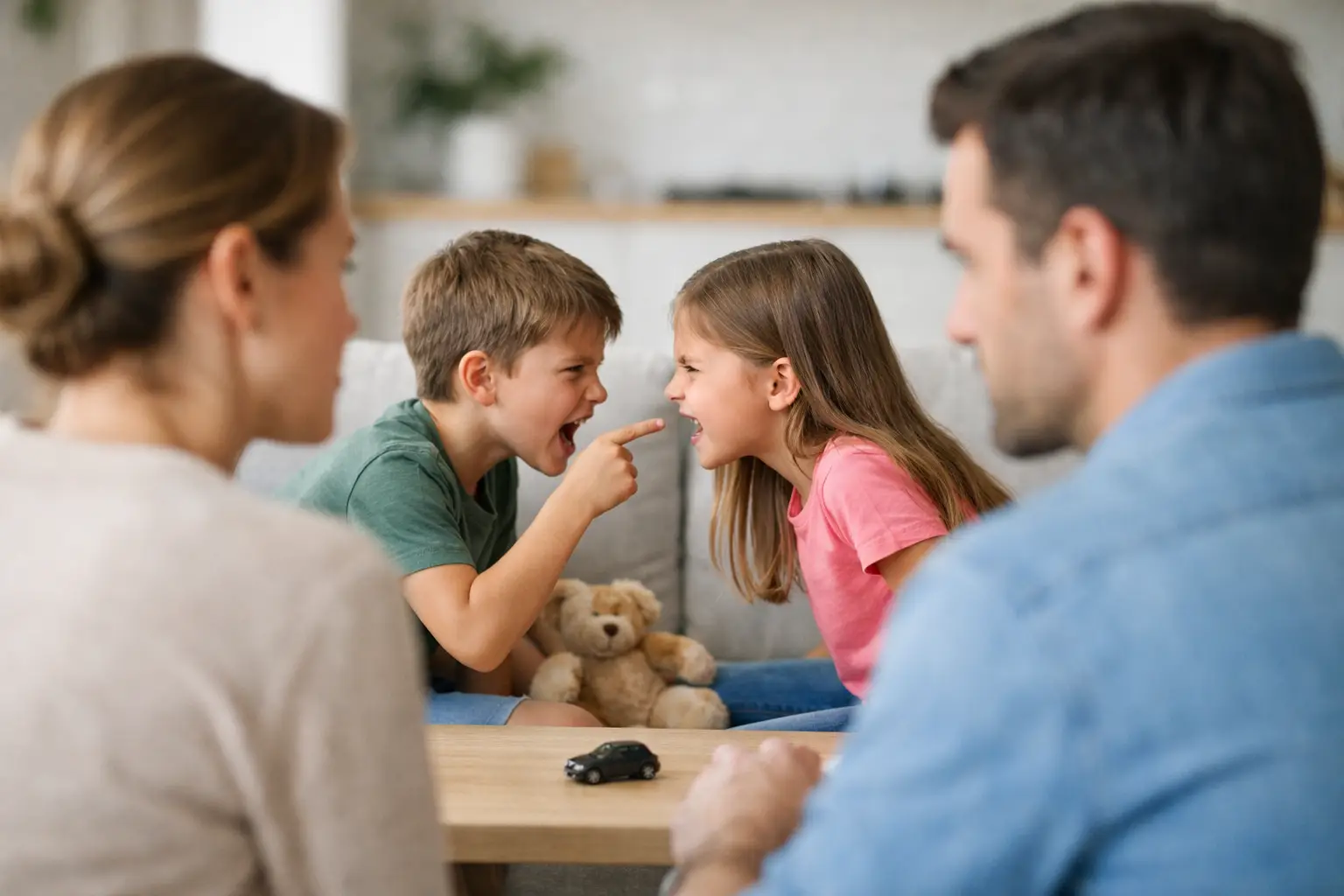
You hear the argument start from the next room and can already predict the script – someone took something, someone says it was unfair, and now everyone is louder than they need to be. If that sounds familiar, these sibling rivalry tips for parents are meant for real family life, not a perfect house where nobody ever fights.
Sibling conflict is stressful, but it is also common. Brothers and sisters compete for attention, space, fairness, and control. That does not mean constant fighting should be brushed off, but it does mean you are not failing because your kids clash. Most of the time, sibling rivalry is less about whether children love each other and more about whether they have the skills, support, and structure to handle frustration.
Why sibling rivalry happens in the first place
Children live close together, share adults, and often have very different temperaments. That alone creates friction. Add hunger, transitions, screen time battles, tiredness, and uneven developmental stages, and it makes sense that conflict shows up often.
A preschooler may grab because impulse control is still developing. A school-age child may keep score because fairness feels huge at that age. An older sibling may seem bossy when they are really trying to protect their place in the family. The same fight can mean very different things depending on the children involved.
That is why the most helpful sibling rivalry tips for parents are not about stopping every disagreement. They are about understanding what is driving the conflict and teaching kids what to do instead.
Start by changing the goal
If your goal is to make sure siblings never fight, you will feel defeated fast. A better goal is to reduce harmful patterns and help your children recover faster, communicate better, and feel secure in your relationship with them.
This matters because not all conflict is the same. Bickering over turns with a game is different from one child repeatedly humiliating or hurting another. Normal conflict can be coached. Aggressive, targeted behavior needs firmer intervention and closer attention.
When you shift the goal from stop all conflict to teach better conflict, your response gets calmer and more effective.
Sibling rivalry tips for parents that work at home
One of the most useful changes you can make is to stop acting like a courtroom judge every time there is a fight. Kids often rush to parents to prove who was right. But if every disagreement turns into an investigation, they may focus more on winning your approval than on solving the problem.
Instead, start with regulation. If voices are high or someone is crying, lower the temperature first. Use a calm voice and short language. You might say, “I can help when everyone is safe and using calm bodies.” That gives children a clear expectation without adding more heat.
Once things settle, help them tell the story in simple parts. Let each child speak without interruption. Reflect back what you hear. “You were using the marker. You wanted a turn and grabbed it.” This does not excuse poor behavior. It helps children feel heard enough to move forward.
Then coach the repair. Younger children may need choices: trade, take turns with a timer, play separately for ten minutes, or ask for help before grabbing. Older kids can do more problem-solving on their own, but many still need prompting. The goal is not a forced apology within ten seconds. The goal is learning how to fix what happened.
Avoid the comparison trap
A lot of sibling rivalry grows in the space created by comparison. Even casual comments can sting. Saying one child is the easy one, the smart one, the athletic one, or the messy one can harden family roles quickly.
Children notice everything. They notice who gets praised, who gets corrected, who gets more patience, and who is seen as the troublemaker. Sometimes parents do need to respond differently because children have different needs. That is normal. But it helps to explain the difference between equal and fair.
You can say, “Fair does not always mean the same. It means everyone gets what they need.” A younger child may need more help getting dressed. An older child may get a later bedtime. The key is to avoid presenting differences as value judgments.
Try to describe each child in ways that leave room for growth. Instead of labels, use observations. Instead of “She is always the responsible one,” try “She remembered her folder today.” That keeps kids from feeling stuck in roles they did not choose.
Give each child some one-on-one attention
Many sibling fights are really bids for connection. A child who feels overlooked may poke, interrupt, or compete because negative attention still feels better than no attention.
You do not need elaborate outings to make this better. Ten focused minutes can help. Read with one child while the other plays nearby. Let one help you make lunch. Take a short walk with your older child after dinner. Small pockets of connection often reduce the need to fight for your attention later.
This can be harder in larger families or during busy seasons. It does not have to be perfectly balanced every day. What matters is that each child regularly feels seen for who they are, not only noticed when there is a problem.
Build routines that prevent predictable fights
Some rivalry is emotional, and some is logistical. If your kids fight every morning over the bathroom, every afternoon over snacks, or every night over whose turn it is to choose a show, that is useful information.
Predictable conflicts often improve when the routine becomes more predictable. Use visual schedules for younger kids. Rotate turns for common disputes. Set up clear rules around shared spaces and high-interest items. If one toy causes a meltdown every day, it may need firmer boundaries, limited access, or separate play times.
Parents sometimes worry that structure is too rigid. Usually, the opposite is true. Structure reduces the amount of negotiating children have to do when they are already tired or frustrated.
Teach the words they can use instead of fighting
Children are more likely to hit, grab, or yell when they do not have language ready in the moment. That is why practicing outside the conflict helps.
Simple scripts work well. “I am still using that.” “Can I have a turn when you are done?” “I do not like that.” “Please back up.” “I need help.” These phrases sound basic, but they give children a bridge between frustration and action.
Role-play can feel silly, but it is effective, especially for younger kids. Practice what to say when someone takes a toy, cuts in line, or ruins a game. For older children, talk through what respectful disagreement looks like. They may not use the words perfectly, but repetition builds confidence.
Know when to step in quickly
There is value in letting siblings work some things out. But stepping back is not the right choice if one child is scared, there is a big power difference, or the conflict has become physical or cruel.
If one child repeatedly targets the other, destroys their things, or uses shame as a weapon, that needs direct intervention. At that point, the issue is not just rivalry. It may be emotional overload, unresolved resentment, or a pattern that requires closer support.
You should also step in sooner when kids are hungry, overtired, or coming off a stressful day. Those are not excuses, but they are real triggers. Prevention often works better than expecting children to show their best skills when they are already running on empty.
What to say in the moment
Parents often want the perfect line that stops a fight instantly. Usually, the best responses are short and steady.
You might say, “I will not let you hit.” “Both of you are upset. We are going to pause.” “Tell me what happened without blaming.” “What can you do to make this better?” These phrases work because they set a limit and move children toward problem-solving.
What usually makes things worse is lecturing in the heat of the moment, demanding instant apologies, or assuming the older child is always at fault. Sometimes the older child should know better. Sometimes the younger child is provoking in ways that are easier to miss. Try to stay curious before you decide.
When sibling rivalry is wearing you down
It is hard to respond calmly when you are already overstimulated. If sibling conflict is constant in your home, that does not mean you need more guilt. It probably means your family needs more support, more rest, or a few simpler systems.
Pick one pattern to work on first. Maybe it is no hitting during transitions. Maybe it is teaching kids to ask for a turn without grabbing. Small gains count. Family change tends to happen through repetition, not one big breakthrough.
If you want more everyday parenting support, Mom Kid Friendly focuses on practical strategies that help families feel calmer and more connected.
Your children do not need a conflict-free childhood to build a strong sibling relationship. They need steady adults, clear boundaries, and enough practice to learn that even after a rough moment, families can repair and try again.
