
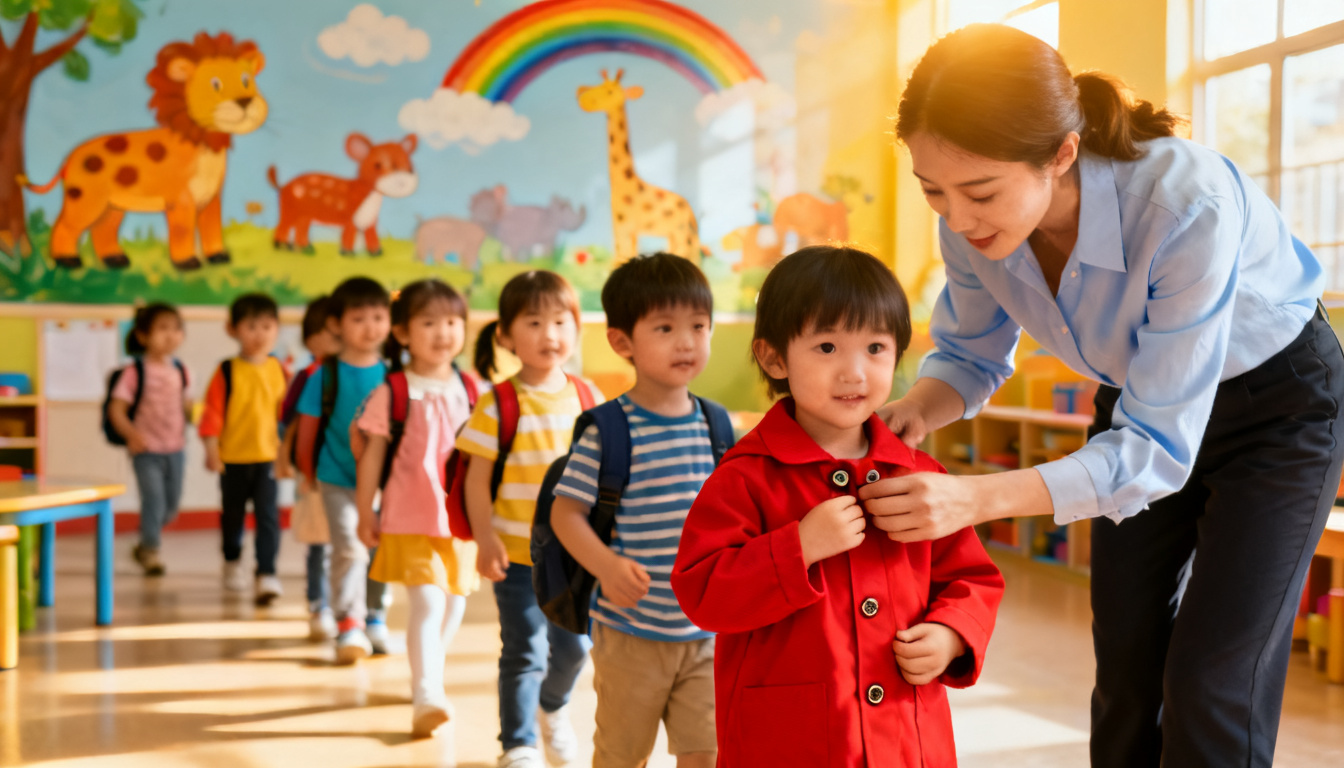
The hardest part of preschool often starts before the first day. It shows up when your child suddenly says, “I don’t want to go,” or when you’re standing in the tiny backpack aisle wondering if they need to know the alphabet, use the potty perfectly, or sit still for circle time while thinking about how to prepare for preschool. If you’re wondering how to prepare for preschool, the good news is that readiness is usually less about academics and more about building comfort, routine, and confidence.
Preschool is a big shift for children and parents. For many families, it is the first regular separation, the first classroom routine, and the first time another adult is leading a large part of the day. That can feel exciting and emotional at the same time.
How to prepare for preschool at home
The best preparation usually happens in small, ordinary moments at home. You do not need to recreate a classroom or push worksheets. Preschool teachers are generally looking for children who are beginning to manage simple routines, express basic needs, and recover from little frustrations with support.
Start with daily habits. Practice washing hands, putting on shoes, hanging up a jacket, and sitting at the table for a short snack or activity. These tasks may seem minor, but they help a child feel more independent in a classroom setting. Independence does not mean doing everything alone. It means having some familiarity with the steps.
It also helps to introduce simple transitions. If your child is used to moving from playtime to cleanup, from lunch to rest, or from outside time to coming indoors, the preschool day will feel less jarring. A few gentle phrases repeated consistently, such as “Two more minutes, then cleanup,” can make a real difference.
If your home schedule has been loose, this is a good time to tighten it just a little. Preschool mornings tend to go better when wake-up, dressing, breakfast, and leaving happen in roughly the same order each day. Children do not need a rigid household to thrive, but predictable rhythms can reduce stress for everyone.
Must Read: 10 Preschool Thanksgiving Craft Ideas for Fun at Home
Focus on emotional readiness, not just skills
Parents often worry about letters, numbers, and pencil grip. Those things can be helpful, but emotional readiness matters more in the beginning. A child who can separate with some support, follow one-step directions, and ask for help is often better positioned for a smooth start than a child who can count to 20 but melts down at every transition.
One of the most useful things you can do is help your child name feelings. Practice simple language like “I feel nervous,” “I miss Mom,” or “I need help.” Young children often act out what they cannot yet explain. Giving them words makes those feelings easier to manage.
You can also rehearse small moments of frustration. If a block tower falls or a shoe feels hard to put on, resist fixing everything immediately. Stay nearby, acknowledge the feeling, and guide them through it. Preschool includes waiting, sharing, trying again, and hearing “not yet.” These are learned skills, not character tests.
Books and pretend play can help here too. Act out dropping off at school, washing hands, sitting for a story, and saying goodbye. Keep it light and familiar. Pretend play gives children a safe way to process something new before they live it.
Social skills that make preschool easier
Children do not need to be outgoing to do well in preschool. They also do not need to be expert sharers. At this age, social development is still very much in progress. Still, a little practice with a few basics can help your child feel more comfortable.
Work on taking turns during play, even if it lasts only a minute or two. Practice hearing another adult give a direction, perhaps during a playdate, library story time, or family activity. Help your child learn a few useful phrases such as “Can I have a turn?” “I’m still using this,” and “Can you help me?”
If your child has had limited time with other children, do not panic. Preschool exists to teach many of these skills. What helps most is gentle exposure before school starts. A playground visit, a music class, or regular time with cousins can provide enough practice without making your child feel overbooked.
Some children warm up quickly in groups. Others watch from the edge before joining in. Both can be normal. The goal is not to change your child’s temperament. The goal is to help them feel safe enough to participate in their own way.
Practical skills preschool teachers appreciate
Each preschool has its own expectations, so check the handbook or ask directly. Some programs require full potty training. Others are more flexible, especially for younger threes. Some expect children to bring lunch, while others provide snacks. Knowing the details prevents a lot of avoidable stress.
In general, children benefit from practicing a few practical tasks before school begins. They should have some experience opening simple containers, using the toilet or asking for help with it, wiping hands and nose, and putting belongings in and out of a backpack. If a lunchbox, water bottle, or jacket is hard for your child to manage at home, it will likely be harder at school.
This does not mean your child must be flawless. Teachers expect to help. But a little practice builds confidence, and confidence tends to lower anxiety.
Labeling belongings is one of those unglamorous tasks that matters more than you think. Young children lose things constantly, especially in the first few weeks. Clear labels make it easier for items to return home and reduce one small layer of chaos.
Must Read: What Toy Would a Preschooler Play With? Find Out Here!
How to ease separation anxiety before the first day
For many families, the biggest challenge in how to prepare for preschool is not the classroom itself. It is the goodbye. Separation anxiety is common, even for children who are excited about school.
The first step is to talk about preschool in a calm, positive, matter-of-fact way. You do not need to oversell it or promise nonstop fun. Instead, describe what will happen. “You’ll hang up your backpack, play, have snack, listen to stories, and then I will come back.” Predictability helps children feel secure.
If the school offers an orientation, classroom visit, or meet-the-teacher event, take it. Familiar faces and spaces can lower stress on day one. If a visit is not possible, drive by the building, look at photos, and talk through the routine.
Practice short separations if your child is not used to them. Leave them with a trusted caregiver for gradually longer periods. The point is not to trick them into being fine. The point is to show them, through repeated experience, that you leave and come back.
When the first school drop-off arrives, keep your goodbye short and steady. A long, uncertain exit often makes things harder. Offer warmth, confidence, and a clear plan. “I love you. Your teacher will help you. I’ll be back after snack and story time.” Then go. It can feel tough, but consistency is reassuring.
Preparing yourself matters too
Children read our faces well. If you feel anxious, emotional, or guilty, that does not make you a bad parent. It makes you a parent. But it does help to process those feelings without handing them to your child.
Try to separate your own worry from your child’s actual readiness. Some children cry and still do very well. Some seem confident and then struggle once the novelty fades. There is no perfect first week. There is only adjustment.
It can help to plan your mornings ahead of time. Lay out clothes, pack the bag the night before, and leave more time than you think you need. Rushed mornings tend to raise everyone’s stress. A little preparation creates breathing room.
You may also need to remind yourself what preschool is for. It is not a test of your parenting. It is a place where your child will practice being part of a group, following routines, and learning from other caring adults. That growth can be wonderful, even if it starts with a few tears.
What not to worry about too much
Many parents worry their child is “behind” because they cannot write their name, know all their colors, or sit quietly for long periods. For most preschool programs, these are not deal-breakers. Young children develop unevenly. One child may speak clearly but struggle with transitions. Another may be shy but physically independent.
If your child has a speech delay, sensory sensitivity, or developmental concern, it is worth talking with the school early so supports can be discussed. Preparation should match the child in front of you, not a generic checklist. Sometimes readiness means building independence. Sometimes it means making sure the environment can meet your child where they are.
Try not to compare your child too closely with peers. Preschool readiness has a range. What matters is steady support, not racing to the starting line.
A child does not need to walk into preschool fearless, perfectly social, and fully independent. They just need enough practice, predictability, and trust to begin. If you can offer that, along with a calm goodbye and a little room for adjustment, you are already giving them a strong start. And if the first days are bumpy, that does not mean you got it wrong. It usually means your child is doing the brave work of learning something new.
Must Read: Fine Motor Activities for Preschoolers: Simple Ways to Build Little Hands
Frequently Asked Questions
1. How to prepare for preschool at home?
Start with simple routines like handwashing, dressing, and short structured activities. Practice transitions and build familiarity with daily schedules.
2. What skills should a child have before preschool?
Basic independence helps, such as following simple instructions, asking for help, and managing small tasks like eating and cleaning up.
3. How do I handle separation anxiety for preschool?
Practice short separations, keep goodbyes quick and calm, and reassure your child that you will return.
4. Does my child need to know letters and numbers before preschool?
No. Emotional readiness and routine are more important than academic skills at this stage.
5. How early should I start preparing my child for preschool?
Start a few weeks to a couple of months before the first day to build routines gradually.
6. What is the best routine before starting preschool?
Consistent wake-up, meals, and bedtime schedules help children adjust more easily to school life.
7. How can I help my shy child prepare for preschool?
Expose them to small group settings like playdates or playground visits to build confidence slowly.
8. What should I avoid when preparing for preschool?
Avoid overloading your child with academics or pressuring them to be perfect. Focus on comfort and confidence.
