
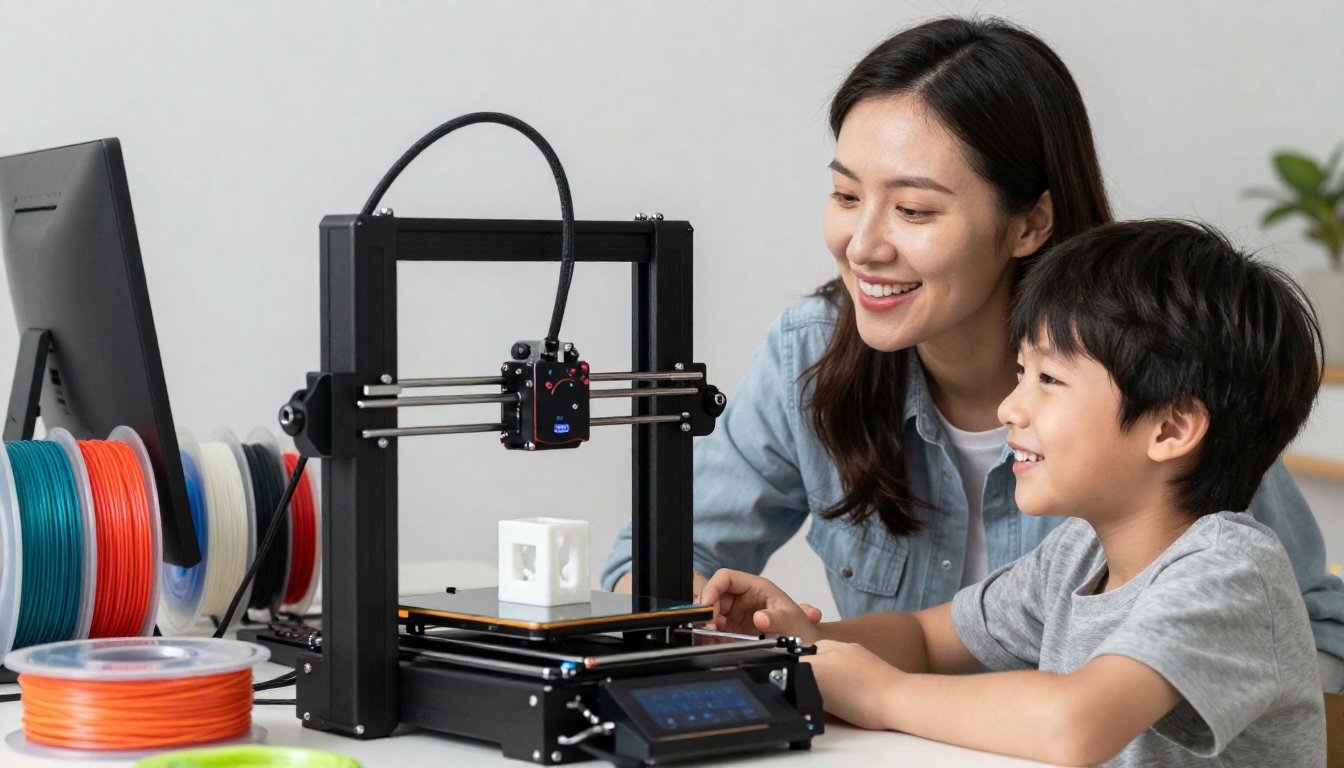
I still remember the look on my son’s face when he realized he could make his own toys with a child’s 3d printer. We were scrolling through pictures of little plastic dinosaurs, and he asked if we could buy one. I told him, “Actually, buddy, I think we can print one right here using a child’s 3d printer.”
That was the day our messy playroom turned into a mini science lab thanks to a child’s 3d printer. It wasn’t about fancy tech or expensive gadgets; it was about watching his imagination turn into something real he could hold with a child’s 3d printer. Suddenly, rainy afternoons weren’t just about screen time, but about creating, testing, and learning together.
If you’ve been hearing the buzz about 3D printing and wondering if a child’s 3d printer is right for your family, you aren’t alone. It sounds complicated, but modern models designed as a child’s 3d printer are surprisingly user-friendly and safe. Let’s explore why this tool is quickly becoming a household favorite for curious kids and busy moms.
Share your thoughts! Have you ever seen a 3D printer in action? Let us know in the comments below!
What Is a Child’s 3D Printer and How It Works
A child’s 3D printer is basically a machine that melts plastic to build objects layer by layer. Think of it like a very precise hot glue gun that moves automatically. It takes a digital design from a computer or tablet and turns it into a physical object.
Unlike the big industrial machines you might see on TV, models designed for kids are smaller and enclosed. They usually come with simple software that makes picking a design as easy as selecting a song on a playlist. You don’t need an engineering degree to get started.
The process starts with a spool of plastic string called filament. The printer pulls this string in, heats it up until it’s soft, and squeezes it out onto a flat plate. It moves back and forth, building the object from the bottom up.
Most kid-friendly printers are “plug-and-play,” meaning they work almost right out of the box. You just plug it in, load the filament, and pick a file to print. It is really that straightforward for beginners.
These machines are designed to be much quieter than standard printers. You can run one on the kitchen table while you cook dinner without it being a distraction. It fits right into normal family life.
The magic happens when the printing finishes and the nozzle moves away. Your child reaches in and pulls out a toy, a tool, or a decoration they chose themselves. It changes how they see the objects around them.
Must Read: Easy Thanksgiving Crafts for Kindergarteners to Enjoy
Benefits of Using a Child’s 3D Printer for Learning and Creativity
Having a 3D printer at home does a lot more than just create free toys. It teaches kids about problem-solving in a very hands-on way. If a print doesn’t work out, they have to figure out why and try again.
It turns passive screen time into active learning time. Instead of just playing a video game, they might design a character from that game. It bridges the gap between the digital world and the real world.
This technology creates a natural introduction to STEM (Science, Technology, Engineering, and Math). Kids learn about geometry, measurements, and physics without even realizing they are studying. They just want their robot to stand up properly.
Creativity explodes when kids realize they aren’t limited to what’s available at the store. If they want a purple dinosaur with wings, they can make one. It gives them a sense of control and ownership over their play.
It also teaches patience, which is a rare skill these days. 3D printing isn’t instant; it takes time to build layer by layer. Kids learn to wait for the reward and appreciate the process.
Finally, it builds confidence. There is a specific pride that comes from saying, “I made this.” That feeling of accomplishment spills over into their schoolwork and other hobbies.
What Age Is Appropriate for a Child’s 3D Printer
Knowing when to introduce this tech depends largely on your child’s maturity level. Generally, kids as young as 8 or 9 can grasp the basics with some help. At this age, they can pick designs and watch the machine work.
For independent use, the sweet spot is usually around 10 to 12 years old. This is when they have the motor skills to handle the filament and the patience to troubleshoot. They can also start learning simple design software.
Teenagers can handle almost standard hobbyist printers. They can get into complex coding and advanced modeling. However, a kid-specific printer is still a great, frustration-free starting point for them.
If you have younger kids, under 8, they can still enjoy the results. You can operate the machine while they watch safely from a distance. They love seeing the object appear “out of thin air.”
Safety is the biggest factor when deciding on age. Even safe printers have hot parts, so supervision is key for younger children. You know your child best and how careful they are around hot items.
Don’t feel pressured to start too early. There is plenty of time to learn tech skills. It should be fun, not a chore or a safety hazard.
Safety Features to Look for in a Child’s 3D Printer
When shopping for a child’s 3D printer, safety features are non-negotiable. The most important feature is a fully enclosed case. This prevents curious little fingers from touching the hot nozzle or moving parts.
Look for a printer with an unheated build plate if possible. While heated plates help prints stick, they can be a burn risk. Many kid-friendly models use special tape or glue instead of heat.
Auto-leveling is a feature that saves you headaches and keeps hands out of the machine. It means the printer calibrates itself, so you don’t have to fiddle with screws. This reduces the need for maintenance and contact with the hardware.
Check for “filament run-out detection.” This pauses the print if the plastic runs out, rather than letting the machine run dry. It’s a safety feature that also saves your print job.
Low-voltage power supplies are safer for household use. They reduce the risk of electrical issues. Always check the safety certifications on any electronic device you buy for kids.
Lastly, look for a printer that uses PLA filament specifically. We will discuss this more in the next section, but the material matters for air quality. A safe printer should be designed for safe materials.
Must Read: Top Rainy Day Activities for Moms and Kids to Enjoy
Best Materials (Filaments) for a Child’s 3D Printer
The fuel for your 3D printer is called filament, and not all types are created equal. For kids and home use, PLA (Polylactic Acid) is the gold standard. It is biodegradable and made from renewable resources like cornstarch.
PLA is the best choice because it doesn’t release toxic fumes when it melts. It smells a bit like sweet pancakes or maple syrup. This makes it safe to use indoors without special ventilation.
Another option is PETG, which is the same plastic used in water bottles. It is stronger than PLA but a little harder to print with. It’s a good step up once you master the basics.
Avoid ABS plastic for a child’s printer. It requires high heat and releases strong, unpleasant fumes that can be harmful. It also tends to warp if the temperature isn’t perfect.
You can find PLA in every color of the rainbow, including glitter, glow-in-the-dark, and color-changing options. This variety keeps the kids excited about their next project. Buying a sample pack of colors is a great way to start.
Always store your filament in a dry place. Moisture from the air can ruin the plastic and make your prints look messy. A simple ziplock bag with a silica packet works wonders.
Easy Project Ideas Kids Can Make With a Child’s 3D Printer
The question “What should we print?” usually comes up about five minutes after setup. A great first project is a simple whistle. It prints quickly, uses very little plastic, and actually works.
Personalized bag tags for school backpacks are always a hit. Kids can add their names or favorite symbols. It makes their gear stand out and gives them something practical to show off.
Fidget toys and spinners are incredibly popular and easy to print. There are thousands of free designs online for gears and moving parts. It saves you money on buying these trendy little gadgets.
For the budding artist, try printing cookie cutters. You can find shapes for any holiday or animal you can imagine. Then you can bake real cookies using the tools you made together.
Organization aids like pencil holders or cable clips are useful for messy desks. Kids are more likely to use an organizer they printed themselves. It helps them take pride in their own space.
Lastly, create replacement parts for board games. If you are missing a piece from Monopoly or Chess, just print a new one. It teaches kids that we can fix things rather than throwing them away.
How to Choose the Best Child’s 3D Printer for Your Family
Choosing the right printer feels overwhelming because there are so many specs to read. Start by looking for the “Mom Kid Friendly” seal of approval—essentially, ease of use. You want a machine that doesn’t require tinkering.
Look for a compact size that fits on a desk or shelf. You don’t need a massive machine taking up your whole dining table. A print area of about 4 to 6 inches is plenty for most toys.
Check the software compatibility. The best printers have their own simple apps that work on tablets or phones. You shouldn’t need a high-end gaming computer to run the slicing software.
Read reviews from other parents, not just tech experts. You want to know if it holds up to real family life. Look for mentions of customer support reliability.
Consider the noise level. Some printers play little musical chimes, while others hum loudly. A quieter machine means you can print overnight without waking the house.
Price is obviously a factor, but don’t just go for the cheapest option. Super cheap printers often require a lot of manual fixing. Spending a little more for reliability saves frustration later.
Common Mistakes Parents Make When Buying a Child’s 3D Printer
One big mistake is buying a printer that is too complex. Parents often think “more features” means “better,” but for kids, simple is superior. A professional-grade machine will likely just gather dust because it’s too hard to use.
Another error is ignoring the ongoing cost of filament. While the plastic isn’t expensive, it does add up if you print constantly. Make sure you budget for a few spools of PLA.
Many parents forget to check the assembly requirements. Some printers come as kits you have to build yourself. Unless you love engineering, stick to pre-assembled units.
Don’t assume the printer comes with everything you need. You might need simple tools like a scraper or wire cutters. Check the box contents before you gift it.
Failing to supervise the first few prints is a common pitfall. Even the best printers can jam or fail. Being there to help ensures your child doesn’t get discouraged immediately.
Lastly, don’t forget to download files ahead of time. There is nothing worse than setting up the machine and having nothing to print. Have a folder of cool “ready-to-go” files prepared.
Must Read: Best Unique Gift for 10 Year Old Boy That He’ll Actually Use
Is a Child’s 3D Printer Worth It for Your Home
Investing in a child’s 3D printer is a decision that balances cost with educational value. If your child loves building, designing, or figuring out how things work, it is absolutely worth it. It provides endless hours of creative entertainment.
Compare the cost to other gaming consoles or electronic toys. A printer offers active engagement rather than passive consumption. It encourages skills that will be relevant in the future job market.
It also creates a unique bonding opportunity for you and your child. You learn the technology together, troubleshoot together, and celebrate the successes. Those shared “aha!” moments are priceless.
However, if your child prefers running outside to sitting indoors, it might sit unused. It requires a bit of patience and interest in tinkering. Know your child’s personality before you buy.
The community around 3D printing is huge and helpful. There are endless free resources to keep the hobby fresh. It’s not a toy they will outgrow in six months.
Ultimately, it empowers kids to be creators. In a world where we buy everything, making something is a powerful lesson. That alone makes it a worthy addition to your home.
Frequently Asked Questions
What is a child’s 3d printer?
A child’s 3d printer is a kid-friendly version of a 3D printer designed with safety features, simple controls, and age-appropriate materials so children can create small objects at home.
Is a child’s 3d printer safe to use at home?
Yes, most models marketed as a child’s 3d printer include enclosed designs, low-temperature nozzles, and non-toxic filaments to make them safer for kids with adult supervision.
What age is appropriate for a child’s 3d printer?
Many child’s 3d printer models are suitable for kids ages 6 and up, though younger children can use one with close parental guidance.
What can kids make with a child’s 3d printer?
Kids can create toys, keychains, figurines, school projects, learning tools, and simple household items using a child’s 3d printer.
Do you need special software for a child’s 3d printer?
Most child’s 3d printer options come with beginner-friendly software or apps that make designing and printing easy, even for kids with no prior experience.
Is a child’s 3d printer educational?
Absolutely. A child’s 3d printer supports STEM learning by teaching problem-solving, creativity, basic engineering concepts, and patience.
Author

