
One day your toddler is stacking two blocks and wobbling across the living room. A few months later, they are running, arguing about bananas, and insisting they can do everything by themselves. That fast shift is exactly why a toddler milestone guide can be so helpful.
It gives you a clear way to notice growth without turning every week into a test. The toddler years, usually ages 1 to 3, are full of big leaps in movement, language, social skills, and independence. They are also full of uneven progress.
A child may talk early and climb later, or show strong social interest but need more time with fine motor skills. A toddler milestone guide helps you keep those changes in perspective. Milestones are useful markers, not a report card.
How to use this toddler milestone guide
Think of milestones as patterns to watch over time, not a checklist to complete by a birthday. Development rarely moves in a perfectly even line. Toddlers often practice one skill intensely while another area seems quiet for a while.
It also helps to look at the whole child. Sleep, temperament, opportunities for play, health history, and even big family changes can affect how a toddler shows new skills. If your child was born early or has had medical concerns, your pediatrician may use adjusted expectations or recommend closer follow-up.
The goal is not to compare your child to a cousin, a sibling, or the toddler at story time. The goal is to notice progress, support learning in daily life, and recognize when a delay may need more attention.
Toddler milestones by age
Around 12 to 18 months
This stage often brings a burst of physical confidence. Many toddlers are walking independently or getting very close. Some are beginning to climb onto furniture, squat to pick up toys, or push and pull objects while moving. Fine motor skills also start becoming more precise. You may see your child feed themselves with their fingers, try a spoon, point with one finger, or put objects in and out of containers.
Language at this age is often a mix of gestures, sounds, and a few recognizable words. Your toddler may understand far more than they can say. They might respond to their name, follow a simple direction like “bring me the ball,” wave goodbye, or point to ask for something.
Socially, this is a very connected age. Toddlers often check in with familiar adults, show clear preferences, and react strongly to separation. You may also notice early pretend play, like hugging a stuffed animal or holding a toy phone to their ear.
Around 18 to 24 months
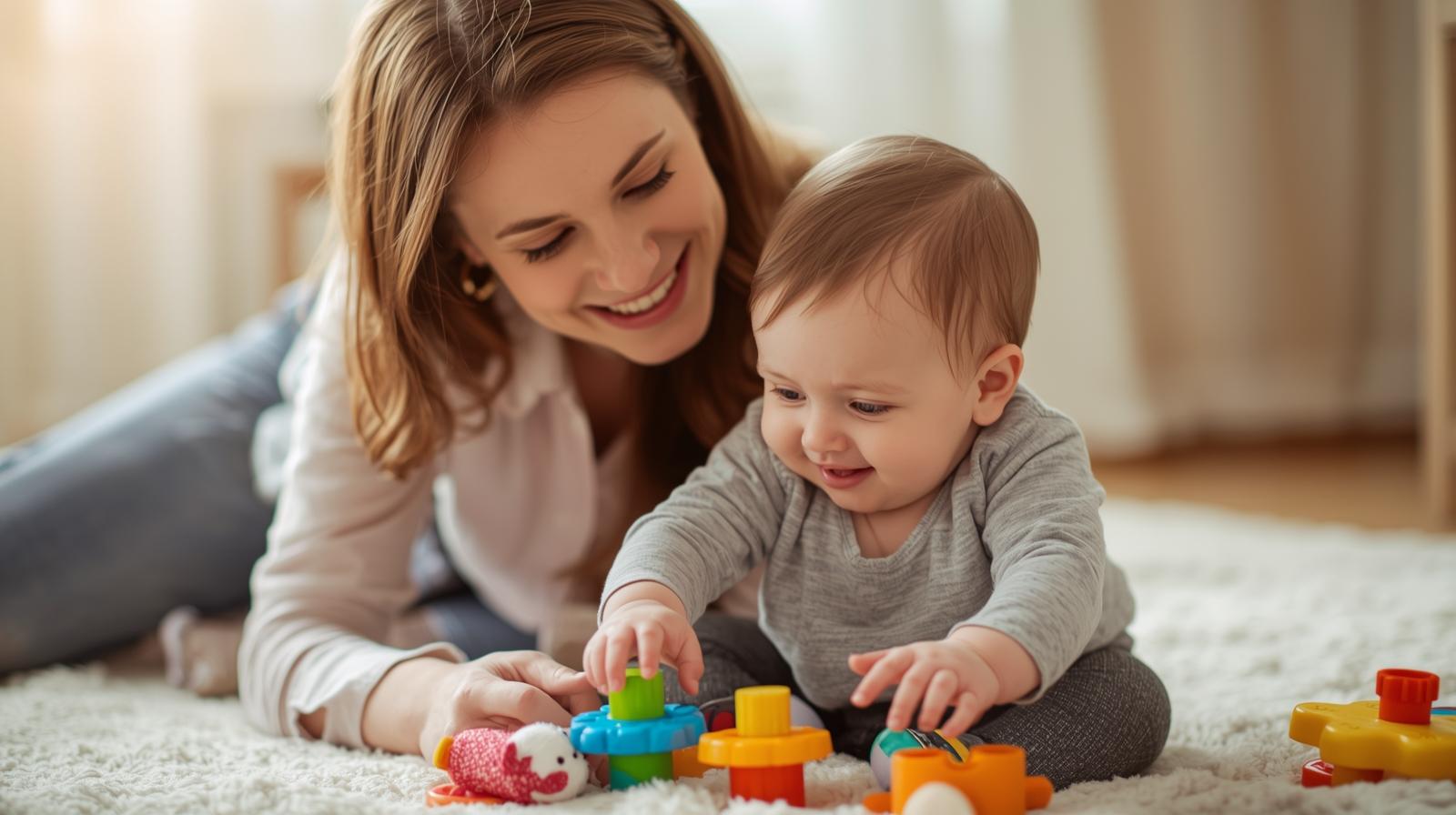
By now, many toddlers are moving with more speed and purpose. Running starts to replace careful walking. They may climb stairs with help, kick a ball, or try to jump. Hands become busier too. Scribbling, stacking several blocks, turning pages, and attempting to use utensils are common signs of progress.
Language often expands quickly during this window, although the pace varies a lot. Some toddlers use a handful of words, while others begin combining two words such as “more milk” or “mama come.” You may hear more imitation, naming familiar objects, and clearer understanding of everyday routines.
This is also a stage when emotions become more visible. Toddlers want independence but still have limited patience, words, and impulse control. That gap often shows up as frustration, protesting, or tantrums. Hard behavior does not mean development is off track. In many cases, it reflects a very typical mix of growing awareness and still-developing regulation.
Around 2 to 3 years
During the third year, toddlers usually become much more coordinated. They may run well, climb confidently, jump with both feet, start pedaling, and handle simple obstacles more easily. Fine motor growth may show up in turning doorknobs, building taller block towers, stringing large beads, or beginning to draw lines and circles.
Language often becomes easier for others to understand, though speech may still be unclear at times. Many children this age begin speaking in short phrases and simple sentences, answering basic questions, and naming familiar people, objects, and body parts. They may also enjoy songs, repetition, and favorite books read over and over.
Social development becomes more noticeable too. Some toddlers begin brief cooperative play, copy adult routines, show affection, and express strong opinions. They are also learning rules, transitions, and limits, which means you may see both sweet helpfulness and very determined resistance in the same afternoon.
Must Read: Easy Thanksgiving Crafts for Toddlers: Fun & Creative Ideas
What matters more than exact timing
Parents often worry about whether a skill appears at the “right” moment. In real life, the bigger question is whether your child is making forward progress. A toddler who is slowly gaining new words, becoming more coordinated, and engaging more with others is showing development, even if they are not early in every category.
It is also normal for toddlers to pause after a big leap. A child who just mastered walking may seem less interested in talking for a bit because so much energy is going into movement. Another child may focus intensely on language while seeming cautious physically. Uneven does not always mean concerning.
What deserves closer attention is a lack of progress, loss of previously used skills, or a pattern that affects everyday functioning. Those are worth bringing up sooner rather than later.
Daily ways to support toddler development
You do not need a complicated curriculum to help your toddler grow. Most milestone support happens in ordinary family life. Talking through routines, reading short books, singing during diaper changes, and letting your child help with simple tasks all build skills in natural ways.
Movement matters too. Toddlers benefit from safe spaces to walk, climb, squat, carry, and explore. This does not require fancy equipment. Pillows on the floor, outdoor walks, playground time, and supervised chances to practice getting on and off low furniture can all strengthen coordination.
For language, the best support is responsive conversation. Name what your child sees, pause for their response, and expand on what they say. If they say “dog,” you can answer, “Yes, a big brown dog is running.” That kind of back-and-forth is more useful than drilling flashcards.
Fine motor skills grow through play with cups, blocks, chunky crayons, simple puzzles, and snacks they can pick up independently. Social and emotional growth is supported when toddlers feel both connected and guided. Predictable routines, simple boundaries, and calm repetition help more than long explanations.
Must Read: Top Activities for 3 Year Olds to Boost Development
When to talk to your pediatrician
A toddler milestone guide should offer reassurance, but it should also make room for real concerns. Reach out to your child’s pediatrician if your toddler is not walking by 18 months, is not using gestures such as pointing or waving, has very limited interest in interaction, is not gaining language over time, or seems to lose skills they once used.
You should also speak up if hearing seems inconsistent, your child rarely responds to their name, or everyday communication feels unusually hard. Sometimes the issue is developmental. Sometimes it is hearing, vision, recurrent ear infections, or another factor that needs attention.
If your concern is brushed aside but your instincts stay active, keep asking questions. Early support can make a meaningful difference, and getting an evaluation does not mean something is “wrong.” It means you are paying attention.
Must Read: Top Learning Toys for 3 Year Olds to Boost Development
A calmer way to track progress
If milestones tend to make you anxious, try shifting from constant monitoring to simple observation. Once a month, jot down a few things your toddler is doing in movement, language, play, and daily routines. That gives you a clearer picture than checking every social media post about what another child can do.
Photos and short notes can help you notice growth you might otherwise miss. Maybe your child still is not saying many words, but they are pointing more, following directions, and engaging in pretend play. Those details matter. Development is broader than one number or one skill.
And if your toddler is intense, messy, loud, cautious, late to warm up, or determined beyond reason, that does not cancel out healthy development. Personality shows up early. Milestones tell part of the story, but your child is more than a chart.
A good toddler milestone guide should leave you feeling informed, not pressured. Watch for progress, support your child in everyday moments, and let yourself ask for help when something feels off. Parenting gets lighter when you stop chasing perfect timing and start noticing the steady, meaningful ways your child is growing.
Frequently Asked Questions
- What is a toddler milestone guide?
A toddler milestone guide is a simple way to track common developmental changes between ages 1 and 3. It helps parents notice growth in movement, language, social skills, and independence. - What age does a toddler milestone guide usually cover?
A toddler milestone guide usually covers ages 1 to 3. This stage includes major changes in walking, talking, play, and emotional development. - Do toddlers reach milestones at the same time?
No, toddlers do not all reach milestones at the same time. One child may develop language first, while another may show stronger physical skills earlier. - What are common milestones from 12 to 18 months?
Common milestones from 12 to 18 months include walking, pointing, following simple directions, using gestures, and saying a few words. Many toddlers also begin simple pretend play. - What are common milestones from 18 to 24 months?
Many toddlers at this stage start running, scribbling, stacking blocks, and using more words. Some also begin combining two words and showing stronger independence. - What are common milestones from 2 to 3 years?
Toddlers from 2 to 3 years often run better, jump, use short sentences, name familiar objects, and copy daily routines. Social skills also become easier to notice. - When should I worry about toddler milestones?
Talk to your pediatrician if your toddler is not walking by 18 months, is losing skills, has very limited language, or shows little interest in interaction. Early support can help. - How can I support my toddler’s development at home?
You can support development through reading, talking, singing, outdoor play, simple routines, and hands-on activities. Everyday moments do a lot of the work. - Are tantrums a normal part of toddler development?
Yes, tantrums are often a normal part of toddler development. Toddlers want independence, but they still have limited language and self-control. - Why is a toddler milestone guide helpful for parents?
A toddler milestone guide helps parents stay informed without turning development into a competition. It keeps the focus on progress instead of pressure.
