
The night before preschool starts can bring out a surprising mix of feelings. You might be labeling a backpack while also wondering, Is my child really ready? A good preschool readiness guide should make that question feel less stressful, not heavier. The truth is, readiness is not about having a child who can do everything alone. It is about helping them build the basic skills and confidence to handle a new routine, new adults, and a room full of other children.
For many families, preschool feels like the first big step into school life. That can create pressure to prepare perfectly, but most children do not arrive with every skill polished. Teachers expect a range of abilities. What helps most is a child who is beginning to manage simple tasks, communicate basic needs, and recover from small frustrations with support.
What preschool readiness really means
Preschool readiness is often misunderstood as academic readiness. Parents may worry about counting to 20, recognizing every letter, or writing a name neatly. Those skills can be helpful, but they are not usually the main thing teachers are looking for.
In most cases, readiness is more about the whole child. Can your child separate from you with some reassurance, even if there are tears at first? Can they follow a simple direction like put your shoes by the door? Can they sit for a short group activity, wash hands with help, and tell an adult when they need the bathroom? These are the kinds of everyday abilities that make the preschool experience smoother.
That also means readiness is not all-or-nothing. A child can be strong in language but still struggle with transitions. Another child may be shy at first but very independent with self-care. It depends on temperament, development, previous experiences, and even the classroom setup.
A preschool readiness guide to the skills that matter most
When parents ask what to work on before preschool, it helps to think in a few broad areas instead of one long checklist.
Social and emotional skills usually matter most. Preschool asks children to join a group, wait for turns, share adult attention, and cope with routines they did not choose. A child does not need to do these things perfectly. They just need early practice. Being able to hear no, handle brief waiting, and use words or gestures instead of hitting are meaningful signs of growth.
Communication is another big piece. Your child does not need advanced speech, but they should have some way to express needs. That might sound like, “Help me,” “I’m thirsty,” or “I need the potty.” If your child is still developing speech, what matters is whether they can communicate clearly enough for caregivers to understand them most of the time.
Basic self-help skills also support a smoother start. This includes washing hands, attempting to put on a coat, using utensils, opening simple snack containers, and participating in toileting routines. Independence will look different for a 2-year-old entering a preschool program than for a 4-year-old in a pre-K classroom, so age and program expectations matter.
Early learning habits matter too, but they are often simpler than parents expect. Curiosity, listening to a short story, noticing patterns, exploring crayons or scissors, and showing interest in songs or pretend play are all useful foundations. Preschool is where many academic skills begin to take shape, not where they must already be mastered.
Signs your child may be ready
A child may be ready for preschool if they can manage short separations with another trusted adult, follow one-step directions, and show interest in other children even if they do not play cooperatively for long. You may also notice they can move through a simple routine, like snack then cleanup, with reminders.
Another encouraging sign is flexibility. Preschool includes transitions all day long. If your child can stop one activity and move to the next with some support, that helps. They do not need to love transitions. Most young children do not. They just need growing tolerance for them.
Readiness can also show up as curiosity. Children who ask questions, notice details, imitate adults, or enjoy songs, books, and pretend play are already practicing the kind of engagement preschool builds on.
Signs your child may need more support first
Needing support does not mean a child cannot start preschool. It simply means preparation may need to be more intentional.
If your child has extreme difficulty separating, cannot yet communicate basic needs, or becomes overwhelmed by noise, transitions, or group settings, it may help to talk with the preschool before starting. Some children do well with a slower adjustment, a meet-the-teacher visit, or extra information about daily routines.
Toileting is another area where expectations vary. Some preschool programs require children to be fully potty trained, while others allow for more support. Knowing the policy matters because readiness for one program may look different than readiness for another.
If you have concerns about speech, sensory needs, behavior, or developmental milestones, trust that instinct. Preschool teachers can be supportive partners, but your pediatrician or an early childhood specialist may also help you decide what kind of setting will work best.
How to build readiness at home without turning it into pressure
The best preschool preparation usually happens through ordinary routines. You do not need to recreate a classroom in your living room. In fact, most children benefit more from consistent home habits than from formal drills.
Start with independence in small doses. Let your child practice putting shoes in one spot, washing hands before meals, cleaning up toys, and carrying a plate to the sink. These tasks build confidence because they show a child, I can do things for myself.
Work on following directions through everyday moments. Ask for simple steps like, “Please put the book on the couch,” or, “Get your pajamas and bring them to me.” Keep your tone calm and encouraging. Preschool teachers give directions to groups, so children benefit from hearing and acting on simple requests at home.
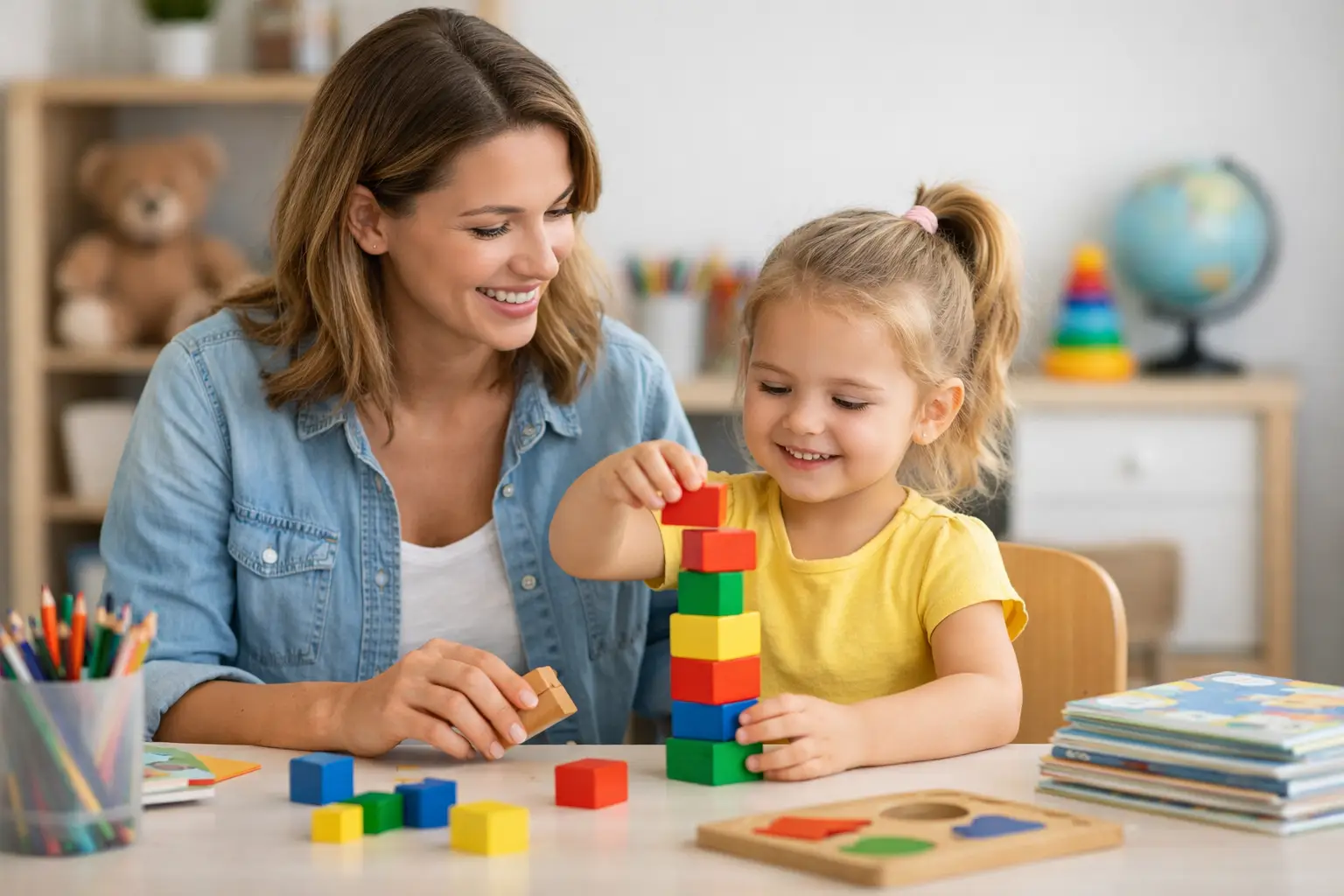
Play can do a lot of heavy lifting here. Pretend school with stuffed animals, take turns in board games, sing cleanup songs, and read books about starting school. These activities help children rehearse social expectations in a low-pressure way.
Routines matter more than many parents realize. A child who has regular mealtimes, a predictable bedtime, and some structure during the day often adjusts more easily to preschool. That does not mean your home needs to run with military precision. It just means familiar patterns help children feel secure enough to handle something new.
What not to worry about too much
Many parents quietly panic if their child cannot write their name, identify every shape, or sit still for long. Those worries are understandable, but they are not always useful.
Preschool teachers generally expect movement, short attention spans, and uneven skills. Some children enter knowing letters but struggle with peer interaction. Others have strong self-control but little interest in early academics yet. Growth in early childhood is rarely even.
It is also common for children to behave differently at school than at home. A child who seems clingy with you may adapt beautifully with a teacher. Another who is very verbal at home may become quiet at first in class. That does not necessarily mean anything is wrong. New settings bring out different sides of children.
Preparing yourself matters too
Any honest preschool readiness guide should include parents, because this transition is not only about the child. Your own feelings shape the experience more than you may think.
If you are anxious, your child may pick up on that. That does not mean you need to hide every emotion or force cheerful confidence. It does help to keep goodbyes calm, brief, and predictable. Children feel safer when adults act like school is a manageable part of the day.
Try to avoid building preschool up as either magical or scary. Instead, talk about it simply. You might say, “You’ll play, have snack, listen to stories, and I’ll come back after school.” Clear language is often more comforting than big promises.
If possible, visit the school ahead of time, meet the teacher, and learn the routine for drop-off, bathroom breaks, meals, and naps. Practical details reduce your own stress and make it easier to answer your child’s questions honestly.
At Mom Kid Friendly, we believe parents need support as much as children do during milestones like this one. Feeling emotional about preschool does not mean you are unprepared. It means this matters to you.
When readiness looks different from child to child
Two children the same age can have very different preschool experiences. One may run into the classroom on day one. Another may cry for two weeks and then settle in happily. Both can be developmentally typical.
Temperament plays a big role. A cautious child may need more time to warm up, while a highly active child may need more support with listening and transitions. Neither temperament is a problem. It just changes the kind of preparation that helps most.
This is why comparison usually creates more stress than clarity. Readiness is not about whether your child looks like someone else’s child. It is about whether they are gradually developing the tools to participate, connect, and feel safe in a group learning environment.
If you focus on connection, routines, communication, and gentle independence, you are doing meaningful preschool prep already. Your child does not need a perfect start. They need enough support to take the next step, and a parent who believes they can grow into it.
