

A toddler melts down because the blue cup is in the dishwasher. A kindergartner suddenly refuses to try something new. A 9-year-old comes home unusually quiet. These ordinary moments are part of child development, not proof that you are doing something wrong. Children grow through thousands of small interactions at home, and the steady support you offer matters more than creating a perfect routine.
What Child Development Really Includes
Child development is the ongoing way children grow in their bodies, thinking, communication, relationships, and ability to manage feelings. These areas overlap all day long. When a baby reaches for a spoon, for example, they are practicing physical coordination, curiosity, independence, and persistence at the same time.
Parents often hear about milestones and understandably wonder whether their child is on track. Milestones can be useful reference points, but they are not a report card. Children develop at different rates, and a child may move ahead quickly in one area while taking more time in another. Temperament, health, family routines, opportunities for practice, and individual personality all play a role.
The goal is not to rush a child toward the next skill. It is to notice who they are now, offer age-appropriate chances to practice, and get support when a pattern raises concern. That approach leaves room for both guidance and grace.
The Everyday Building Blocks of Child Development
Many of the experiences that support growth are already part of family life. They do not require expensive supplies, elaborate schedules, or hours of one-on-one instruction. What children need most is responsive connection paired with room to try.
Connection teaches safety and confidence
When you answer a baby’s cries, listen to a preschooler’s long story, or sit beside an older child after a hard day, you are helping build emotional security. Children who feel safe with their caregivers are more able to explore, learn, recover from disappointment, and ask for help.
Connection does not mean agreeing with every behavior. You can hold a limit while staying emotionally present: “You are really mad that screen time is over. I will not let you throw the tablet. I can sit with you while you calm down.” This teaches that feelings are acceptable, even when certain actions are not.
Small, predictable moments count. A few minutes of cuddling before bed, a silly song during cleanup, or a check-in during the ride home can become anchors in a busy week.
Play is serious learning
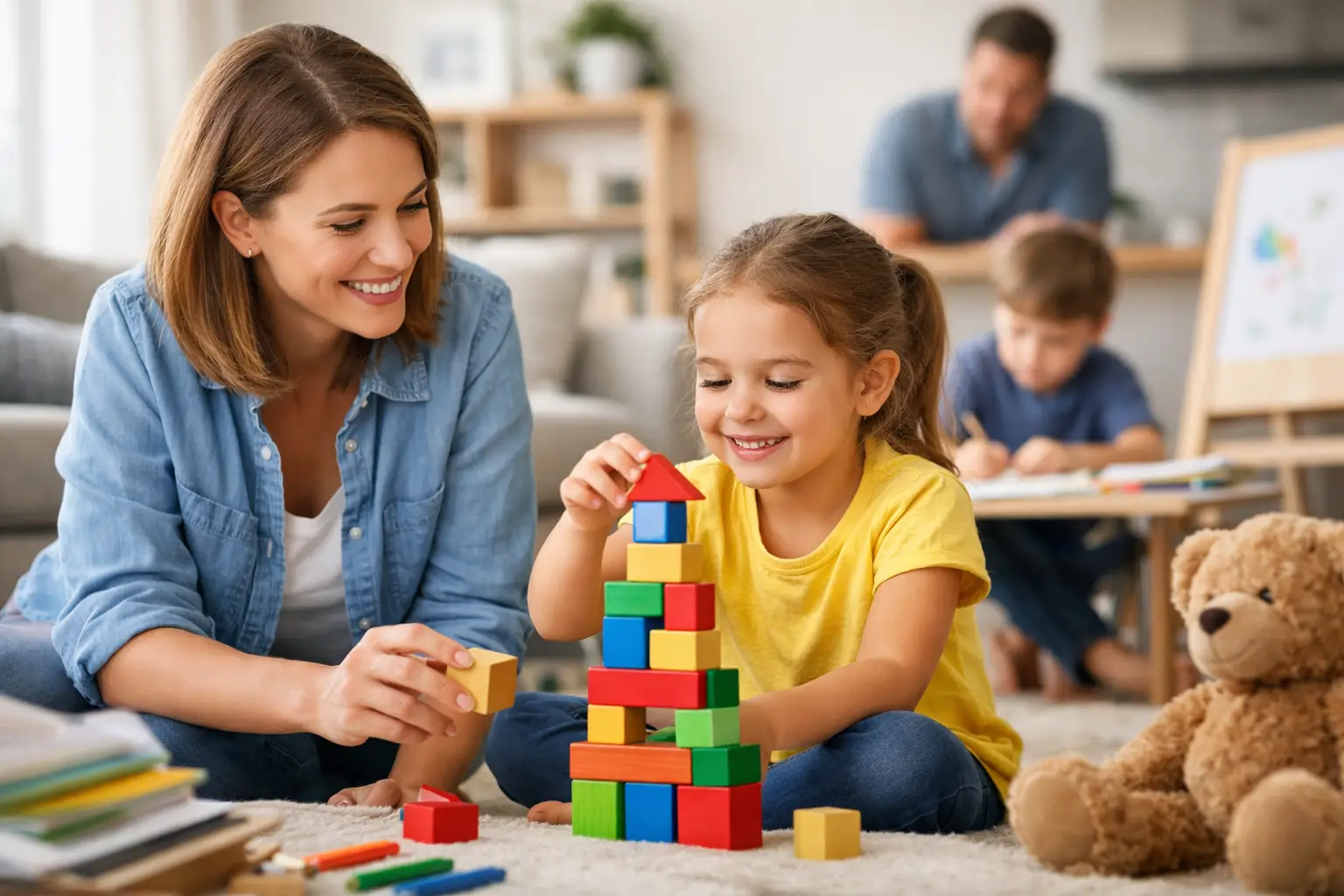
Play gives children a natural way to test ideas and build skills. A baby shaking a rattle learns cause and effect. A preschooler serving pretend soup practices language and social roles. School-age children negotiating rules for a made-up game learn flexibility, problem-solving, and cooperation.
Try to leave some play unstructured. It can be tempting to direct every activity toward a lesson or outcome, especially when time is limited. Structured activities have value, but open-ended play lets children make choices, follow interests, and work through challenges without being corrected at every turn.
Simple materials often go far: blocks, crayons, cardboard boxes, dress-up clothes, sidewalk chalk, measuring cups, and blankets for a living room fort. The best activity is usually the one your child can return to with growing independence.
Routines create room for growth
Children do better when parts of the day feel predictable. Routines reduce the number of decisions everyone has to make and give children chances to practice responsibility. A familiar morning sequence, a regular snack time, or a bedtime rhythm can lower stress before it becomes a power struggle.
Keep routines realistic for your household. A detailed color-coded schedule may help one family and overwhelm another. Start with one transition that feels difficult, such as getting out the door or winding down at night. Then use a short, repeatable sequence and a visual reminder for younger children.
For example, bedtime might be pajamas, bathroom, two books, cuddle, lights out. A child will not follow it perfectly every night, but repetition helps them know what comes next and gradually take on more of the process.
Talk, read, and listen without turning home into school
Language grows through back-and-forth interaction. Describe what your young child is doing, pause so they can respond, and add a little more to their words. If they say, “Big truck,” you might say, “Yes, that big red truck is carrying rocks.”
Reading together supports vocabulary, attention, imagination, and connection. The book matters less than the conversation around it. Point to pictures, wonder aloud, let your child turn pages, and welcome the same favorite story again. Older children benefit from this too, whether you read a chapter book together, discuss an article, or listen when they explain a topic they care about.
Supporting Growth Without Doing Everything for Them
One of the hardest parenting balances is knowing when to step in. Helping too quickly can send the message that a task is beyond a child. Waiting too long can lead to frustration that overwhelms them. The middle ground is called scaffolding: offering just enough support for the child to take the next step.
If your preschooler cannot put on a coat, hold the coat open and let them find the sleeves. If your child is upset about a difficult homework problem, ask what they have tried before supplying the answer. If a teenager is dealing with friendship conflict, listen first and help them think through options rather than immediately taking over.
This process may take more time than doing it yourself. On a rushed morning, it is completely reasonable to zip the coat and move on. Independence grows over repeated opportunities, not through perfection every day.
When Behavior Is Communication
Tantrums, whining, defiance, and withdrawal can be exhausting, but behavior often carries a message. A child may be tired, hungry, overstimulated, worried, seeking connection, or struggling with a skill they cannot yet express in words. Looking beneath the behavior does not excuse hurtful actions. It helps you respond more effectively.
Begin with the immediate need for safety and calm. Use few words when emotions are high. Once your child is regulated, you can name what happened and practice a better option: asking for a turn, using words instead of hitting, taking a break, or coming to an adult for help.
Pay attention to patterns. If meltdowns happen every afternoon, an earlier snack, a quieter transition home, or a few minutes of connection before requests may make a meaningful difference. If a behavior is intense, persistent, or affecting school, sleep, friendships, or family life, speak with your child’s pediatrician or another qualified professional. Asking early questions is a caring step, not an overreaction.
How to Notice Progress in Your Child’s Development
Progress is not always dramatic. Sometimes it looks like a child using one more word, recovering from a disappointment a little faster, trying a food they once avoided, or remembering to feed the pet without a reminder. These are real signs of growing skills.
Instead of comparing your child to siblings, classmates, or social media snapshots, compare them gently to their own recent self. You might keep a note on your phone of funny sayings, new abilities, favorite interests, and hard-won successes. This can be especially reassuring during phases when development feels uneven or behavior feels bigger than usual.
It also helps to praise effort specifically. “You kept working when that puzzle was frustrating” tells a child more than a general “Good job.” Specific encouragement helps them connect persistence, strategy, and growth.
Make Support Sustainable for the Whole Family
Children benefit from engaged caregivers, but no parent can be patient, playful, and prepared every hour of every day. Your own rest, support system, and breathing room are part of the family environment too. A simpler dinner, a shortened activity, or a request for help can protect the energy you need for the moments that matter most.
Choose one small practice to focus on this week: ten minutes of child-led play, a calmer bedtime sequence, a daily feelings check-in, or letting your child take on one new household task. Child development is built in these repeatable, imperfect moments. Your steady presence gives your child a secure place to keep trying, growing, and becoming more fully themselves.
