
Some afternoons call for more than crayons and a snack. If your child is bouncing from room to room or asking for a screen five minutes after quiet time starts, simple crafts for kindergarteners can be the reset button you need. The right craft gives little hands something meaningful to do, keeps setup manageable for you, and supports skills your child is already building in kindergarten.
At this age, kids usually want to make something that feels real, and simple crafts for kindergarteners give them exactly that opportunity. They are proud of cutting paper, squeezing glue, choosing colors, and showing off a finished project on the fridge. Crafts help children practice fine motor control, follow directions, express ideas, and build confidence without making home feel like another classroom.
Why simple crafts work so well at kindergarten age
Kindergarteners are in a sweet spot. They are more independent than preschoolers, but they still need activities that match short attention spans and developing coordination. A craft that looks easy to an adult can still feel challenging to a five-year-old if it includes too many steps, requires perfect cutting, or takes too long to dry.
That is why simpler is often better. The best projects let kids do most of the work themselves, with just a little guidance. They also leave room for imperfect results. A crooked googly eye or too much blue paint is not a problem. It is part of the process.
If your child tends to get frustrated quickly, choose crafts with quick wins. If they love sensory play, lean toward projects with paint, tissue paper, or glue. If mess is your biggest stress point, paper-based crafts are usually the easiest place to start.
Must Read: Easy Thanksgiving Crafts for Kindergarteners to Enjoy
Simple crafts for kindergarteners that are easy to set up
You do not need a dedicated craft room or a giant supply bin. Most of these ideas use materials many families already have at home.
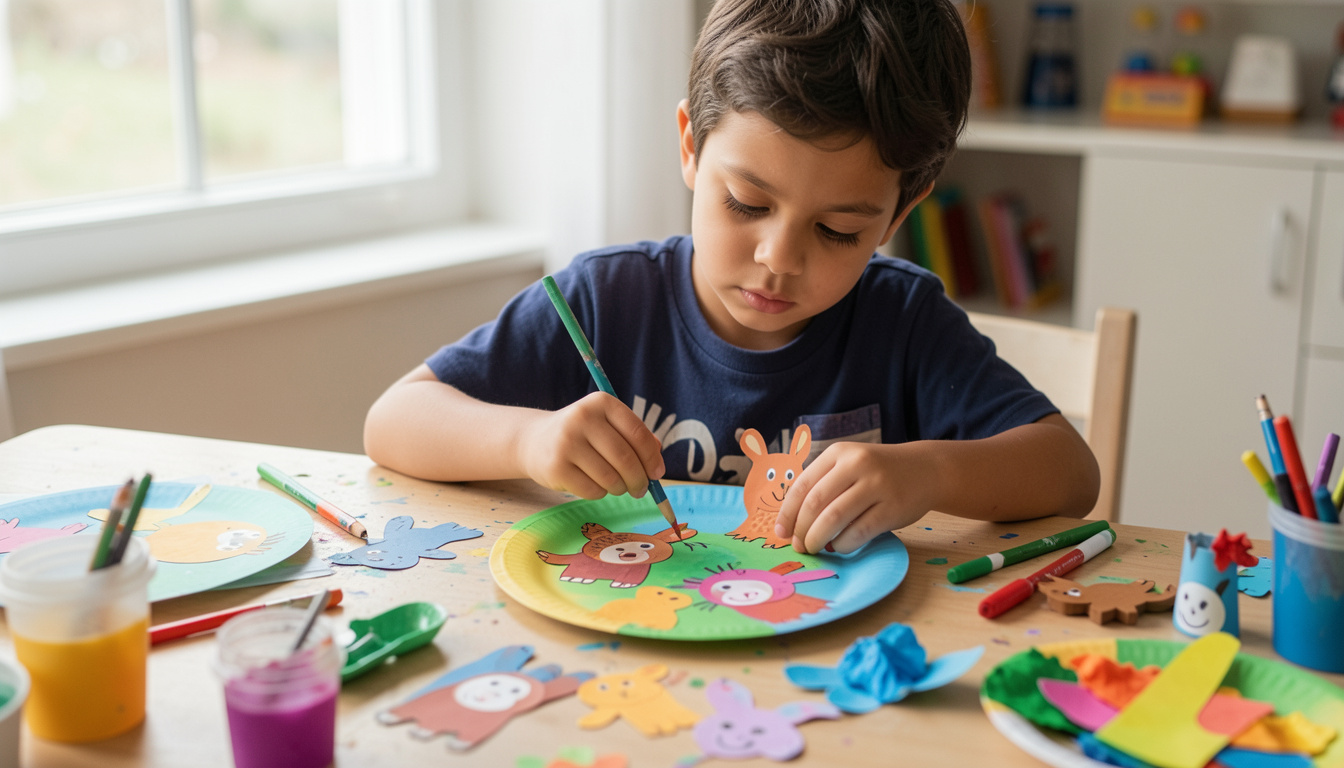
Paper plate animals
Paper plates are a parent favorite for a reason. They are sturdy, inexpensive, and easy for small hands to decorate. Turn them into lions, fish, ladybugs, or bears with crayons, paint, construction paper, and glue.
This craft works well because children can start with a large base and add simple features one at a time. If your child does not enjoy drawing faces, you can cut out ears, fins, or spots ahead of time and let them assemble everything independently.
Tissue paper rainbow
Draw a rainbow outline on white paper and tear tissue paper into small pieces. Your child can crumple and glue the pieces into each section. Tearing paper is great fine motor practice, and the finished project looks bright and cheerful even if the pieces overlap.
If your kindergartener is still learning how much glue to use, this is a forgiving option. A little extra glue usually dries clear, and there is no pressure to make it look neat.
Handprint flowers
Handprint crafts are classic because children love seeing their own hands become part of the art. Use washable paint to stamp handprints as flower petals, then add stems and leaves with markers or paper strips.
This is a nice choice for spring, Mother’s Day, or just a rainy afternoon. It also creates a keepsake without requiring a lot of effort or supplies.
Sticker shape collage
Draw a few big shapes on paper, such as circles, squares, and triangles. Give your child colored stickers to fill each shape. If you have shape stickers, even better, but regular dot stickers work too.
This feels more like play than work, yet it supports shape recognition, hand control, and concentration. It is also one of the lowest-mess crafts you can offer.
Toilet paper roll binoculars
Tape or glue two empty cardboard rolls together, then let your child decorate them with markers, paint, washi tape, or stickers. Add yarn if you want a strap for pretend play.
The real fun comes after the craft is done. Many kindergarteners will immediately use their binoculars for animal hunts, backyard adventures, or indoor scavenger games. That makes this a good option when you want an activity that keeps going past the crafting stage.
Cotton ball clouds and weather scenes
Draw a sky scene and let your child glue cotton balls on as clouds. Add a sun, raindrops, lightning, or a rainbow with crayons or paint. This simple setup works especially well if your child is interested in weather or seasons.
Because the materials are soft and easy to handle, this craft is a good fit for children who do not love scissors yet.
Pasta necklaces or bracelet strings
Dyed pasta is fun, but plain pasta works too. Let your child string pasta onto yarn or a pipe cleaner to make jewelry. This kind of craft strengthens hand-eye coordination and patience.
There is one trade-off here: it is excellent for focus, but it may not hold your child’s attention if they prefer fast-moving projects. If that sounds familiar, keep the string short and celebrate a small finished piece.
Egg carton caterpillars
Cut an egg carton into strips of three or four cups. Your child can paint the strip, add pipe cleaner antennae, and glue on googly eyes. It is simple, cute, and a good way to reuse something headed for the recycling bin.
This craft usually needs a little grown-up help with cutting the carton, but the decorating can be all theirs.
How to make craft time easier on yourself
Even fun activities can feel like too much when you are already managing dinner, cleanup, and everything else on your list. A few small habits can make craft time more realistic.
Start by keeping supplies visible and basic. You do not need twenty options. White paper, construction paper, washable markers, child-safe scissors, glue sticks, tape, paint, paper plates, and stickers can cover a lot of ground. When everything is easy to find, you are more likely to say yes.
It also helps to think in short windows. Most kindergarteners do well with crafts that take around 10 to 25 minutes, especially on weekdays. Longer projects can work on weekends, but quick completion usually leads to less frustration for everyone.
Another helpful shift is letting go of the picture-perfect outcome. Many parents feel pressure to produce something cute enough for social media or worthy of saving forever. But your child gets more out of doing the craft than from making a polished result. If they glue the tail where the ear should go and love it, that is still a successful activity.
Must Read: Easy Thanksgiving Crafts for Toddlers: Fun & Creative Ideas
What kids are really learning through simple crafts for kindergarteners
A paper collage may look small, but a lot is happening under the surface. When children squeeze glue, pick up tiny pieces, and place them intentionally, they are strengthening the muscles used later for writing. When they follow two or three directions in a row, they are practicing sequencing and attention.
There is an emotional side too. Crafts give kids a safe place to make choices. They decide which color belongs on the butterfly wing or whether the sun should wear sunglasses. Those choices build independence. Finishing a project also helps children experience effort leading to a result, which is a valuable lesson at this age.
For some children, crafting can even become a calming tool. Repetitive actions like coloring, sticking, tearing, or painting can settle busy energy after school. Not every child finds crafts relaxing, and that is okay. Some prefer movement or building activities instead. But for many kindergarteners, a simple project can create a gentle transition between the school day and home life.
A few signs a craft is the right fit
If you are not sure whether a project matches your child’s stage, watch for three things. First, they can participate more than they have to wait. Second, the steps are easy enough that they feel capable. Third, the process is enjoyable even if the result is messy.
That last one matters most. Kindergarten crafts should feel playful, not performative. If your child spends the whole time asking you to fix it, the craft may be too advanced or too tightly structured. A better choice is usually one with open-ended materials and a simple goal.
At Mom Kid Friendly, we know parents are often looking for activities that fit real life, not ideal conditions. That is why the best crafts are usually the ones you can pull together with ordinary supplies, a little flexibility, and a willingness to let your child lead.
When the day feels long and your child needs something hands-on, you do not need a perfect plan. One sheet of paper, a glue stick, and a few minutes at the kitchen table can be enough to turn the mood around and give both of you a small win.
Must Read: Fun Thanksgiving Activities for Kids: Crafts, Games & More
Frequently Asked Questions
What are the best simple crafts for kindergarteners using household items?
Paper plate animals, tissue paper rainbows, and toilet paper roll binoculars are excellent options because they use common supplies already found at home.
How long should kindergarten craft activities last?
Most children in kindergarten enjoy crafts lasting between 10 and 25 minutes. Shorter projects help prevent frustration and keep attention focused.
What skills do children develop through crafts?
Crafts improve fine motor skills, focus, sequencing, creativity, and independence. They also strengthen the hand muscles needed for writing.
Which crafts work best for children who dislike scissors?
Cotton ball weather scenes, sticker collages, and tissue paper rainbows are excellent alternatives because they require little or no cutting.
How can parents make craft time less stressful?
Keeping supplies simple, choosing shorter activities, and letting children focus on creativity instead of perfection can make craft time much easier.
Can crafts help children relax after school?
Yes. Many children find repetitive activities like painting, tearing paper, or coloring calming after a busy school day.
