

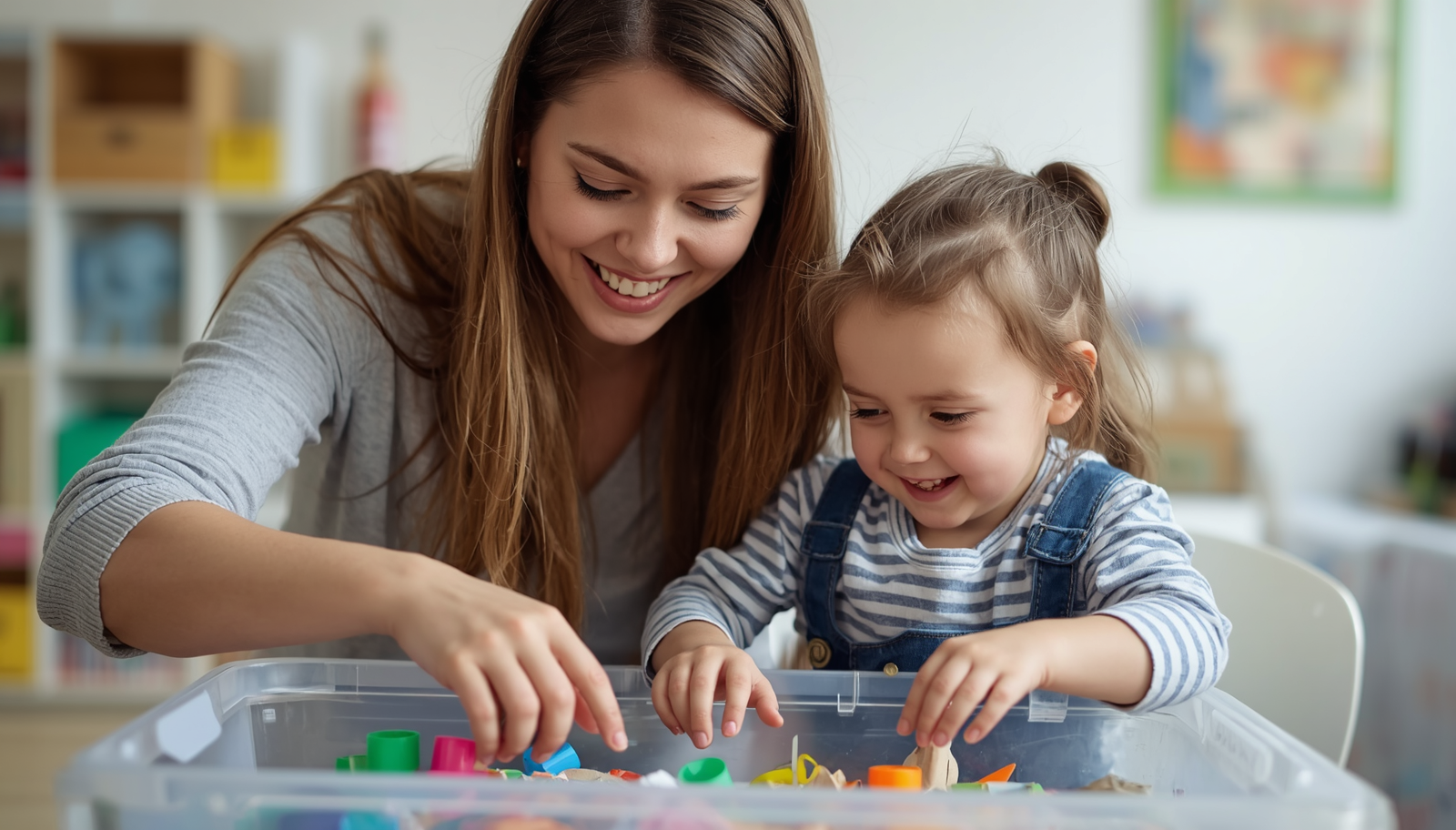
If your child has ever spent 20 happy minutes scooping rice, squishing play dough, or pouring water between cups, you have already seen sensory play at work. When parents ask, “what are sensory activities,” the simplest answer is this: they are hands-on experiences that help children explore the world through their senses while building important developmental skills. These simple moments can help kids learn while they play.
Sensory activities can look wonderfully ordinary. A baby rubbing a crinkly cloth, a toddler stomping in a puddle, or a preschooler finger-painting at the kitchen table all count. If you have ever wondered “what are sensory activities,” they are the everyday play moments that invite a child to notice texture, sound, movement, smell, sight, and sometimes taste in a safe, playful way.
What are sensory activities, exactly?
Sensory activities are play experiences designed to engage one or more of the senses. Most parents think first of touch, and that is a big part of it. But sensory play also includes visual input, sounds, smells, body movement, and balance.
In child development, the senses go beyond the basic five we all learned in school. Children also rely on proprioception, which helps them understand where their body is in space, and vestibular input, which relates to balance and movement. That is why jumping on a cushion, crawling through a tunnel, or spinning slowly can also be sensory activities.
This matters because young children learn best by doing. Before they can explain an idea with words, they often need to feel it, move it, hear it, or see it happen. Sensory play gives them that chance.
Must Read: 15 Sensory Bin Ideas That Actually Keep Kids Busy
Why sensory activities matter for child development
Sensory play is not just a way to keep kids busy for a few minutes while you unload the dishwasher. It supports early learning in ways that are both simple and far-reaching.
For many children, sensory activities help with focus and emotional regulation. Repetitive actions like pouring, scooping, squeezing, or stirring can feel calming. That is one reason sensory bins and tactile play often work well during fussy parts of the day.
They also strengthen fine motor skills. Picking up small objects, pinching dough, spraying water, and using tongs all help build hand strength and coordination. Those same skills support later tasks like writing, buttoning, and using utensils.
Sensory experiences support language too. When you describe what your child is feeling or seeing – soft, cold, sticky, smooth, loud, bright – you are helping build vocabulary in a very natural way. Children also practice problem-solving when they test what sinks, what sticks, what pours faster, or how to build something that will not fall.
There is also a social side. Shared sensory play can encourage turn-taking, cooperation, and conversation. For some children, especially those who are slower to warm up, sensory activities offer an easier entry point than more structured play.
What are sensory activities for different ages?
The best sensory activities depend on your child’s age, temperament, and developmental stage. A busy toddler and a cautious kindergartener may both enjoy sensory play, but they may need very different setups.
Must Read: Sensory Toys for Toddlers That Keep Them Engaged
Babies
For babies, sensory play is usually gentle and simple. Think soft fabrics, tummy time on different surfaces, rattles, safe mirrors, water splashing during bath time, or crinkly books. At this stage, the goal is exploration, not a finished activity.
Babies need close supervision, and anything used should be safe for mouthing. Strong scents, tiny objects, and anything messy enough to become a choking risk are not a good fit.
Toddlers
Toddlers often love sensory activities because they can repeat the same action again and again. Pouring dry oats, scooping water, squishing foam, finger-painting, or digging in kinetic sand can feel almost magical to them.
This is also the age when mess tolerance becomes part of the equation. Some toddlers want to climb right into the sensory bin. Others hate sticky hands and would rather use a spoon. Both responses are normal.
Preschoolers and early elementary kids
Older children are often ready for more themed sensory play and simple challenges. They might enjoy sorting pom-poms by color, hiding letters in rice, making slime, building with shaving cream, or creating a pretend car wash for toy animals.
At this age, sensory activities can easily blend with early academics. Counting scoops, tracing letters in salt, and comparing textures are all playful ways to support learning without making it feel like a lesson.
Common types of sensory activities at home
You do not need a dedicated playroom or a social-media-worthy setup. Most sensory play can happen with everyday items you already have.
Tactile activities are the most familiar. These include water play, dry bins filled with rice or beans, play dough, finger paint, mud, foam, and sand. They help children explore texture, pressure, and temperature.
Movement-based sensory play is just as useful. Jumping, rolling, swinging, carrying laundry baskets, pillow crashes, and animal walks all give kids body awareness and movement input. These are especially helpful for children who seem to seek constant motion.
Visual and auditory sensory activities can be simpler than parents expect. Flashlights in a dark room, shadow play, listening walks, musical instruments, or watching bubbles float through the air all count.
Smell and taste can also be part of sensory play, especially in the kitchen. Baking, smelling spices, washing fruit, stirring yogurt, or helping tear herbs can engage multiple senses at once.
Must Read: Sensory Bins for Toddlers That Keep Little Hands Busy At Home
Sensory play is helpful, but it is not one-size-fits-all
This is where many parents need reassurance. A child does not have to love every sensory activity. In fact, many do not.
Some children crave strong sensory input. They seek noise, movement, crashing, and messy textures. Others are more sensitive and may avoid sticky, loud, or unpredictable experiences. Neither response is wrong.
If your child resists a sensory activity, it does not mean you are doing it badly. It may just mean the setup is not a good match. A child who hates finger paint may enjoy brushing water on a fence outside. A child who avoids loud music may love scooping dried pasta in a quiet bin.
It also helps to think about timing. A sensory activity that feels fun after a nap may feel overwhelming right before dinner. Energy level, hunger, and environment all matter.
How to make sensory activities easier for parents
The biggest barrier is usually not a lack of ideas. It is the fear of more mess, more setup, and one more thing to manage.
Start small. Put a towel under a water bin. Offer one scoop and one container. Use a baking sheet for a contained activity like shaving cream or salt tracing. Ten minutes of simple play is enough.
Choose activities based on your own capacity too. If you are stretched thin, dry sensory play may feel easier than paint. If outdoor cleanup is less stressful for you, save messier options for the backyard. Good sensory play does not have to be elaborate to be effective.
It also helps to build a few sensory options into your weekly routine. A bath with cups and strainers, a nature walk with leaf collecting, or a quick play dough session after school can become reliable tools when your child needs help settling or reconnecting.
Safety tips worth keeping in mind
Sensory activities work best when they are closely supervised and matched to your child’s age. Small items can be choking hazards, and some materials are not safe for mouthing. If you are using food items, consider allergies and whether it makes sense for your family.
Cleanliness matters too, especially with shared materials or anything used by babies and toddlers. Water play should be emptied right away, and homemade sensory materials should be checked often for freshness.
If your child has developmental differences, sensory processing challenges, or very strong reactions to certain inputs, it may help to observe patterns and adjust slowly. You do not need to force a child into sensory play for it to be beneficial.
A simple way to think about what sensory activities are
If you are still wondering what are sensory activities in everyday parenting terms, think of them as experiences that help children learn through their bodies. They are often playful, sometimes messy, and usually more beneficial than they first appear.
They can calm a hard afternoon, spark curiosity, support development, and create little moments of connection that feel manageable in real family life. And that is often enough. You do not need to plan a perfect activity. You just need to offer your child a chance to explore, with a little space, a little patience, and the reminder that simple things often do the most good.
Frequently Asked Questions
What are sensory activities?
Sensory activities are hands-on play experiences that help children explore touch, sound, sight, smell, taste, movement, and balance.
Why are sensory activities important for kids?
Sensory activities support focus, emotional regulation, fine motor skills, language development, problem-solving, and social skills.
What are examples of sensory activities?
Examples include water play, play dough, rice bins, finger painting, bubble play, nature walks, shaving cream play, and sorting pom-poms.
What are sensory activities for toddlers?
Sensory activities for toddlers include pouring water, scooping oats, squishing foam, digging in sand, playing with dough, and finger-painting.
Are sensory activities safe for babies?
Yes, sensory activities can be safe for babies when parents use age-appropriate materials and supervise closely.
Do sensory activities have to be messy?
No, sensory activities do not have to be messy. Flashlight play, listening walks, bubbles, soft fabrics, and crinkly books also count.
How do sensory activities help child development?
They help children learn through their senses while building coordination, language, focus, curiosity, and body awareness.
Can sensory activities calm children?
Yes, repetitive actions like scooping, pouring, squeezing, and stirring can help many children feel calmer and more settled.
