
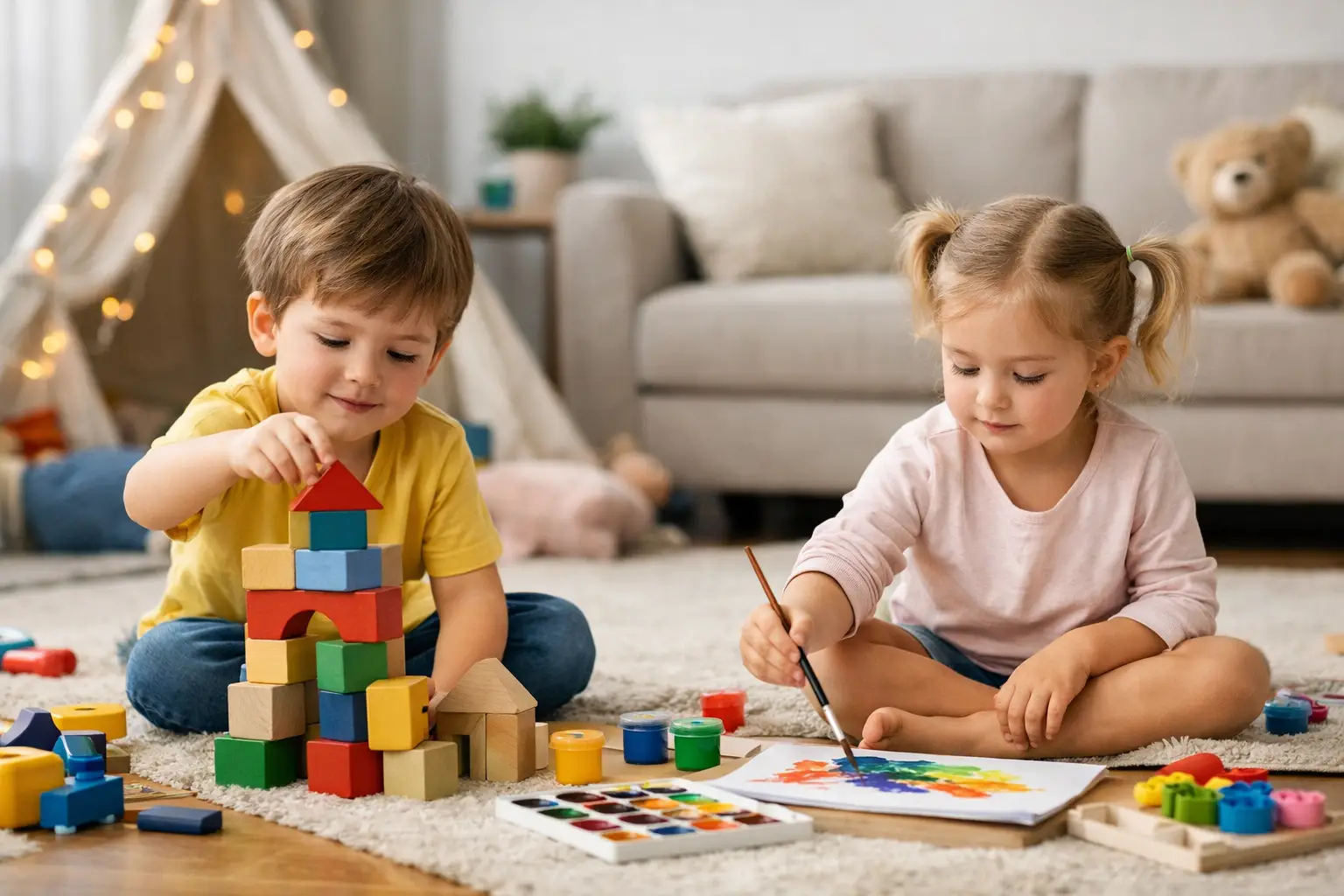
Rainy afternoons can feel very long when your preschooler has energy to spare and your to-do list is already full. The best indoor activities for preschoolers are not the ones that look perfect on social media. They are the ones that hold your child’s attention, fit your real home, and give you a little breathing room while still supporting play, movement, and learning.
At this age, children learn through repetition, sensory experiences, pretend play, and simple challenges they can actually finish. That means you do not need a complicated setup or a closet full of supplies. A few basic materials, a little flexibility, and the right kind of activity can turn a restless morning into something much more manageable.
What makes indoor activities for preschoolers actually work?
Preschoolers usually do best with activities that have a clear start, simple rules, and room for independence. If something is too open-ended, some kids lose interest quickly. If it is too structured, they may resist before you even begin. The sweet spot is an activity that feels playful but still gives them something specific to do.
It also helps to rotate between different kinds of play. A child who has been sitting for ten minutes may need to jump, crawl, or carry something heavy. A child who is overstimulated may need a quieter sensory bin, coloring station, or puzzle. This is where many parents get stuck – not because they lack ideas, but because the timing matters.
Rather than planning a full day of entertainment, think in short blocks. Ten to twenty minutes is often enough for one activity before you switch gears. That rhythm tends to work better than trying to force one great idea to last all morning.
Easy indoor activities for preschoolers using what you already have
A simple obstacle course is one of the most reliable ways to reset the mood in the house. Use couch cushions for stepping stones, painter’s tape for balance lines, and chairs for tunnels or weaving paths. Preschoolers love being told exactly how to move – hop to the rug, crawl under the table, tiptoe to the door. It gives them physical input and a sense of accomplishment without needing much from you once it is set up.
A scavenger hunt works well when your child wants direction but not stillness. You can ask them to find something soft, something red, something round, or something that starts with a certain letter if they are ready for that. Younger preschoolers enjoy picture-based hunts more than verbal ones, while older preschoolers may like a tiny challenge built in.
Water play at the sink can buy surprising amounts of time, especially for children who enjoy pouring and scooping. A few cups, spoons, plastic animals, or washable toys are enough. The trade-off is obvious – you may need a towel on the floor and close supervision – but for many families, a little cleanup is worth the calm focus it creates.
Masking tape roads on the floor can turn toy cars, animals, or even doll figures into a whole play world. You can add parking spots, a car wash, bridges, or a pretend town. This kind of setup is especially helpful when your child likes independent play but needs a starting idea.
Creative play that builds skills without feeling like a lesson
Art activities are often most successful when they are slightly contained. Instead of setting out every supply you own, try one invitation at a time: dot markers on paper, sticker collages, crayons with stencils, or painting with cotton balls clipped in clothespins. Preschoolers usually engage longer when the activity is simple enough to begin immediately.
Playdough is another strong option because it supports fine motor development, pretend play, and sensory regulation all at once. You can offer cookie cutters, plastic utensils, beads, or small toy animals. Some children want to make pretend food, while others just enjoy rolling, squishing, and poking. Both are useful forms of play.
If your child enjoys building, try recycled materials instead of standard crafts. Paper towel tubes, tissue boxes, egg cartons, and tape can become towers, robots, or animal homes. This kind of activity works best if you stay flexible. Your child may not build what you imagined, and that is fine. The value is in planning, testing, and creating.
Story basket play is another gentle way to support language. Put together a few related items – maybe a stuffed bear, a small blanket, a plastic cup, and a toy spoon – and invite your child to tell a story or act one out. You do not need to teach during this. Just follow their lead and respond with interest.
Movement games for high-energy days
Some days call for more than coloring and blocks. If your preschooler is crashing into furniture, arguing over everything, or bouncing from room to room, they probably need movement before they can focus on anything else.
A dance break is simple, but it helps to make it interactive. Freeze dance is usually more engaging than just playing music, and animal dance adds another layer of fun. Ask your child to stomp like an elephant, hop like a frog, or stretch like a cat. It gives them both gross motor practice and an easy way to release tension.
Balloon play is a favorite because it feels active without being too wild for indoor spaces. Try keeping the balloon off the floor, batting it back and forth, or assigning actions like clap before you tap it. If balloons are not a good fit for your family, a soft ball or scarf can create a similar effect.
Painters tape can also turn the floor into a game board. Make lines to jump over, squares to hop into, or shapes to match with objects from around the room. This works especially well for children who like clear visual cues and quick success.
For a quieter kind of movement, try a “heavy work” helper game. Have your child carry laundry to a basket, push a bin of toys across the floor, wipe the table, or move couch pillows into a stack. These tasks do not just help you get something done. They also give preschoolers the body-based input that can make them feel more settled.
Quiet-time activities when everyone needs a softer pace
Not every indoor activity has to be exciting. Sometimes what your home needs most is a calm reset.
Puzzles, simple matching games, and board books still matter at this age, especially when used intentionally. If your child is wound up, sitting close and doing a short puzzle together can feel grounding. If they are tired but resisting rest, looking at books in a cozy corner may be the right bridge.
Sensory bins can also be soothing, depending on the child. Dry rice, oats, pom-poms, or kinetic sand with scoops and containers often hold attention well. The main question is whether your child plays appropriately with sensory materials or tends to scatter them immediately. Some children thrive with sensory play at the kitchen table, while others need a simpler setup.
Audiobooks and read-aloud time are worth including too. Many preschoolers will color, build with blocks, or cuddle with stuffed animals while listening. It is a quiet activity that still supports vocabulary, listening skills, and imagination.
If you need a few minutes to handle dinner, answer an email, or just regroup, create a small quiet-time basket with familiar items your child only sees during that part of the day. Rotating books, reusable sticker pads, lacing cards, and magnetic tiles can make quiet play feel special without needing to buy something new every week.
How to make activities easier on you
The biggest mistake most parents make is thinking the activity has to be impressive to be worthwhile. It does not. Preschoolers often return to the same simple play ideas because repetition feels good and helps them build confidence.
It also helps to prepare for transitions, not just the activity itself. Tell your child what is coming next before one activity ends. Use clear language like, “After the puzzle, we’re going to clean up and have a snack.” That small step can prevent meltdowns better than the most creative setup.
You may also notice that some activities look great on paper but do not suit your child’s temperament. That is normal. One preschooler will happily sort pom-poms by color for fifteen minutes, while another wants to turn the bin upside down and race around the room. The goal is not to make every idea work. The goal is to notice what helps your child feel engaged, calm, and capable.
If you want a manageable rhythm, keep a short mental list: one movement activity, one sensory activity, one creative activity, and one quiet activity. That is usually enough variety for a long morning or an afternoon indoors. Family-centered resources like Mom Kid Friendly often work best when they help you simplify, not when they give you fifty ideas you never have time to try.
A good indoor day with a preschooler does not have to look productive from the outside. If your child laughed, moved their body, used their imagination, and made it through the day with a little more connection and a little less chaos, that counts for a lot.
