

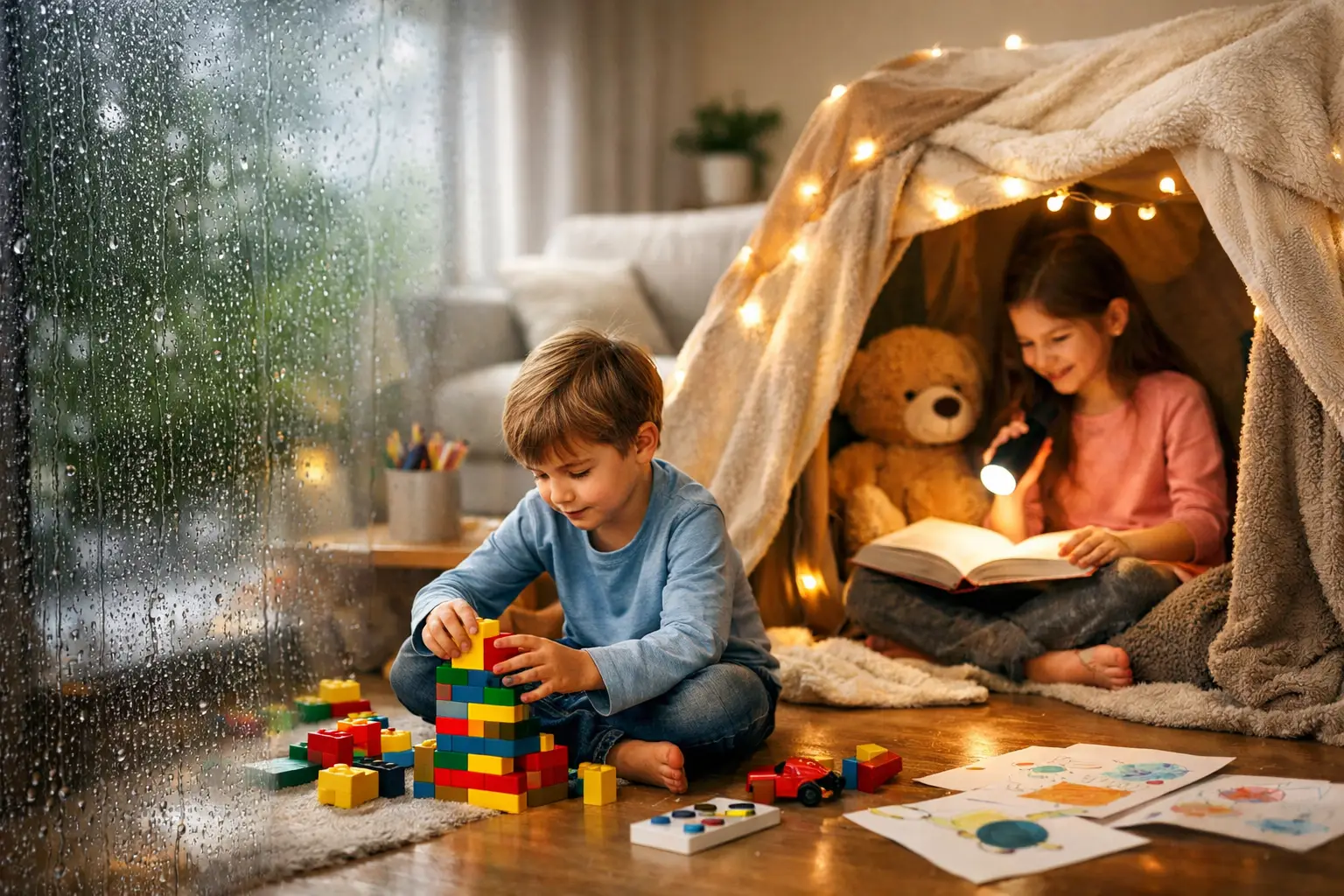
When the rain starts before breakfast and the energy in your house is already climbing, having a plan helps. The best rainy day activities for kids do not need to be expensive, complicated, or Pinterest-perfect. They just need to meet your child where they are, buy you a little breathing room, and turn a long indoor day into something more manageable.
Some kids need to move. Some want to build, create, or pretend. Others get cranky fast if the day feels too unstructured. That is why a good rainy-day plan works best when it mixes active play, quiet focus, and simple connection. You are not trying to fill every minute with magic. You are trying to create a rhythm that helps everyone get through the day a little more peacefully.
How to choose rainy day activities for kids
A helpful place to start is with your child’s energy level, not the craft bin. If your child is bouncing off the couch, a seated activity may fail before it begins. If they are tired or overstimulated, a loud game might make the afternoon harder.
It also helps to think in blocks. Many parents do better with a loose sequence rather than one big idea. Start with movement, shift to hands-on play, then save a quieter activity for later. That simple pattern often prevents the mid-afternoon spiral when everyone is tired of being inside.
Age matters too, but interest matters more. Preschoolers may love sensory play or pretend setups. Early elementary kids often enjoy challenges, scavenger hunts, and art projects with a purpose. Older kids may resist anything that feels too babyish, but they usually respond better when they have some control over the activity.
Easy indoor activities that actually hold attention
Build an obstacle course
If your child needs to burn energy, this is often the fastest win. Use couch cushions, painter’s tape lines, tunnels made from chairs and blankets, and simple instructions like hop, crawl, spin, and balance. You do not need a large house. Even a hallway can work.
What makes this one especially useful is that it can grow with your child. Younger kids can follow a simple path. Older kids can design the course themselves, time each other, or add challenge cards. When children help build it, they usually stay engaged longer.
Set up a themed scavenger hunt
A scavenger hunt gives restless kids a clear mission. You can keep it basic with color clues or make it more creative with categories like something soft, something round, or something that starts with B.
For kids who are learning to read, picture clues are easier. For older children, riddles make it more interesting. This kind of activity works especially well when siblings are getting on each other’s nerves because it redirects them toward a shared goal.
Try a kitchen science activity
Rainy days are a good time for simple experiments that feel like play. Baking soda and vinegar reactions, sink-or-float testing, or making a homemade rainbow with cups of colored water can all hold attention surprisingly well.
The trade-off is cleanup. If you are already stretched thin, choose one contained experiment instead of three messy ones. Kids usually remember the experience itself, not how elaborate it was.
Create an art station with one clear prompt
Open-ended crafts can be wonderful, but they can also overwhelm kids who do better with direction. Instead of putting out every supply you own, try one prompt such as draw your dream playground, make a paper pet, or build a city from recycled boxes.
A little structure often leads to more independence. You can still keep it creative, but the prompt gives kids a place to start, which matters on long afternoons when boredom turns quickly into frustration.
Rainy day activities for kids that support connection
Make a living room fort and read inside
This classic works for a reason. A fort changes the mood of the day without requiring much. A few blankets, pillows, and flashlights can turn ordinary reading time into something children remember.
For younger kids, bring in picture books and stuffed animals. For older kids, try chapter books, joke books, or even audiobooks if reading feels like a fight that day. The point is not perfection. It is creating a cozy reset.
Cook or bake something simple together
Kids love meaningful jobs, and the kitchen offers plenty of them. Stirring batter, measuring ingredients, washing produce, or assembling mini pizzas can all help a rainy day feel more grounded.
This activity pulls double duty because it fills time and solves the snack question. If your child is impatient, choose something with quick payoff, like muffins, quesadillas, or trail mix. If they enjoy process, homemade dough or decorated cookies may buy more time.
Start a family puzzle or floor game
Not every rainy day activity needs to be exciting. Sometimes the most helpful option is one that slows the house down. Puzzles, memory games, dominoes, and card games give kids a way to focus without screens while still feeling together.
If siblings are far apart in age, choose cooperative games when possible. Competitive games can be fun, but they can also backfire when everyone is stuck indoors and already a little worn down.
Put on music and have a dance break
A five-minute dance break can shift the energy of the whole house. It works well between quieter activities or right before the time of day when your kids usually start to unravel.
You do not need a full party setup. Just pick a few songs and move. Freeze dance, copycat dancing, or taking turns choosing songs makes it more interactive and often prevents the couch-jumping that happens when kids have energy but no outlet.
Quiet rainy day ideas for slower moments
Create an independent invitation to play
This sounds fancy, but it can be very simple. Put out blocks with toy animals, magnetic tiles with cars, or play dough with cookie cutters and let the setup do the work. Children often engage longer when materials are presented with some intention instead of pulled out in the middle of chaos.
This is especially helpful for younger kids who still need your presence but not your full participation. A small setup at the kitchen table can buy you enough time to answer emails, fold laundry, or just drink your coffee while it is still warm.
Try sticker books, coloring, or water painting
Quiet activities matter because not every hour indoors can be high energy. Coloring books, reusable sticker scenes, tracing pages, and water-reveal painting can help children regulate after active play.
These options are also useful when you need something low-mess and low-prep. If your child tends to rush through them, add a little challenge such as color only with cool colors or create a story to go with the picture.
Make a story basket
Fill a basket with a few books, puppets, stuffed animals, and blank paper. Invite your child to retell a favorite story or make up their own. This supports language development, imagination, and emotional expression, all without feeling like a lesson.
For older kids, comic strips or homemade mini books can be a better fit. Some children who resist traditional writing will happily create characters and dialogue when the format feels playful.
When screens are the right call
Sometimes parents feel pressure to make rainy days endlessly creative. Real life is different. If you are sick, working from home, caring for a baby, or simply running on empty, a screen-based break may be the most supportive choice for everyone.
The goal is to use screens intentionally rather than as the only plan. A movie afternoon with blankets and popcorn can feel cozy and restorative. An educational app or movement video can fill a specific need. It depends on your child, your day, and what the rest of the household requires.
If you want to avoid the post-screen crash, it helps to have a next step ready. A snack, a puzzle, or free play after screen time creates a smoother transition than ending the show and hoping for the best.
A simple rainy day rhythm that works
If the day feels long, do not think in terms of entertainment. Think in terms of pacing. One active activity, one focused activity, one quiet reset, and one point of connection is usually enough. You can repeat that pattern in a loose way without planning every detail.
This is where many families find relief. Instead of trying to be “on” all day, you are creating a structure your child can move through. That predictability often reduces whining and helps kids settle into play more easily.
At Mom Kid Friendly, we believe the best family routines are the ones you can actually use on ordinary days, including the rainy, restless ones. A blanket fort, a mixing bowl, a roll of tape, and twenty minutes of attention can go a long way.
Some rainy days will still feel messy, loud, and longer than expected. That does not mean you are doing it wrong. It usually means your kids are home, your house is being lived in, and you are finding small ways to make the day feel a little softer.
