
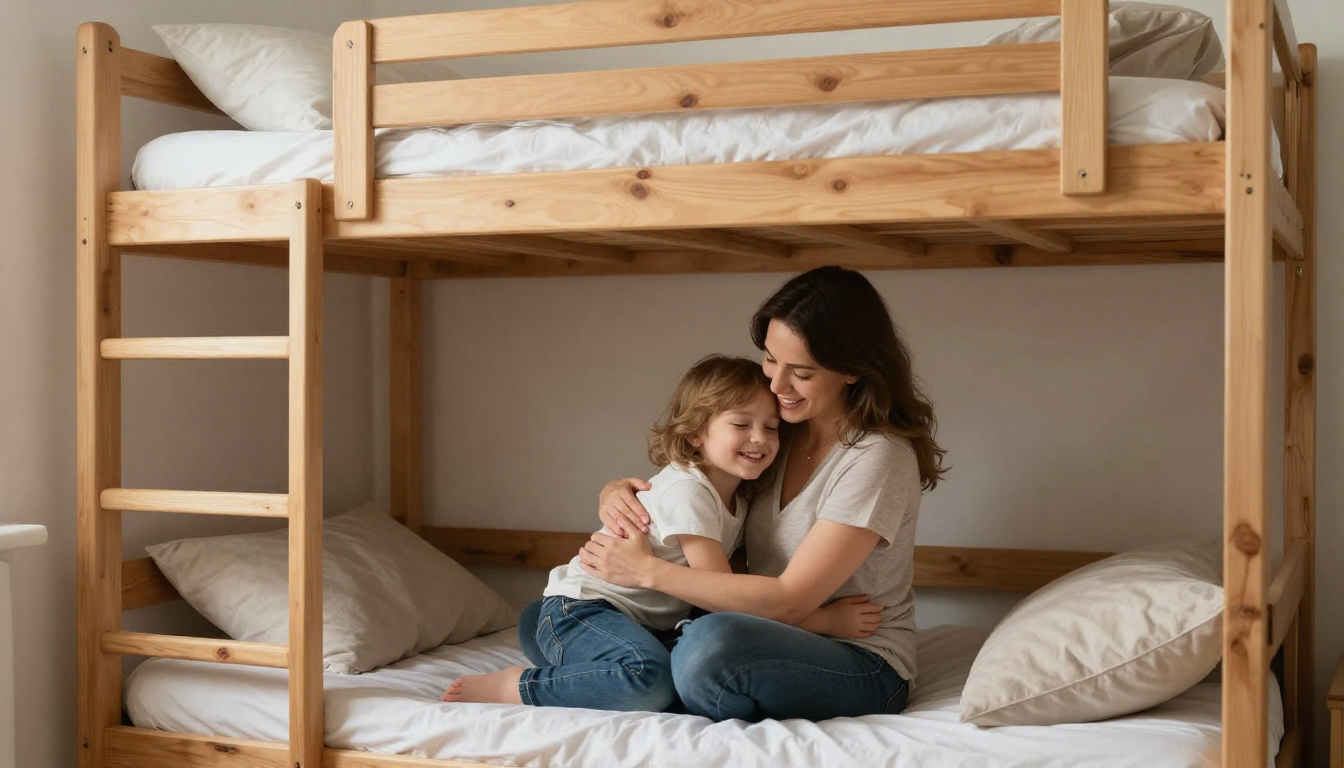
We all remember fighting over the top bunk at sleepovers when we were kids. It felt like being the king or queen of the castle up there — but now as moms, the idea of anything too high feels less magical and more nerve-wracking. That’s why many of us are turning to low bunk beds, because low bunk beds offer that fun bunk experience without the scary height.
That’s exactly why low bunk beds are having a massive moment right now. Not only do low bunk beds give our kids that exciting “big kid” feeling, they also keep bedtime safer and calmer for us. Plus, they save so much space in bedrooms that somehow seem to shrink as our kids (and their stuff!) grow.
If you are on the fence about upgrading your kids’ room, you’re in the right place. We’re going to break down everything you need to know about low bunk beds so you can confidently decide if low bunk beds are the perfect fit for your growing family.
Ready to find the perfect bed for your little ones? Check out our list of top-rated low bunk beds here!
What Are Low Bunk Beds? (And How They Differ From Traditional Bunks)
When most of us picture a bunk bed, we imagine a towering structure that nearly scrapes the ceiling fan. Traditional bunks are usually about 60 to 72 inches tall. That is a long way up for a little six-year-old to climb.
Low bunk beds are designed completely differently. They typically stand about 45 to 55 inches high. That is significantly shorter and much more approachable.
The bottom bunk on these beds often sits directly on the floor or just a couple of inches off the ground. This design eliminates that scary gap under the bed where toys always seem to get lost. It is a sleek, modern look that serves a practical purpose.
Because the whole structure is lower, the top bunk isn’t actually that high up. An average adult can easily kiss their child goodnight on the top bunk without standing on tiptoes. It makes tuck-in time so much easier on your back.
These beds are specifically designed for younger children who are ready to share a room but aren’t quite ready for heights. It bridges the gap between a toddler bed and a full-sized teen setup. It’s the perfect middle ground for elementary-aged kids.
Must Read: Choosing the Best Booster Seat: Safety and Comfort Tips
Safety First: Are Low Bunk Beds Safe for Young Kids?
This is the number one question on every mom’s mind. Safety is always our top priority when it comes to where our babies sleep. The short answer is generally yes, low bunk beds are safer than traditional ones.
The biggest risk with bunk beds is always falling from the top. With a low profile design, the distance to the floor is much shorter. This significantly reduces the risk of injury if a tumble does happen.
Most experts recommend that children under six should not sleep on a top bunk. However, because low bunks are so close to the ground, some parents feel comfortable moving kids up a bit sooner. You know your child’s maturity and coordination best.
Another safety feature is the stairs or ladder. On low bunks, the ladder usually has fewer steps to climb. This makes it much easier for little legs to navigate safely in the middle of the night.
We also love that the center of gravity is lower. This makes the bed feel sturdier and less wobbly than those tall, metal frames from the 90s. You won’t feel the whole bed shake every time the bottom sleeper rolls over.
Always check for sturdy guardrails that go all the way around the top. Make sure the mattress fits snugly so there are no gaps. Peace of mind is worth every penny when buying furniture.
Benefits of Low Bunk Beds for Families
The most obvious benefit is maximizing space in a small bedroom. When you stack beds, you instantly double your floor space for play. That means more room for Legos, dollhouses, or just wrestling on the rug.
Low bunks specifically are great for rooms with low ceilings. Traditional bunks can feel claustrophobic if you don’t have high vaulted ceilings. A low design keeps the room feeling open and airy.
They are also incredibly easy to make. Have you ever tried to change sheets on a traditional top bunk? It is basically an Olympic sport involving jumping and tucking while trying not to fall.
With a low bunk, the mattress is right at chest level for most moms. You can change the sheets without breaking a sweat or pulling a muscle. This small convenience makes laundry day surprisingly less terrible.
These beds are also less intimidating for younger siblings. A towering ladder can be scary for a three-year-old. A short ladder or slide makes the top bunk feel like a fun fort rather than a mountain.
Finally, they encourage bonding between siblings. Because they are closer together vertically, it feels more intimate and cozy. Late-night whisper sessions are much easier when you aren’t shouting across a huge vertical gap.
Types of Low Bunk Beds (And Which One Fits Your Family Best)
There isn’t just one style of low bunk bed anymore. Furniture designers have realized moms need options. Let’s look at a few popular styles to see what works for you.
The Twin-Over-Twin Low Bunk: This is the classic setup. It is perfect for siblings close in age or twins. It has a small footprint and fits into almost any bedroom.
The Twin-Over-Full Low Bunk: This option is fantastic if you have an older child and a younger child sharing. The bottom bunk is wider, perfect for the older sibling or for mom to snuggle during story time. It does take up a bit more floor space, though.
The L-Shaped Low Bunk: These beds are positioned in a corner shape rather than directly on top of each other. This often creates a cute little nook underneath for a desk or reading chair. It is great if you have a square room rather than a long, narrow one.
The Loft Low Bunk: This is just a top bunk with open space underneath. The height is still low and safe. The space below is perfect for toy storage, a play kitchen, or a cozy reading fort.
The Slide Bunk: Let’s be honest, this is the one the kids want. It features a slide coming down from the top bunk. It turns the bedroom into an indoor playground, which is a lifesaver on rainy days.
How to Choose the Right Low Bunk Bed: A Simple Mom Checklist
Shopping for furniture online can be overwhelming. There are thousands of options and reviews to sift through. Use this checklist to narrow down your choices quickly.
Measure Your Space Twice: Don’t just measure the floor space. Measure the height of the ceiling, too. Ensure there is enough clearance for the top sleeper to sit up without bumping their head.
Check the Weight Limit: Not all beds are built the same. Some are strictly for toddlers, while others can hold a full-grown adult. If you plan to lie down with your child, you need a higher weight capacity.
Material Matters: Solid wood is usually the sturdiest option for bunks. Particle board can chip and wobble over time. Metal is durable but can be noisy and cold to the touch.
Ladder or Stairs: Ladders save space, but stairs are safer for younger kids. Some stairs even have drawers built into them for extra storage. Decide if safety or floor space is your priority.
Mattress Thickness: Low bunks often require thinner mattresses to ensure the guardrails are high enough. Check the manufacturer’s recommendation before buying new mattresses. You usually need an 8-inch mattress or thinner.
Assembly Difficulty: Read the reviews about assembly time. Some beds take two hours, while others take two days. Know your DIY limits before the boxes arrive at your door.
Must Read: Best Baby Bouncer That Keeps Your Little One Happy
Best Low Bunk Bed Ideas for Small Bedrooms
Small bedrooms require smart thinking. A low bunk bed is already a space saver, but you can do even more. Look for beds with built-in storage drawers underneath the bottom bunk.
These drawers are perfect for storing out-of-season clothes or extra bedding. It eliminates the need for a separate dresser in a tight room. Every inch of storage counts when kids share a room.
Another great idea is a bed with built-in shelving. Some low bunks have small bookshelves attached to the frame. This gives kids a place for their water bottle, night light, and favorite books.
If the room is very narrow, position the bunk against the longest wall. This opens up the center of the room for play. Avoid blocking windows so natural light can still pour in.
Use light colors for the bedding and the frame. White or light wood frames make a small room feel bigger. Dark, heavy wood can make a tiny space feel cramped.
Consider wall-mounted lamps for reading. Since low bunks might not have room for a nightstand, a clip-on light is perfect. It keeps the floor clear of cords and clutter.
Setting Up Your Child’s Bedroom: Safety + Fun Design Tips
Once the bed is built, the fun part begins. You want the room to be safe but also a place they love to be. Start by securing the bunk bed to the wall if the instructions recommend it.
Even low bunks can tip if climbing gets rough. Anchoring it gives you extra peace of mind. Next, think about the floor around the bed.
Place a soft rug near the ladder or slide. If a slip happens, a fluffy rug is much softer than a hardwood floor. It also makes those midnight bathroom runs a little warmer on the feet.
Let the kids pick out their own bedding. Since they have to share the room, having their own unique sheets helps them claim their space. One might love dinosaurs while the other loves unicorns, and that is totally okay.
Create a “no jumping” rule early on. Even though the bed is low, jumping from the top is still dangerous. Make sure they understand the bed is for sleeping and reading, not gymnastics.
Add some glow-in-the-dark stars on the ceiling above the top bunk. Since they are closer to the ceiling, the effect is really cool. It makes going to bed feel magical instead of a chore.
Low Bunk Beds for Twins, Toddlers, and Siblings of Different Ages
Sharing a room can be tricky when kids are at different stages. Low bunks are actually great for navigating these age gaps. The toddler stays safely on the floor bunk while the older sibling gets the “cool” top bunk.
For twins, it creates a sense of equality. Neither child is stuck way up high or hidden way down low. They are close enough to talk but have their own defined zones.
If you have a toddler transitioning from a crib, the bottom bunk is perfect. It is essentially a floor bed, so they can’t roll off and get hurt. You can even add a temporary rail to the bottom for extra security.
For older siblings, the top bunk becomes a private retreat. It is a space the younger sibling literally cannot reach yet. This gives the older child a safe place for their special toys or Lego creations.
This setup fosters a sense of independence for both kids. The little one learns to sleep in a big bed. The big one learns to respect their sibling’s space.
It also teaches valuable social skills like compromise. They have to decide who turns out the light or shuts the door. These are small lessons that last a lifetime.
Why Low Bunk Beds Can Simplify Your Mom Life
We are all looking for ways to make the days run smoother. Low bunk beds are a surprising tool in your parenting toolkit. They streamline bedtime because you aren’t shouting up to the ceiling.
They make cleaning easier because you can reach everything. Dusting, vacuuming, and changing sheets are no longer back-breaking chores. A tidy room helps everyone feel calmer.
They save space, which keeps the clutter contained. When toys have a place on the floor, clean-up time is faster. Less mess means less stress for you.
They are safer, which means you worry less. You won’t wake up in a panic wondering if someone fell. Better sleep for you means a happier mom in the morning.
Finally, they make your kids happy. There is something special about bunk beds that creates childhood memories. Hearing them giggle together before falling asleep is the best sound in the world.
So, take a deep breath and measure that bedroom. A low bunk bed might be the solution you have been looking for. You’ve got this, Mom!
Want more tips on organizing your kid’s room? Join our community discussion below and share your favorite mom hacks!
The Best Kids Sled for Safe & Fun Winter Memories
Frequently Asked Questions
1. What are low bunk beds?
Low bunk beds are shorter, space-saving bunk beds designed to sit lower to the ground. They typically range from 45–55 inches in height, making them safer and more accessible for younger children.
2. Are low bunk beds safe for toddlers and young kids?
Yes, low bunk beds are generally safer than traditional tall bunks because the distance from the top bunk to the floor is much shorter. Always choose a model with strong guardrails and ensure your child meets the recommended age for top bunk use.
3. Do low bunk beds work well in small bedrooms?
Absolutely. Low bunk beds are perfect for small spaces because they maximize floor space while keeping the room feeling open and airy, especially in rooms with low ceilings.
4. What types of low bunk beds are available?
Popular styles include twin-over-twin, twin-over-full, L-shaped low bunk beds, loft-style low bunks, and low bunk beds with slides or storage options.
5. What should I look for when buying low bunk beds?
Key features include sturdiness (solid wood vs. particle board), ladder vs. stairs, mattress height requirements, weight limits, built-in storage, and overall room measurements.
6. Can low bunk beds grow with my kids?
Yes. Low bunk beds are versatile and work well for toddlers, early elementary kids, twins, or siblings of different ages.
Author

