
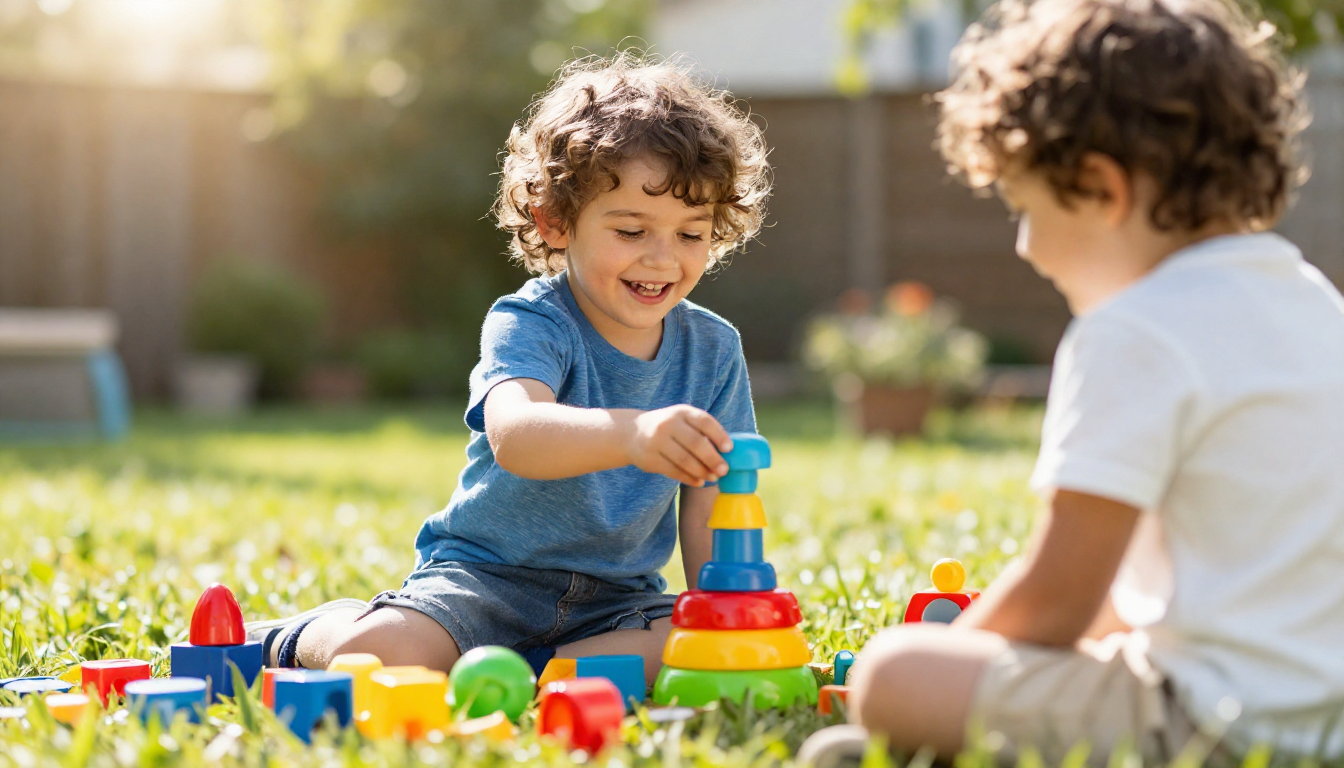
A toddler grabs a truck, another child cries, and suddenly snack time turns into referee duty. If you have ever wondered how to teach sharing skills without forcing your child to hand things over on command, you are not alone. Sharing is one of those parenting goals that sounds simple until real life shows up with favorite toys, tired kids, and big feelings.
The good news is that sharing is not a personality trait kids either have or do not have. It is a social skill that develops over time, especially when parents understand how to teach sharing skills in small, patient ways. Like taking turns, waiting, and using kind words, it grows through practice, repetition, and support.
What sharing really looks like at different ages
One reason sharing feels hard to teach is that parents are often working against unrealistic expectations. A 2-year-old who yells, “Mine!” is not necessarily selfish. Very young children are still learning that other people have needs separate from their own, and they do not yet have strong impulse control.
Toddlers usually understand ownership before they understand generosity. Preschoolers begin to grasp turn-taking, especially when adults guide them. By kindergarten and the early elementary years, many kids can share more flexibly, but even then, it often depends on the situation. A child may share art supplies easily and still melt down over a beloved stuffed animal.
That is why it helps to think of sharing as a collection of smaller abilities. Kids need to manage disappointment, wait for a turn, notice another person’s feelings, and trust that giving something up does not mean losing it forever. When one of those pieces is shaky, sharing gets harder.
Must Read: Bonding Activities for 3 Month Olds That Build Skills
How to teach sharing skills in everyday life
The most effective way to teach sharing is to stop treating it like a single lesson. It works better as a daily habit that shows up in little moments.
Start by naming what is happening. If your child is holding tightly to a toy, you might say, “You are still using that. Your brother wants a turn when you are done.” That wording matters. It teaches that sharing does not always mean immediate surrender. It can mean using something now and letting someone else use it next.
This approach helps children feel safer, which often makes them more willing. When kids believe adults will protect their boundaries, they are less likely to cling to every object like it is under threat.
Modeling also matters more than many parents realize. Children notice how adults share food, time, attention, and household space. When you say, “I’m done with this marker, you can use it,” or “Let’s split the last muffin,” you are showing them what generosity sounds like in real life.
Teach taking turns before expecting open sharing
For many children, especially younger ones, turn-taking is the bridge to sharing. It is concrete, fair, and easier to understand.
If two kids want the same toy, skip lectures and move straight to structure. You can say, “You can have two minutes, then it’s her turn,” or “When the timer rings, we switch.” Timers are helpful because they make the adult feel less like the villain. The timer becomes the neutral signal.
There is a trade-off here, though. Some kids do well with very short turns because waiting feels possible. Others get frustrated if the turn is so short they barely begin playing. Adjust based on age and temperament. A preschooler may do well with two or three minutes, while an older child can usually handle longer stretches.
Use simple scripts your child can actually remember
Children do better with short, repeatable language than with big explanations in the middle of conflict. When emotions are high, they need words they can grab quickly.
Try phrases like, “Can I have a turn when you’re done?” “I’m still using this.” “You can have it next.” “Let’s use it together.” These scripts give kids a path besides grabbing or crying.
If your child struggles to speak up, practice these lines during calm moments. You can role-play with dolls, stuffed animals, or even while cleaning up toys. The goal is not to make your child sound perfect. It is to make kind interaction feel familiar enough to use under stress.
Must Read: Physical Milestones for School Age: What to Expect as Your Kid Grows
Do not force sharing with prized possessions
This part surprises many parents, but it is often one of the most helpful shifts. Children do not need to share every single item they own. In fact, allowing a few special belongings to stay off-limits can reduce power struggles and build trust.
Before playdates, ask your child to put away toys they do not want others to touch. Then explain that the toys left out are toys available for shared play. This teaches both generosity and boundaries, which are both healthy social skills.
If you force a child to hand over their favorite comfort item or treasured toy, the lesson they may learn is not kindness. They may learn that their feelings are ignored. It is okay to protect a few special things while still expecting respectful behavior with common toys and group materials.
Praise the process, not just the outcome
When kids share, parents often say, “Good job sharing.” That is fine, but specific praise teaches more. It helps children connect their action to its impact.
You might say, “You let your sister have a turn even though you still wanted it. That was hard, and you did it,” or “You noticed your friend didn’t have any crayons and gave him one.” This kind of praise highlights effort, empathy, and self-control.
Be careful not to overdo it. If every act of sharing gets huge applause, some children begin performing for praise instead of internalizing the value. Warm, calm acknowledgment usually works better than making sharing feel like a stage performance.
When your child refuses to share
Refusing to share does not mean you are failing. It usually means your child needs support in one of three areas: emotional regulation, clear limits, or more practice.
First, stay calm. If you react with embarrassment or anger, the moment gets bigger fast. Try, “You really don’t want to give that up right now,” followed by a limit or option: “You may keep using it for two more minutes, then it’s Sam’s turn,” or “That toy is special, so let’s choose a different one to play with together.”
If your child completely falls apart, address the feelings before the lesson. A dysregulated child cannot absorb much teaching. Once they are calm, you can revisit what happened and practice a better response.
It also helps to notice patterns. Some children struggle most when they are hungry, tired, overstimulated, or surprised by transitions. In those cases, the problem is not really sharing. Sharing is just where the stress spills out.
Make sharing part of family routines
The best learning often happens outside conflict. Family routines give kids low-pressure chances to practice generosity.
At home, you can build sharing into snack time, art projects, board games, and sibling play. Let children pass napkins, divide strawberries, choose a game everyone can enjoy, or help serve materials. These moments teach that sharing includes resources, attention, and cooperation, not just toys.
Reading books about friendship and fairness can help too, especially for preschool and early elementary kids. So can simple family language such as, “In our family, we take turns,” or “We make space for each other.” Repeating these ideas gives children a clear social expectation.
How to teach sharing skills with siblings and friends
Sibling dynamics can make sharing more emotional because the relationship is ongoing and the competition feels personal. With friends, children may try harder to be flexible, but they may also become territorial in their own home.
With siblings, avoid turning one child into the “good sharer” and the other into the “difficult one.” Labels stick. Instead, coach both children through the same process. Name the problem, set the turn, and help them recover after conflict.
With friends during playdates, prepare ahead of time. Review which toys are for everyone and which are put away. Keep play simple early on. Too many choices can create more conflict, especially for younger kids. Shared activities like play dough, blocks, sidewalk chalk, or a baking project often go more smoothly than one highly desired toy.
Must Read: Small group activities for preschoolers that work at home
Remember that empathy grows slowly
Parents often want sharing to come from the heart, not just because an adult said so. That deeper kind of generosity does develop, but usually after lots of guided practice.
When you say, “Look, your friend is sad because he wanted a turn,” you are helping your child connect behavior with another person’s feelings. Over time, that matters. But empathy should not be rushed. Some kids become caring and generous early. Others need more repetition and maturity before it clicks consistently.
If you are patient, clear, and steady, your child will likely make progress in ways that are easy to miss day to day. One day they will offer a snack, scoot over on the couch, or hand a toy to a younger sibling without being asked. Those quiet moments count.
Teaching sharing is really about helping your child live with other people kindly while still feeling safe and respected themselves. That takes time, and it is okay if it grows one small turn at a time.
Frequently Asked Questions
How do you teach sharing skills to toddlers?
The best way to teach sharing skills to toddlers is through daily practice, turn-taking, and simple language. Modeling sharing and guiding children through real situations helps them learn over time.
At what age should a child learn to share?
Most children begin understanding sharing between ages 3 and 5. Toddlers often struggle because they are still developing impulse control and empathy.
Why does my child refuse to share?
Children may refuse to share because they feel attached to an item, lack emotional regulation, or do not yet understand turn-taking. This behavior is usually a normal part of development.
Should parents force children to share?
Forcing children to share can create resistance and frustration. It is often more effective to teach turn-taking, respect boundaries, and encourage voluntary sharing.
What is the difference between sharing and taking turns?
Sharing means allowing others access to a resource, while taking turns involves using something one at a time. Turn-taking is often easier for young children to understand first.
How can I teach sharing skills during playdates?
Prepare children before the playdate by putting away special toys and explaining which items are available for everyone. Clear expectations reduce conflict.
Can sharing skills be taught through family routines?
Yes. Snack time, board games, art projects, and sibling activities provide natural opportunities for children to practise sharing and cooperation.
How do I help siblings share without arguing?
Use clear rules, timers, and calm guidance. Avoid labeling one child as the good sharer and instead coach both children through the process.
Does empathy help children learn to share?
Yes. As empathy develops, children become more aware of other people’s feelings, which often makes sharing feel more meaningful and natural.
What are the benefits of teaching sharing skills early?
Children who learn sharing skills often develop stronger friendships, better cooperation, improved patience, and healthier social interactions.
