
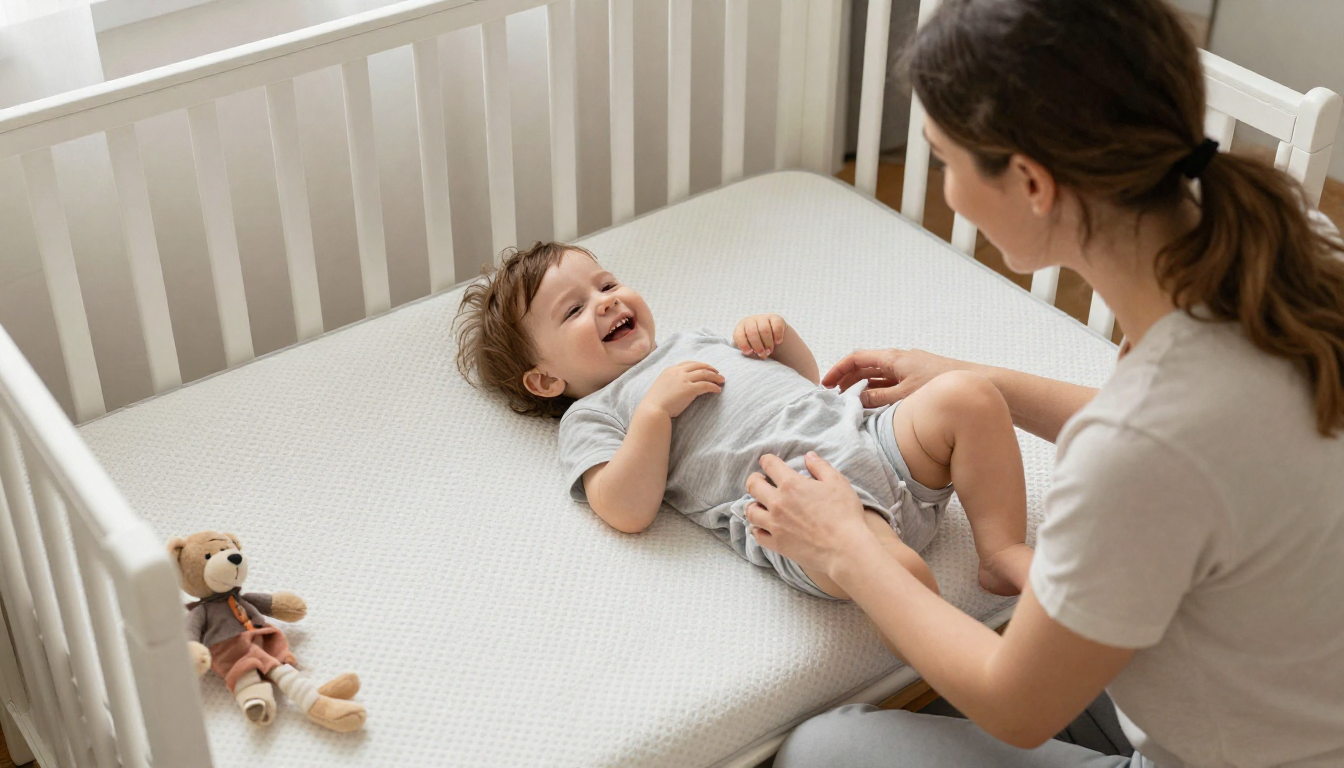
I remember standing in the baby aisle, totally overwhelmed by the wall of crib mattresses while trying to find a good crib mattress. They all looked like big white rectangles, but the prices ranged from fifty bucks to five hundred. I just wanted something safe so I could sleep at night without worrying, but the labels were confusing.
Choosing a good crib mattress isn’t just about comfort; it’s one of the most important safety decisions you’ll make for your nursery. Your little one will spend more time on this surface than anywhere else during their first few years. Let’s break down exactly what you need to look for, mom-to-mom.
Have a question about crib safety or sleep? Drop a comment below and join the Mom Kid Friendly community conversation!
Good Crib Mattress: What Actually Helps Your Baby Sleep Better
We often think about sleep training or blackout curtains when we want better sleep. But the foundation of good sleep starts literally with the foundation—the mattress. A good crib mattress provides the right support for growing bones and keeps your baby comfortable enough to stay asleep.
If a mattress is too soft, your baby might struggle to move or get comfortable safely. If it’s rock hard and crinkly like a chip bag, every tiny movement might wake them up. Finding that balance is key to longer stretches of sleep for everyone.
The right mattress also regulates temperature better than cheap plastic ones. Babies can get sweaty quickly, and a sweaty baby is an awake baby. Investing in quality materials helps keep them cool and dry all night long.
Why Crib Mattresses Matter More Than Parents Think
It is easy to spend your budget on a cute crib or adorable bedding sets. However, the mattress does all the heavy lifting for your baby’s development. It supports their spine as they grow and provides a safe environment for those precious hours of rest.
Newborns sleep up to 16 hours a day, which is a huge amount of time spent on one surface. A subpar mattress can dip or sag, creating unsafe pockets. That flat, firm surface is non-negotiable for safety guidelines.
Plus, a quality mattress saves you money in the long run. Cheap ones often crack, tear, or lose their shape within months. A sturdy one can last through toddlerhood and maybe even for baby number two.
What Makes a Crib Mattress Safe for Babies
Safety is the number one priority when we talk about infant sleep. The American Academy of Pediatrics recommends a firm sleep surface to reduce the risk of SIDS. A good crib mattress should not conform to the shape of your baby’s head.
You also need to check for a snug fit inside your specific crib. If you can fit more than two fingers between the mattress and the crib frame, it’s too small. Those gaps can be dangerous entrapment hazards for tiny limbs.
Look for certifications like GREENGUARD Gold, which tests for chemical emissions. Babies breathe faster than adults, so air quality around their sleep space matters. A certified mattress ensures fewer volatile organic compounds (VOCs) are in the air.
Must Read: Why Moms Are Considering a West Elm Crib
Signs Your Baby Needs a Better Crib Mattress
Sometimes we inherit gear or buy budget options, and that is totally fine. But you need to watch for signs that the mattress is failing. If you see visible sagging in the middle, it is time to toss it immediately.
Listen for excessive noise when your baby moves around. If the mattress crinkles loudly, it might be disrupting their sleep cycles. A quieter mattress can mean the difference between a 20-minute nap and an hour-long break for you.
Check the edges of the mattress regularly for wear and tear. If the binding is unraveling or the waterproof coating is cracking, bacteria can get inside. Visible wear is a clear sign that it is time for an upgrade.
Firmness Explained in Simple Parent Terms
“Firm” is a confusing term because it feels uncomfortable to us adults. But for a baby, firm means resistance—if you push your hand down, it should snap back instantly. It shouldn’t leave an indentation of your handprint.
Think of it like sleeping on a carpeted floor versus a plush pillow. Your baby needs the carpeted floor level of support. This firmness keeps their airway open and allows them to push up when they learn to roll.
Many modern mattresses are dual-sided to grow with your child. One side is ultra-firm for infants, and the other is slightly softer for toddlers. This is a great feature that extends the life of your purchase.
Breathability and Temperature Concerns Parents Worry About
New moms often worry about their baby overheating or rolling onto their stomach. Breathable mattresses are designed to allow air to flow through the core. This helps regulate body temperature and gives parents peace of mind.
However, be careful with marketing terms regarding breathability. A “breathable” mattress doesn’t replace the need for Back-to-Sleep practices. It is just an added layer of comfort and temperature control.
If your baby wakes up with a sweaty back or damp hair, the mattress might be trapping heat. Vinyl covers are great for waterproofing but terrible for airflow. Look for breathable covers or cotton blends to help with this issue.
Materials Parents Trust for a Good Crib Mattress
Foam mattresses are lightweight and easy to change sheets on. They are usually less expensive but can vary wildly in quality. High-density foam is what you want for durability and support.
Innerspring mattresses are heavy and durable, feeling more like a traditional adult bed. The more coils, generally the firmer and more supportive it will be. They are heavy to lift, so keep that in mind for late-night sheet changes.
Organic options use materials like wool, cotton, and coconut coir. These are fantastic if you want to avoid synthetic chemicals and foams. They are pricier but offer natural temperature regulation and durability.
Waterproof Covers and Why They Matter
Let’s be real: diapers leak and spit-up happens constantly. A waterproof barrier is absolutely essential for hygiene. Without it, fluids seep into the core where mold and bacteria can grow.
Some mattresses come with a built-in waterproof cover that wipes clean. This is super convenient for those 3 AM accidents. Just wipe it down, change the sheet, and everyone goes back to sleep.
Others require a separate waterproof mattress pad. If you go this route, buy two or three pads immediately. You do not want to be doing laundry in the middle of the night.
Must Read: Discover the Best Crib Mattress for Your Baby’s Sleep
Standard vs Organic Crib Mattresses
Standard mattresses often use polyurethane foam and vinyl covers. They pass safety standards and are very affordable for tight budgets. Many also contain flame retardants, which some parents prefer to avoid.
Organic crib mattresses use natural materials to meet flammability standards without chemicals. They often use wool as a natural fire barrier. This peace of mind is worth the extra cost for many eco-conscious families.
There is also a middle ground of “eco-friendly” mattresses. These might use plant-based foams but aren’t 100% organic. Read the labels carefully to know exactly what you are paying for.
How Long a Crib Mattress Should Last
A high-quality crib mattress should last through the toddler bed stage. That is typically about three to five years of daily use. If it starts sagging before then, it wasn’t a good quality investment.
If you plan to use it for a second child, inspect it rigorously. Check specifically for center support and edge firmness. Hygiene is also a factor; ensure it was stored in a dry, cool place.
Ideally, every new baby deserves a fresh mattress to ensure optimal firmness. Used mattresses can soften over time in ways you can’t always see. If you can afford it, buy new for each sibling.
Common Crib Mattress Mistakes Parents Make
The biggest mistake is assuming “soft” equals “comfortable” for a newborn. Parents often add toppers or soft blankets to make the crib cozy. This is dangerous and increases the risk of suffocation significantly.
Another mistake is keeping the plastic packaging on to “protect” the mattress. This is a huge suffocation hazard and can cause overheating. Remove all packaging completely before putting the mattress in the crib.
Many parents also forget to rotate the mattress. Babies tend to sleep in the same spot, which can cause divots. Rotate the mattress every few months to ensure even wear.
How to Test if a Crib Mattress Is Truly Firm
Go to the store and press on the center of the mattress and the edges. It should rebound immediately when you lift your hand. If your hand sinks in easily, walk away.
Pick it up and feel the weight of the product. A heavier foam mattress usually indicates higher density and better support. Flimsy, light mattresses will break down much faster.
Squeeze the edges with your hands to test structure. Strong edges prevent your toddler from sliding off or getting a foot stuck. You want structured, squared edges, not rounded or soft ones.
Final Tips for Choosing a Good Crib Mattress
Measure your crib before you shop, just to be double sure. While sizes are standard, slight variations can happen with different brands. You want that tight, safe fit with no gaps.
Check the return policy before you buy online. Sometimes a mattress smells funny or doesn’t fit right. You want a hassle-free way to exchange it if needed.
Read reviews from other parents who have used the mattress for a year or more. Long-term reviews tell you the truth about sagging and durability. Mom Kid Friendly recommends looking for consistent praise about longevity.
Making the Right Choice for Your Nursery
Choosing a good crib mattress feels like a big task, but you’ve got this. Focus on firmness, fit, and safe materials above all else. Once you have that safe foundation, you can relax and focus on all the snuggles.
Remember, the best mattress is one that keeps your baby safe and fits your budget. You don’t need the most expensive one, just the right one. Trust your gut and the safety standards.
We hope this guide helps you navigate the confusing world of baby gear. You are doing a great job making safe choices for your little one. Now, go get some rest yourself, mama!
Must Read: Top Rated Portable Cribs That Moms Trust
Frequently Asked Questions
What makes a good crib mattress safe for babies?
A good crib mattress is firm, fits snugly in the crib, and meets safety standards to reduce suffocation risks.
How firm should a good crib mattress be?
A good crib mattress should feel firm and spring back immediately when pressed, without leaving an indentation.
Can a baby sleep on a soft crib mattress?
No, soft mattresses increase suffocation risk and are not recommended for infants.
How long should a good crib mattress last?
A good crib mattress should last three to five years if it stays firm and free from sagging.
Is an organic crib mattress better for babies?
Organic options reduce chemical exposure, but a good crib mattress can also be non-organic if it meets safety standards.
Author

