
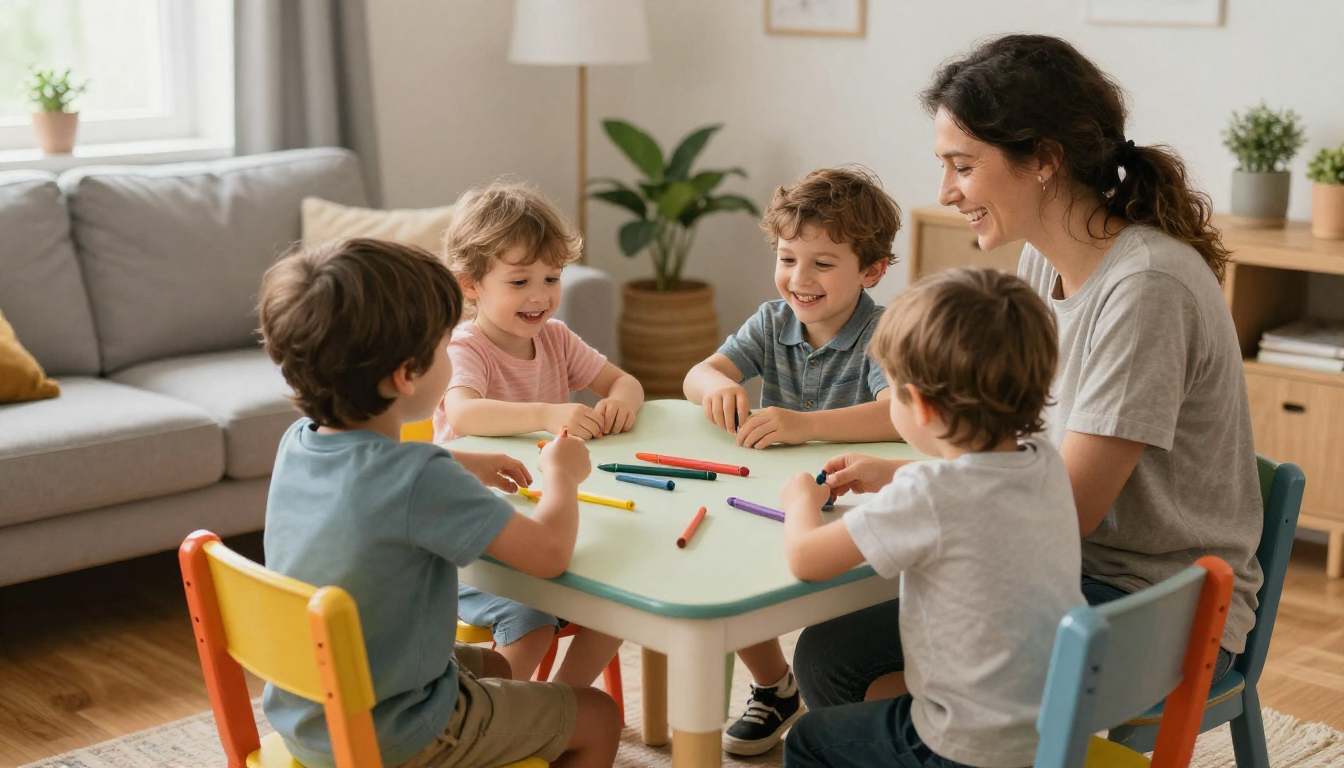
Does your coffee table look like a permanent art station covered in crayon marks? Or maybe you find yourself constantly hunching over a tiny floor puzzle, wishing your back didn’t hurt quite so much. If this sounds familiar, it might be time to think about giving your little one their own dedicated workspace.
We have all been there, trying to make grown-up furniture work for tiny bodies. But adding a childrens small table and chairs to your home can truly change the rhythm of your day. A childrens small table and chairs gives your child a place where the world finally fits them perfectly.
Ready to reclaim your dining table and give your kids a spot to call their own? Let’s talk about finding the perfect set for your family.
Check out our top picks for durable play tables here
Why childrens small table and chairs make daily life easier
Why kids love having their own space
Imagine living in a house where every chair requires a climb and every table hits you at chin level. It is exhausting to navigate a world that is built for giants. When you bring in furniture sized just right for them, their entire demeanor changes.
They suddenly have a spot where their feet touch the floor and their elbows rest comfortably. It makes them feel important, seen, and capable. You will see their eyes light up when they realize this space is just for them.
How it supports independence
We all want our kids to do things on their own, but sometimes our environment holds them back. A childrens small table and chairs removes the physical barriers to independence. They don’t need to ask for help to climb up or get down safely.
They can set up their own coloring book or sit down for a snack without waiting for a booster seat. This small shift builds massive confidence over time. It tells them, “You are big enough to handle this.”
Why it reduces mess and stress
Let’s be honest: glitter glue and your expensive dining room rug are not a good mix. Having a designated kid-sized table contains the chaos to one specific area. It is much easier to wipe down a plastic or sealed wood surface than to scrub upholstery.
It also saves your nice furniture from the inevitable scratches and dents of enthusiastic play. When messes happen (and they will), you won’t feel that panic rise in your chest. You can just grab a wet cloth and move on with your day.
Must Read: 7 Best High Chairs for Stress-Free Mealtimes
Best ages for childrens small table and chairs
Toddlers and early play
The golden age for introducing a table set is usually around 18 months to two years old. This is when toddlers start enjoying seated activities for more than thirty seconds at a time. They are steady enough to sit and stand without much assistance.
At this stage, the table becomes a hub for chunky puzzles and playdough smashing. It is also the perfect height for them to stand and cruise around. Just make sure the set is heavy enough not to tip over if they lean on it.
Preschool learning years
As your child hits three and four, this furniture becomes absolutely essential. Their attention span grows, and they start doing more detailed work like drawing and writing letters. This is the prime time for “pretend school” and tea parties.
They will spend hours sitting there, engrossed in building blocks or sorting beads. A childrens small table and chairs supports good posture during these longer sessions. It prevents them from developing bad habits like slumping over the floor.
How long families actually use them
You might worry that they will outgrow this purchase in a blink. Surprisingly, a good quality set often lasts well into the early elementary years. Most kids fit comfortably at a standard play table until they are six or seven.
Even when they get taller, they often still use the table for Lego building or storing treasures. It eventually transitions from a main workspace to a side table. It is an investment that pays off over several years of daily use.
How families use them every day
Arts and crafts
This is the most obvious use, but it is also the most important one. Creativity needs a flat, stable surface where supplies won’t roll away. A dedicated table invites creativity because the materials are accessible and ready to go.
You can leave a project out overnight without having to clear the kitchen table for dinner. It encourages them to come back and finish what they started. Plus, you can keep a bin of crayons nearby for spontaneous art sessions.
Snacks and meals
Sometimes, high chairs feel too restrictive, but the big table feels too formal. A small table is the perfect middle ground for afternoon snacks. It is also great for “kids’ table” meals during holidays or parties.
It helps them practice table manners in a low-pressure environment. They can learn to pour their own water or spread their own jam. Spills are just part of the learning process here, not a dining disaster.
Puzzles, books, and quiet time
We all need a quiet corner to decompress, and kids are no different. A little table provides a calm zone away from the noise of the TV or active play areas. It is the perfect spot to spread out a 24-piece puzzle.
They can stack their favorite books there and “read” quietly. It creates a physical boundary that signals it is time to slow down. This can be a lifesaver during that witching hour before dinner.
What to look for before buying
Correct height and size
The rule of thumb is that your child’s feet should be flat on the floor when seated. Their knees should be bent at a 90-degree angle. If their legs are dangling, they will get fidgety and uncomfortable quickly.
Measure your child’s current inseam and compare it to the chair’s seat height. Ideally, there should be about seven to eight inches between the seat and the table apron. This gives their legs plenty of room to move without getting squished.
Materials that handle real kids
You want something that can survive a toddler tantrum and a spilled juice box. Solid wood is durable and looks great, but it can be heavy and expensive. Plastic is lightweight, easy to clean, and usually cheaper.
Metal sets are sturdy but can feel cold and industrial. Look for rounded corners to prevent painful bumps and bruises. Avoid glass tops or anything with delicate finishes that chip easily.
Easy cleaning and safety basics
Ask yourself: “Can I clean this with a paper towel and spray cleaner in ten seconds?” If the answer is no, keep looking. Textured surfaces might look cool, but they trap playdough and dirt like crazy.
Check for safety certifications to ensure non-toxic paints and finishes were used. Make sure the chairs are stable and won’t tip backward if a child pushes away from the table. Safety is always more important than style when it comes to kids’ gear.
Must Read: Best Bean Bag Chairs for Kids Comfort & Fun
Small homes and shared spaces
Apartments and tight rooms
Not everyone has a dedicated playroom, and that is totally okay. You can fit a childrens small table and chairs into surprisingly tight corners. Look for square tables that can be pushed flush against a wall when not in use.
Some families use the coffee table as a play surface and just buy small chairs. Others swap out a bedside table for a small desk setup. You just have to get creative with the square footage you have.
Foldable and lightweight options
If you really can’t spare the floor space 24/7, collapsible sets are a game changer. You can set them up for art time and then slide them under the sofa or into a closet. This keeps your living room looking like an adult space in the evenings.
Lightweight plastic sets are easy to move from the kitchen to the patio. This flexibility allows the play zone to move wherever you are working. It is the best of both worlds for busy families.
Common buying mistakes parents regret
Going too big
It is tempting to buy a larger size so they can “grow into it.” But if the table is at chest height, they won’t be able to use it comfortably now. They will struggle to reach their paper or leverage their arms for drawing.
It is better to buy the right size for today. If you are worried about longevity, look for adjustable legs. Many modern sets can grow a few inches taller as your child spurts up.
Ignoring chair comfort
We often focus on the table surface and forget about where the tush goes. Hard, flat seats can get uncomfortable after ten minutes. Look for chairs with a slightly contoured seat or a supportive backrest.
If the chairs are uncomfortable, your child simply won’t sit there. They will end up back at the kitchen island or on the floor. Comfort is the key to keeping them engaged in their activities.
Choosing looks over function
That sleek, mid-century modern set might look amazing on Instagram. But if the finish ruins the moment a marker touches it, it is not practical. Kids’ furniture needs to work for kids, not just for home decor magazines.
Prioritize durability and washability over aesthetic perfection. You can always find a cute set that is also tough as nails. Real life is messy, and your furniture should be able to handle it.
When it is time to upgrade or replace
Signs your child outgrew it
You will know it is time to move on when their knees start bumping the underside of the table. If they are slouching significantly to reach their work, the ergonomics are off. Another sign is when the chair lifts off the ground when they stand up.
At this point, you can move them to a proper student desk. Or, you might just transition them to the regular dining table for homework. Listen to their body language—it usually tells you when the setup isn’t working anymore.
Passing it down to siblings
The beauty of a good childrens small table and chairs set is its lifespan. Once your oldest outgrows it, the little sibling is usually ready to move in. A quick coat of paint can make it feel brand new again.
If you don’t have younger kids, these sets hold their resale value well. You can pass it on to a friend or sell it in a local parent group. It is a piece of furniture that keeps on giving.
Final thoughts on choosing childrens small table and chairs
Creating a dedicated space for your child is one of the sweetest ways to say, “You belong here.” It doesn’t have to be the most expensive set or the biggest one. It just needs to be a spot where they can create, snack, and dream comfortably.
When you find the right fit, you will see their independence blossom in ways you didn’t expect. So take a deep breath, measure that corner of the room, and get ready for some serious tea parties. You have got this, mama!
Must Read: Best Rated All In One Car Seats
Frequently Asked Questions
What age is best for a childrens small table and chairs?
Most kids can start using a childrens small table and chairs around 18 months to 2 years old when they enjoy seated play.
How tall should a childrens small table and chairs be?
A childrens small table and chairs should allow your child’s feet to rest flat on the floor with elbows comfortably on the table.
Are childrens small table and chairs safe for toddlers?
Yes, childrens small table and chairs are safe when they are sturdy, have rounded edges, and use non-toxic finishes.
Do kids outgrow childrens small table and chairs quickly?
Most families use a childrens small table and chairs until age six or seven, especially for crafts and quiet play.
What material is best for childrens small table and chairs?
Plastic is easy to clean, while wood is durable, making both good options for childrens small table and chairs.
Author

