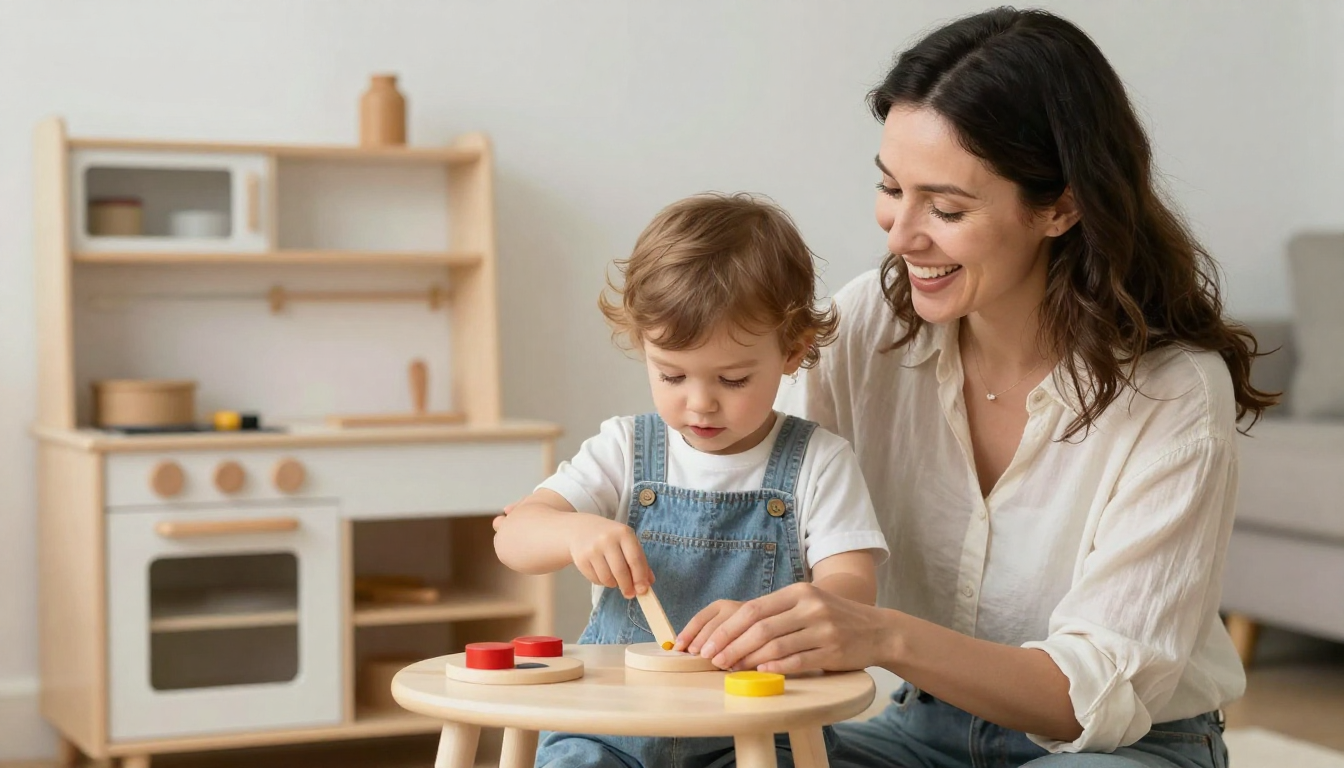
Every mom knows the struggle of trying to cook dinner with a toddler attached to her leg, and this is often when a toddler kitchen becomes a lifesaver. You just need ten minutes to chop vegetables, but they want to see, touch, and help with everything while standing right next to their toddler kitchen. It is exhausting, but there is a solution that might actually let you finish that meal in peace with a toddler kitchen.
A toddler kitchen gives them a safe space to mimic what you do without the danger of hot stoves or sharp knives, making a toddler kitchen a smart choice for busy moms. It keeps their little hands busy and their minds engaged right next to you as they play with their toddler kitchen. Suddenly, cooking dinner feels less like a battle and more like parallel play thanks to a toddler kitchen.
Ready to see how this simple toy can transform your daily routine? Check out our favorite picks for durable and cute play kitchens here.
What Is a Toddler Kitchen and Why Toddlers Love It
A toddler kitchen is a pint-sized version of a real kitchen, usually equipped with a stove, sink, and storage. It is designed for pretend play, allowing kids to “cook,” “wash,” and serve meals just like they see adults do. To a toddler, this isn’t just a toy; it is a serious workspace where important things happen.
Toddlers love these kitchens because they crave independence and mastery over their world. They watch you in the kitchen every day, and they desperately want to participate in that rhythm. Having their own space validates that desire and makes them feel capable and grown-up.
It also taps into their natural love for imitation. When they stir a pot or open an oven door, they are practicing the skills they see you use. It connects them to you, even when they are playing independently.
Developmental Benefits of a Toddler Kitchen
You might see a messy pile of plastic food, but a lot of learning is happening in that chaos. A toddler kitchen is a powerhouse for developing fine motor skills. Turning knobs, opening doors, and gripping utensils all strengthen those little hand muscles they need for writing later.
Language skills explode during kitchen play, too. You can introduce words like “whisk,” “bake,” “temperature,” and “ingredients” in a natural context. Narrating their play—”Oh, you are baking a hot pizza!”—helps them connect actions to vocabulary.
Social and emotional skills get a major boost when they play with others. They learn to take turns at the stove or negotiate who gets to be the chef. It teaches empathy as they “feed” their stuffed animals or serve you a pretend coffee.
How to Choose the Best Toddler Kitchen for Your Child
Choosing a toddler kitchen can feel overwhelming because there are so many options on the market. Start by measuring your available space, because these toys can be surprisingly bulky. If you live in a smaller home or apartment, look for compact, vertical models rather than wide ones.
Consider the material that fits your lifestyle and budget. Wooden kitchens tend to be sturdier and more aesthetic, often blending in better with living room decor. Plastic kitchens are lightweight, easier to clean, and usually come with more built-in sound effects and accessories.
Think about longevity and how the kitchen will grow with your child. Some models come with adjustable legs or modular sections that can change as your toddler gets taller. You want something that will last through years of rigorous “cooking.”
Must Read: Top Educational Toys for 3 Year Olds to Boost Learning
Must-Have Accessories for a Toddler Kitchen
A kitchen is only as fun as the tools inside it. Start with the basics: a pot, a pan, and a few sturdy utensils like a spatula and ladle. These allow for open-ended play without cluttering up the small space too quickly.
Play food is essential, but you don’t need every plastic vegetable ever made. Look for “cutting” food sets that connect with velcro, as toddlers love the satisfaction of slicing through them. Felt food is also a great option because it is soft, quiet, and doesn’t hurt when stepped on.
Don’t forget realistic touches like an apron or oven mitts. These dress-up items help them get into character and take their role seriously. Small baskets or bins are also helpful for keeping all those tiny pieces organized.
Easy Toddler Kitchen Play Ideas That Keep Kids Busy
Sometimes kids need a little nudge to get the creative juices flowing. Try setting up a specific “restaurant” scenario where you are the customer ordering a meal. Ask for something silly, like “purple soup,” and see what they come up with.
Use the kitchen for color sorting games using their play food. Ask them to put all the red foods in the sink and all the green foods in the oven. It turns cleanup time into a learning game that reinforces color recognition.
Turn the kitchen into a sensory station by adding real elements. Put some dry pasta or rice in their pots (if you can handle a little mess) for them to stir. The sound and feel of real ingredients make the play experience incredibly engaging.
Must Read: Top Art Supplies for Kids to Boost Creativity and Fun
Montessori-Inspired Toddler Kitchen Activities
If you love the Montessori approach, a toddler kitchen can be easily adapted for practical life skills. Instead of just pretend play, use the counter space for real snacks. Let them peel a banana or spread peanut butter on crackers at their own station.
Set up a functional washing station in their play sink. You can put a small amount of water in a basin and let them wash their waterproof toys or plastic cups. It teaches responsibility and the sequence of cleaning up.
Use the kitchen storage for organization practice. Label the shelves with pictures so they know exactly where the pots and cups belong. This builds a sense of order and independence that is central to Montessori philosophy.
Where to Set Up a Toddler Kitchen at Home
Location is everything when it comes to getting the most use out of this big toy. The best spot is usually right near your actual kitchen. This allows you to supervise easily while getting your own chores done.
If your kitchen is too small, a corner of the living room is a great alternative. It keeps them in the main social hub of the house so they don’t feel isolated. Avoid putting it in a bedroom if you want them to play while you are doing housework.
Make sure the setup invites play by keeping it accessible. If the kitchen is buried under other toys, it won’t get used. A clear path and an organized setup make it welcoming every time they walk by.
Why Every Home Can Benefit from a Toddler Kitchen
Investing in a toddler kitchen is about more than just buying another toy. It is about creating a space where your child feels capable, creative, and independent. It gives you a few precious minutes of breathing room while they are happily occupied.
Mom Kid Friendly believes in tools that make parenting a little lighter, and this is definitely one of them. Whether it is plastic or wood, big or small, the benefits remain the same. It is a classic childhood staple for a reason.
Are you ready to find the perfect kitchen for your little chef? Browse our top recommendations and get started on the fun today.
Must Read: Top Indoor Activities for Kids to Spark Creativity and Fun
Frequently Asked Questions
What age is a toddler kitchen suitable for?
A toddler kitchen is usually suitable for children ages 1 to 4. Most toddlers start enjoying pretend kitchen play around 18 months. Always check the manufacturer’s age recommendation for safety.
Are toddler kitchens safe for young children?
Yes, a toddler kitchen is designed with safety in mind and avoids real hazards like heat and sharp tools. Look for rounded edges and sturdy construction. Adult supervision is still recommended during play.
Is a toddler kitchen good for development?
A toddler kitchen supports fine motor skills, language development, and social interaction. Pretend play helps toddlers practice real-life routines. It also encourages independence and creativity.
What accessories are best for a toddler kitchen?
Basic pots, pans, utensils, and play food work best with a toddler kitchen. Velcro cutting food and soft felt food are popular options. Simple accessories encourage longer, more focused play.
Where should I place a toddler kitchen at home?
The best place for a toddler kitchen is near your real kitchen or in the living room. This allows your child to play while staying close to you. Easy access increases daily use.
Author

