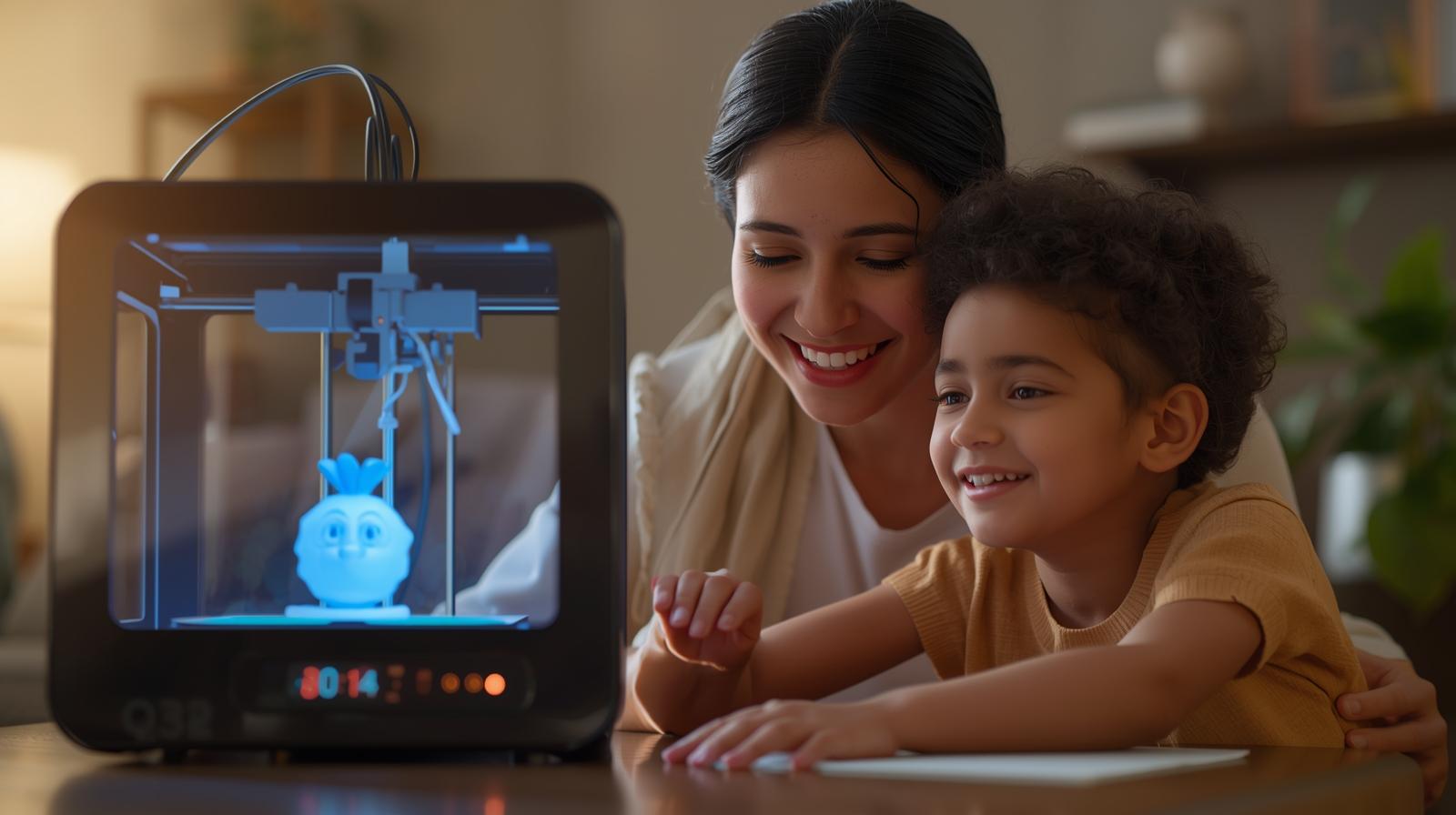
Does your child love building, fixing, or inventing new things? You might have noticed them staring in awe at cool gadgets online. It sounds like they are ready for a new challenge.
Bringing a kids 3d printer into your home can feel intimidating at first. Technology moves so fast, and we just want to keep up without the stress. But don’t worry, because modern printers are actually very family-friendly.
Here at Mom Kid Friendly, we believe in making tech simple and fun. Let’s explore how this tool can spark creativity in your living room. A kids 3d printer can turn small ideas into real projects they can hold.
Are you thinking about getting a 3D printer for your family? Drop a comment below and tell us what your kids want to make first!
Why parents keep searching for a kids 3D printer
We all want our kids to spend less time passively watching screens. We want them to engage their brains and hands in active play. A 3D printer offers that perfect balance of tech and touch.
It transforms a digital idea into a physical object they can hold. This process feels like magic to a child. It turns them from consumers of content into creators of toys.
Parents also love the educational value hidden inside the fun. It quietly teaches math, engineering, and spatial reasoning. You don’t have to force them to learn when they are having this much fun.
The prices have also dropped significantly in recent years. What used to be expensive lab equipment is now affordable for home use. This accessibility makes it a top wish-list item for birthdays and holidays.
Must Read: The Best Kids Sled for Safe & Fun Winter Memories
What is a kids 3D printer and how it actually works
Let’s strip away the complicated jargon. Think of a 3D printer as a very precise, robotic hot glue gun. It melts plastic string, called filament, to create shapes.
The printer follows a digital map from a computer file. It lays down the melted plastic in super thin layers. It builds these layers one on top of the other, from the bottom up.
Eventually, those hundreds of tiny layers form a solid object. It creates everything from dinosaur toys to missing board game pieces. The process takes time, but watching it build is fascinating.
Most kid-friendly models use a specific plastic called PLA. PLA is biodegradable and made from renewable resources like cornstarch. It smells a bit like waffles when it melts, which is much better than harsh chemicals.
You don’t need to be a computer genius to run one. Many printers come with pre-loaded designs ready to go. You just plug it in, load the plastic, and press print.
Is a kids 3D printer safe for young children?
Safety is always the number one worry for us moms. The main safety concern with 3D printing is the heat. The nozzle that melts the plastic gets very hot.
It creates a burn risk if little fingers get too curious. However, many printers designed for kids come fully enclosed. This box keeps the hot parts safely behind a door.
Another thing to consider is the moving parts. The print head zips back and forth quickly. An enclosure also protects fingers from getting pinched during a job.
Fumes can also be a concern with industrial materials. But as we mentioned, PLA plastic is non-toxic and safe for home use. It does not release harmful fumes like other industrial plastics do.
Always supervise younger children while the machine is running. Teach them to treat it like an oven or an iron. With clear rules, it is a safe and exciting tool for the house.
Best age to introduce a kids 3D printer at home
Every child matures at a different pace. However, most experts suggest that 8 to 10 years old is a great starting point. At this age, they can understand the software basics.
They also have the patience to wait for a print to finish. Younger kids, around 5 to 7, can still enjoy the process. They will just need you to handle the hardware and software.
For teenagers, this tech opens up a whole new world. They can design their own complex models using free software. It becomes a serious tool for cosplay, gaming, or school projects.
If your child loves Legos or Minecraft, they are likely ready. These interests show they understand building in 3D space. That mental skill translates perfectly to printing.
Start small with easy projects to build their confidence. You don’t want to overwhelm them on day one. Let their curiosity lead the way as they get older.
Real benefits of using a kids 3D printer for learning and play
The benefits go far beyond just making plastic trinkets. The biggest lesson a kids 3D printer teaches is resilience. Prints will fail, and plastic will tangle.
Your child will have to figure out why it happened. They learn that making mistakes is just part of the process. This problem-solving skill is vital for real life.
It also gives them a massive boost in confidence. There is immense pride in saying, “I made that.” They see the direct result of their planning and effort.
Here are a few specific skills they build:
- Spatial Reasoning: They learn how shapes fit together in the real world.
- Patience: Printing is slow, teaching them to wait for a reward.
- Computer Skills: They learn to navigate files and simple design programs.
- Creativity: If they can dream it, they can try to build it.
It also connects the digital world to the physical world. They see how a drawing on a screen becomes a real object. This is the foundation of modern engineering and design.
What to look for before buying a kids 3D printer
Not all printers are created equal. You want a machine that is a tool, not a burden. Look for a printer described as “auto-leveling.”
Leveling the print bed is the hardest part of printing. If the bed isn’t flat, the print fails. An auto-leveling printer does this hard work for you.
Check for safety features like a full enclosure. As we discussed, this keeps hot parts away from hands. It also keeps the noise down, which is a nice bonus.
Look for a flexible, removable print bed. This makes popping the finished toy off the printer much easier. You don’t want to be scraping at it with sharp tools.
Here is a quick checklist for your shopping trip:
- Auto-leveling: A must-have for beginners.
- Enclosed design: Safer and quieter.
- Wi-Fi connectivity: Makes sending files easier.
- Good support: Look for brands with helpful customer service.
Read reviews from other parents, not just tech experts. Parents will tell you if it’s actually easy to use. You want a “plug-and-play” experience, not a science project.
Must Read: Laser Tag Guns and Vests: The Ultimate Guide to Screen-Free Family Fun
Common mistakes parents make with a kids 3D printer
We all make mistakes when learning something new. One common error is buying the absolute cheapest printer available. Ultra-cheap kits often require hours of assembly and constant tinkering.
It is worth spending a little more for reliability. You want to spend time printing, not repairing the machine. Frustration is the quickest way to kill your child’s interest.
Another mistake is forgetting to buy extra filament. The sample roll in the box runs out very fast. Buy two or three rolls of colorful PLA right away.
Parents often underestimate the time it takes to print. Even small toys can take two or three hours. Manage expectations so kids don’t expect instant gratification.
Don’t ignore the maintenance requirements. The nozzle can clog, and the bed needs cleaning. A little regular care keeps the printer running smoothly.
Finally, don’t leave the printer running unattended overnight at first. While safe, prints can detach and create a “spaghetti” mess. It’s better to print while you are home and awake.
Simple project ideas kids can make with a kids 3D printer
Once the printer is set up, what should you make? Start with pre-made designs from websites like Thingiverse or Printables. You don’t need to design anything from scratch yet.
Fun ideas for beginners:
- Backpack Tags: Customize them with their name.
- Cookie Cutters: Fun shapes for play-dough (or cookies if you use food-safe steps).
- Action Figures: Print heroes or monsters for their games.
- Desk Organizers: Pencil holders in cool geometric shapes.
Useful household hacks:
- Cable clips: Keep their charging cords tidy.
- Toothpaste squeezers: Get every last drop out of the tube.
- Drawer knobs: Fun shapes to update their dresser.
- Phone stands: Perfect for watching videos hands-free.
Gifts for family:
- Keychains: A personalized gift for Grandma.
- Picture frames: Small, custom frames for wallet photos.
- Bookmarks: Thin, flat prints are fast and easy.
- Vases: Simple vases for dried flowers look beautiful.
Let your child browse the file websites with you. They will find thousands of free ideas. It is a treasure hunt for their imagination.
How to set up a kids 3D printer without stress
The box arrives, and excitement is high. Take a deep breath before you open it. Clear a sturdy table or desk near a power outlet.
The printer needs a stable surface that doesn’t wobble. Vibrations can ruin a print job. Make sure there is good airflow in the room, too.
Read the manual together with your child. It sounds boring, but it prevents broken parts. Watch a “setup video” for your specific model on YouTube.
Seeing someone else do it makes it much clearer. Install the filament according to the instructions. It usually feeds through a tube into the print head.
Run the “test print” file that comes on the machine. This file is perfectly sliced to work on that printer. It proves that everything is working correctly before you try other files.
Celebrate that first successful print! It might just be a little boat or a cube. But it marks the start of your journey.
Final thoughts on choosing the right kids 3D printer
Bringing a kids 3D printer into your home is a big step. It introduces your family to the future of making. It encourages creativity, patience, and STEM learning.
Remember that you don’t need to be a tech expert. You just need to be willing to learn alongside your child. The “Mom Kid Friendly” approach is all about learning together.
There will be messy prints and tangled plastic. But there will also be moments of pure joy and pride. The skills they learn will stick with them forever.
Trust your gut when picking a model. Look for safety, ease of use, and good reviews. You’ve got this, and your kids are going to love it.
Does your family love tech toys or do you prefer old-school crafts? We want to hear your story! Leave a comment below and join our community of supportive moms.
Must Read: Why a Child’s 3D Printer Is Becoming a Favorite Learning Tool at Home
Frequently Asked Questions
What is a kids 3d printer?
A kids 3d printer is a beginner-friendly 3D printer made for home use, with safety features and simple controls for children.
Is a kids 3d printer safe for home use?
A kids 3d printer is safe when it uses PLA filament, has an enclosed design, and is used with adult supervision.
What age is best for a kids 3d printer?
Most kids do well with a kids 3d printer between ages 8 and 10, while younger kids can join with hands-on help.
Do kids need design skills to use a kids 3d printer?
No, many kids 3d printer models include ready-made designs so kids can start printing right away.
What can children make with a kids 3d printer?
Kids can make toys, school tools, organisers, small gifts, and custom items using a kids 3d printer.
What filament is best for a kids 3d printer?
PLA filament is best for a kids 3d printer because it is non-toxic, easy to print, and safe for home use.
Are kids 3d printers expensive?
Many kids 3d printer options are now affordable and cost similar to other popular educational toys.
Author

