

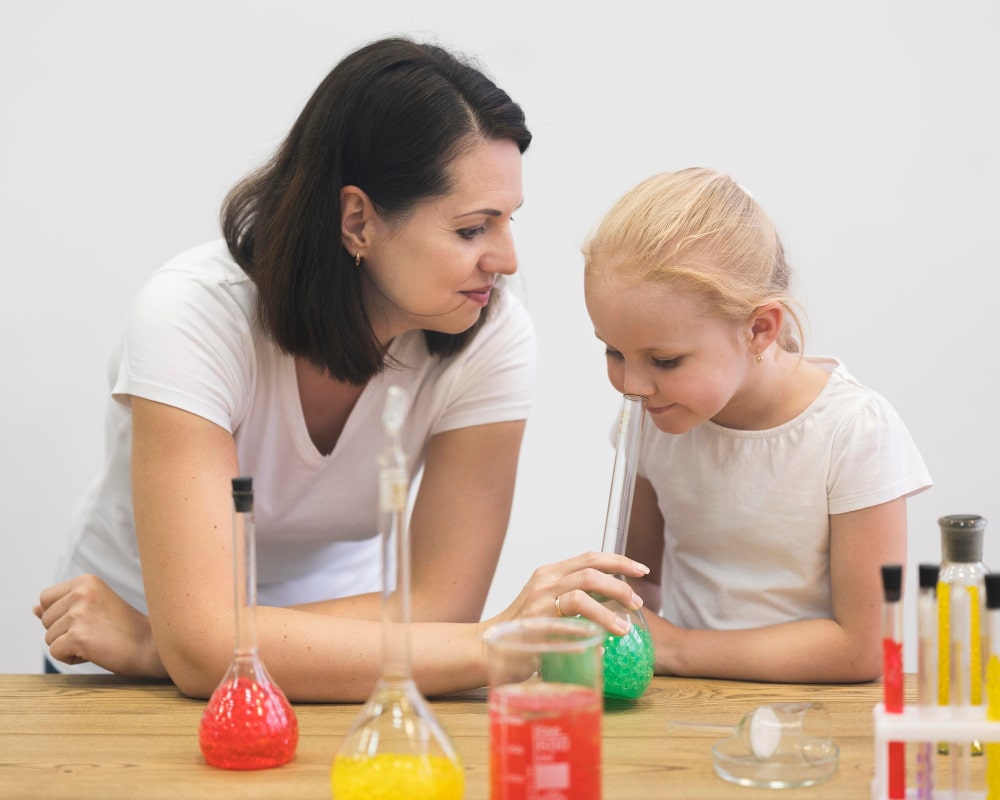
Science is all around us and is constantly evolving. It’s important for parents to foster their child’s curiosity towards science. One of the best ways to do this is by conducting homemade science experiments with your kids. Not only are these activities fun and engaging, but they also teach valuable lessons about the world we live in.
Many of these experiments can be done with materials found around the house, making them affordable and convenient. There are countless experiments to choose from, depending on your child’s interests and age range. But I’ll share a few simple and easy experiments that you can try with your child to get them excited about science.
Why Science Experiments are Important for Kids
Science experiments are a great way to introduce children to the world of science and foster their curiosity. By engaging in hands-on activities, kids can learn valuable skills such as critical thinking, problem-solving, and observation. These skills can then be applied to other areas of their life, making them more confident and independent learners.
Science experiments allow kids to explore and understand the world around them. They can see scientific concepts in action and gain a deeper understanding of how things work.
This will not only pique their interest in science but also help them develop a love for learning. That’s why it’s important to encourage kids to engage in science experiments.
You may like: 5 Best Camping Activities for Kids
Simple and Fun Science Experiments for Kids
Here are a few simple and fun science experiments that you can do with your kids at home:
Baking Soda Volcano
This classic science experiment never fails to amaze kids. All you need is a bottle, baking soda, vinegar, and food coloring.
- Fill the bottle with water until it’s about ¾ full.
- Gently mix a few drops of food coloring into the water.
- In a separate container, mix together ½ cup of vinegar and a few tablespoons of baking soda.
- Quickly pour the mixture into the bottle and watch as the volcano erupts!
This experiment demonstrates the reaction between an acid (vinegar) and a base (baking soda), creating carbon dioxide gas that causes the eruption.
Floating Egg
This experiment is not only easy but also visually impressive for kids. I remember doing this experiment in school and being amazed by the result.
To do this experiment, you need:
- A clear glass or jar
- Water
- Salt
- An egg
Instructions:
- Fill the glass or jar until it is approximately three-quarters full with water.
- Carefully place the egg into the water and observe that it sinks to the bottom.
- Add salt to the water and stir gently until fully dissolved.
- Keep adding small amounts of salt and stirring until the egg begins to float!
Your kids will be amazed to see the egg that once sank, now floating in the water. This is because saltwater is denser than freshwater, which makes it easier for objects to float in saltwater.
Rainbow in a Glass
Another fun and educational science experiment that you can do at home with your kids is creating a rainbow in a glass. Here’s what you’ll need:
- Clear drinking glasses
- Water
- Food coloring (red, blue, and green)
- Tablespoon or spoon
Instructions:
- Fill each glass with water until it’s approximately three-quarters full..
- Add a few drops of red food coloring to one glass, blue to another, and green to the third glass.
- Stir the water in each glass until the food coloring is evenly distributed.
- Take an empty glass and place it in the middle of the three glasses filled with colored water.
- Using a tablespoon, slowly pour the red water into the empty glass, being careful not to mix it with the other colors.
- Next, pour the blue water into the empty glass followed by the green water.
- You should now have a glass filled with layers of red, blue, and green water.
- Take a white piece of paper and place it behind the glass to observe the colors more clearly.
- As you look through the layers of colored water, notice how they blend together to create new colors where they overlap.
This is a simple and fun experiment that demonstrates the principles of color mixing. By layering different colors of water, we can see how they interact with each other to create new shades and hues. This experiment can also be done with different liquids, such as food coloring, juice, or even milk.
Magic Milk Experiment
The magic milk experiment is a classic homemade science experiment that kids of all ages can enjoy. It is a great way to introduce basic science concepts, such as color mixing and chemical reactions, in a hands-on and engaging way.
Materials Needed:
- Whole milk
- Dish soap
- Food coloring (various colors)
- A shallow dish or plate
- Cotton swabs or toothpicks
Instructions:
- Begin by pouring enough milk to cover the bottom of the dish or plate. It is important to use whole milk as it has a higher fat content, which will be necessary for the experiment.
- Add drops of food coloring in various spots on top of the milk. Try to place the drops close together but not on top of each other.
- Take a cotton swab or toothpick and dip it into the dish soap.
- Place the soapy cotton swab or toothpick onto one of the drops of food coloring. Watch as the colors start to mix and move around the dish.
- Notice how the colors continue to move and blend together, creating unique patterns and designs.
Safety Precautions:
When conducting any type of science experiment, it is important to prioritize safety. Here are a few precautions to keep in mind when trying out homemade science experiments with kids:
- Read through all instructions and gather necessary materials before starting the experiment.
- Do not taste or ingest any materials used in the experiment.
Bottom Line
Homemade science experiments can be a fun and educational activity for kids. It encourages them to explore their curiosity and learn about the world around them in a hands-on way. By following safety precautions and using simple materials, these experiments can be easily done at home with parental supervision.
So if you’re looking for a way to keep your child entertained and engaged, try out some of these fun and easy homemade science experiments.
Frequently Asked Questions
Can these experiments be done with materials found at home?
Yes, most of the materials used in these experiments can be easily found around the house or purchased at a local store. This makes them convenient and budget-friendly for parents.
Will my child learn anything from these experiments?
Absolutely! Not only will your child have fun while conducting these experiments, but they will also have the opportunity to learn new concepts and develop their critical thinking skills.
Are homemade science experiments safe for kids?
Yes, homemade science experiments are generally safe for kids as long as proper safety precautions are followed. Always supervise children during experiments and use non-toxic, kid-friendly materials.
How much time does a typical experiment take?
Most experiments can be set up and completed within 15 to 30 minutes, making them convenient and fun.
