
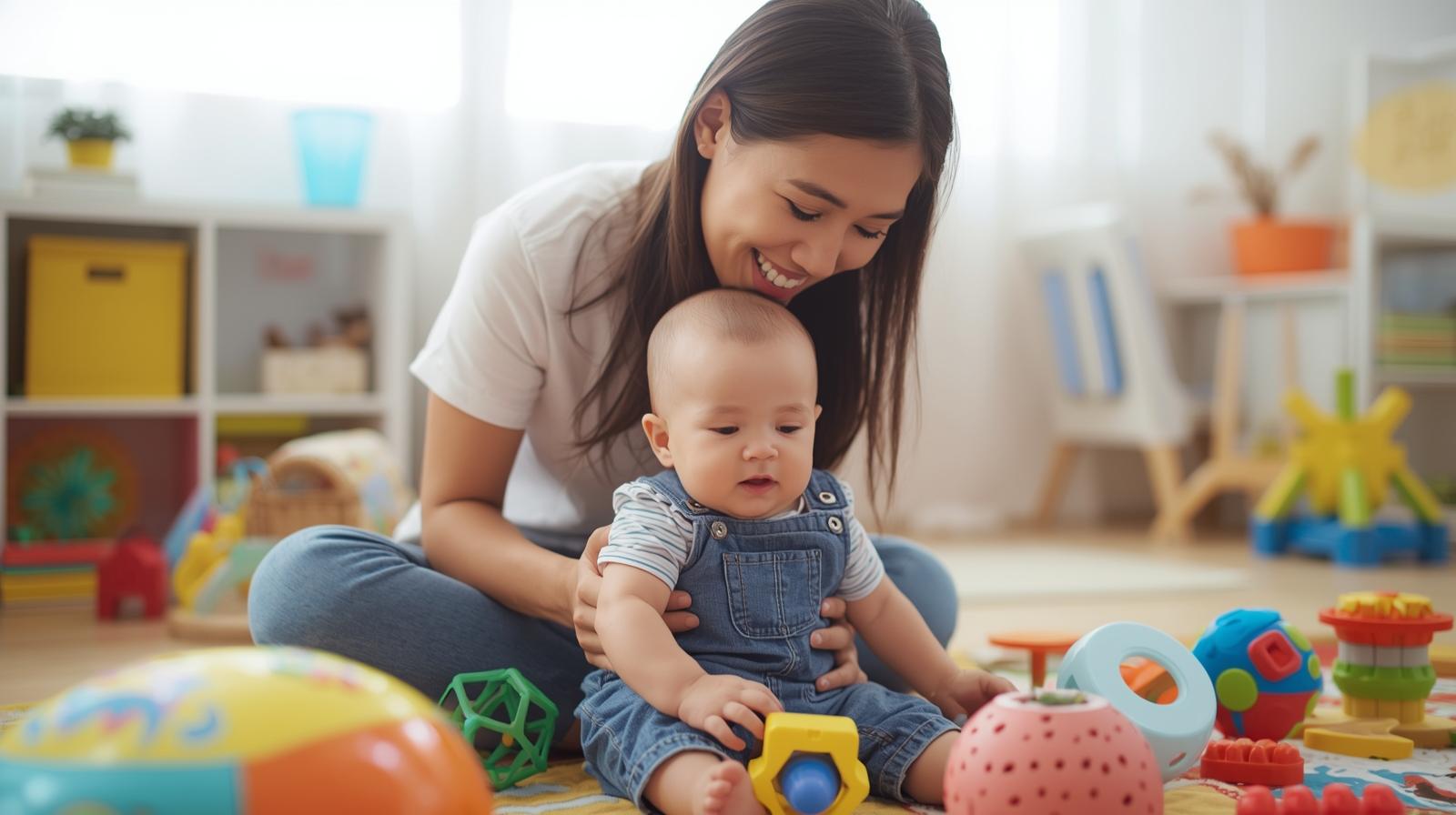
You finally got the baby to sleep, you washed the bottles, and now you are staring at your little one. Maybe they are awake and looking around, and you wonder what you should actually do with them. This quiet moment is often where sensory activities for infants naturally begin for every new mom.
We often think play needs to look like a structured game or a fancy class. But for babies, the world is brand new and full of wonders through sensory activities for infants. Everything is a learning opportunity waiting to happen.
Sensory activities for infants are the perfect way to bridge the gap between “keeping them alive” and “helping them thrive.” You do not need a degree in education to do this right. You just need a few minutes and a willingness to explore.
Join the Mom Kid Friendly community today for more simple, stress-free parenting tips sent straight to your inbox!
Why sensory activities for infants matter in the first year
Your baby’s brain is growing faster right now than it ever will again. Every time they smell, touch, or see something new, neural connections form. These connections are the building blocks for all future learning.
Sensory play helps babies understand their bodies. It teaches them about cause and effect. It also lays the groundwork for language skills and problem-solving later on.
You are building their brain architecture. Simple interactions create strong foundations. It is amazing what a little play can do.
Building a bond through play
Sensory play is also a massive bonding opportunity. When you explore a texture together, you are connecting. Your voice and your touch make them feel safe.
This security allows them to be brave enough to explore. They learn that you are their safe home base. That trust lasts a lifetime.
Calming the nervous system
Believe it or not, sensory play can settle a fussy baby. Water play often calms a crying infant. Gentle music can reset a bad mood.
It works for moms, too. Watching your baby discover something new is incredibly grounding. It helps you slow down and enjoy the moment.
Must Read: Indoor Activities For Toddlers That Work At Home
What parents worry about with infant playtime
We often stress about doing enough for our kids. You might worry that your baby isn’t hitting milestones fast enough. You might fear that you aren’t “teaching” them enough during the day.
Social media makes this harder. You see perfectly curated playrooms and feel guilty. You wonder if you need to buy expensive subscription boxes.
Let us be Mom Kid Friendly and honest with you. Your baby does not care about the price tag. They care about the experience.
The fear of the mess
Another big worry is the mess. The idea of sensory play often brings up images of paint everywhere. No mom wants extra cleaning when she is already exhausted.
We get it completely. That is why we focus on manageable activities. You can do sensory play without destroying your living room.
Safety concerns
New moms also worry about safety. Choking hazards are a real fear. We want to protect our little ones from everything.
This guide focuses on safe, age-appropriate ideas. We will help you feel confident. You can do this safely.
How infants learn through touch, sound, sight, and movement
Babies are like tiny scientists gathering data. They don’t read books to learn; they use their bodies. Their senses are their only tools for information.
Learning through touch
Skin is the largest organ in the human body. Babies learn about temperature, texture, and pressure through touch. It is how they distinguish between a soft blanket and a hard floor.
They also use their mouths to “touch.” The lips and tongue have many nerve endings. This is why everything goes straight into their mouth.
Learning through sight
Newborns have blurry vision. They are drawn to high-contrast images because they are easier to see. As they grow, they begin to track movement and see color.
Visual sensory play helps develop focus. It strengthens the eye muscles. It prepares them for hand-eye coordination.
Learning through sound and movement
Sound helps babies locate objects. It teaches them rhythm and language patterns. Your voice is their favorite sound in the world.
Movement, or the vestibular sense, is crucial. It tells a baby where their body is in space. Rocking, bouncing, and swinging all feed this sense.
Simple sensory activities for infants using everyday items
You do not need to go to the store. Look in your kitchen drawers. Look in your laundry basket.
Your house is a goldmine for sensory tools. A metal spoon feels cold and hard. A wooden spoon feels warm and smooth.
Here is a quick list of household sensory items:
- Laundry basket: Fill it with blankets for a soft nest.
- Pots and pans: The classic drum set.
- Scarves: Great for peek-a-boo and feeling soft textures.
- Plastic containers: Put items inside to make shakers.
- Mirror: Babies love looking at themselves.
Using what you have saves money. It also teaches your child creativity. You can make fun out of anything.
Must Read: Activities for 4 Month Old: Easy Play at Home
Sensory activities for infants from 0–3 months
In the “fourth trimester,” babies are adjusting to the world. They sleep a lot and have limited movement. Sensory play here should be gentle and calming.
Keep sessions very short. Even two minutes is enough. Watch for sleepy cues.
High-contrast tracking
Newborns see black, white, and red best. Print out simple patterns or buy high-contrast cards.
- Hold a card about 10 inches from their face.
- Move it slowly from side to side.
- Watch their eyes try to follow it.
This builds neck strength. It helps with visual tracking. It is a quiet, focused activity.
The texture tour
Your baby spends a lot of time in pajamas. Give their skin a chance to feel different things.
- Gently rub a silk scarf on their hand.
- Tickle their toes with a clean makeup brush.
- Let them lie on a fuzzy rug (supervised).
Talk to them while you do it. Say, “This is soft,” or “This tickles.” You are building their vocabulary early.
Tummy time sensory bag
Tummy time can be a struggle. Make it more fun with a sensory distraction.
- Fill a ziplock bag with hair gel and glitter.
- Tape it securely to the floor (double tape the edges!).
- Place baby on their tummy in front of it.
They can squish the bag without getting messy. The movement of the glitter catches their eye. It makes the workout feel like play.
Sensory activities for infants from 4–6 months
Your baby is waking up to the world now. They might be reaching for things or rolling over. They are starting to grab everything in sight.
This is the golden age of “mouthing.” Ensure everything is clean and too big to swallow. They want to taste the world.
Water splash (on a tray)
You don’t need a full bath for water play.
- Put a small amount of water on a highchair tray or baking sheet.
- Let them slap the water with their hands.
- Add a floating toy for them to grab.
This teaches cause and effect. They hit the water, and it splashes. It is simple, wet fun.
Mirror play
Babies at this age are fascinated by faces.
- Prop a non-breakable mirror on the floor.
- Lay baby down so they can see themselves.
- Make funny faces next to them.
They don’t know it is a reflection yet. They just see a friendly baby. It encourages social smiles and cooing.
The “What’s that sound?” game
Help them develop auditory localization.
- Take a rattle or a crinkly paper.
- Make a sound on their left side.
- Wait for them to turn their head.
- Move to the right side and repeat.
This strengthens neck muscles. It helps them connect sound to a source. It is a great pre-crawling skill.
Sensory activities for infants from 7–9 months
Your baby might be sitting up or starting to crawl. They have better hand control. They can pass toys from one hand to the other.
They are also very curious. They want to explore textures and hidden objects. They love to drop things to see what happens.
Edible sensory bin
Since they still put things in their mouth, keep it safe. Use food as your sensory material.
- Put yogurt or pureed pumpkin on a clean tray.
- Let them smear it around.
- It is messy, but it is safe if they eat it.
This introduces new textures. It helps desensitize picky eaters. Strip them down to a diaper for easy cleanup.
Sensory bottles
Make your own discovery tubes.
- Fill clear plastic bottles with different items.
- Try dry rice, water with oil, or colored beads.
- Glue the caps shut very tightly.
They can shake, roll, and look at them. It works their arm muscles. It is mesmerizing for busy minds.
Temperature play
Explore hot and cold (safely).
- Give them a metal bowl from the fridge.
- Give them a warm towel from the dryer.
- Let them feel the difference.
Use words like “brrr, cold” and “ahh, warm.” It connects physical feelings to words. It is a quick science lesson.
Sensory activities for infants from 10–12 months
Your baby is almost a toddler now. They might be cruising furniture or standing. They understand object permanence (things exist even when hidden).
They enjoy solving problems. They like putting things in and taking them out. Their fine motor skills are getting sharper.
Jello dig
This is a Mom Kid Friendly favorite.
- Make a batch of Jello and hide small plastic toys inside.
- Let the Jello set in the fridge.
- Let your baby dig the toys out.
It is sticky, squishy, and cold. They have to work to get the prize. It builds persistence and finger strength.
Tape peel
This is great for fine motor skills.
- Stick strips of painter’s tape to the floor or highchair.
- Leave a little tab up so they can grab it.
- Let them work to peel the tape off.
It takes concentration. They have to use their “pincer grasp” (thumb and finger). It keeps them busy for surprisingly long.
Cardboard tunnel
Use those delivery boxes.
- Open both ends of a large box.
- Line the inside with different textures (bubble wrap, fabric).
- Encourage them to crawl through.
It changes the acoustics of their voice. It changes the light. It builds gross motor skills and spatial awareness.
Safe sensory play tips every parent should know
Safety is always the priority. Sensory activities for infants require active supervision. You cannot leave the room, even for a second.
The toilet paper roll test
If you are unsure if an item is a choking hazard, test it. Use a toilet paper roll. If the item fits inside the roll, it is too small.
Babies can choke on surprisingly large items. When in doubt, swap it out. It is better to be safe.
Watch for strings and loops
Be careful with ribbons or strings. They can wrap around tiny fingers or necks. Keep all strings short (under 6 inches).
Check homemade toys often. Tape can peel off. Glue can come loose.
Allergies and skin sensitivity
Watch out for skin reactions. Some babies have sensitive skin. Test new textures (like shaving cream or lotions) on a small patch of leg first.
Be mindful of food allergies. If you use food for play, ensure it is safe. Avoid honey before age one.
How often to do sensory activities for infants without overstimulation
More is not always better. Babies have a limit. Their brains can only process so much new information at once.
Overstimulation looks like fussiness. It looks like looking away or arching the back. It can even lead to crying.
Short bursts are best
You don’t need an hour-long session. Five to ten minutes is plenty. Quality matters more than quantity.
Stop while they are still having fun. This leaves a positive memory. It makes them want to play again later.
Balance with quiet time
Follow sensory play with calm time. Cuddle on the couch. Read a quiet book.
This helps their nervous system reset. It processes the learning. It prevents the “crash” later.
Must Read: 50+ Easy Activities for 2 Year Olds
Signs your baby is enjoying sensory activities for infants
You want play to be a happy experience. It should not be stressful for the baby. Watch their body language.
Positive cues
- Reaching out: They are trying to touch the item.
- Wide eyes: They are focused and interested.
- Cooing or babbling: They are “talking” about what they feel.
- Kicking legs: This often shows excitement.
Negative cues (Time to stop)
- Turning head away: They are breaking contact.
- Rubbing eyes: They might be tired.
- Hiccups or yawning: These are subtle stress signs.
- Stiff body: They are not relaxed.
If you see negative cues, just stop. Pick them up. You can try again tomorrow.
Easy ways to fit sensory activities for infants into daily routines
You are a busy mom. You don’t always have time to set up a specific activity. The good news is that sensory play fits into real life.
We love multitasking at Mom Kid Friendly. You can turn chores into play. You can make the mundane magical.
Bath time is sensory time
The bath is the ultimate sensory bin.
- Use cups to pour water.
- Use a sponge to squeeze water.
- Talk about the splash sounds.
You have to bathe them anyway. Make it count. It is easy cleanup, too.
Kitchen prep
While you cook, let them play safely.
- Give them a metal bowl and spoon on the floor.
- Let them smell the ingredients (safe ones like vanilla or oranges).
- Talk about the sizzling sounds of the pan.
They feel included. You get dinner made. Everyone wins.
Laundry mountain
Folding clothes is boring for you, but fun for them.
- Let them crawl over the pile of warm clothes.
- Let them hide under a sheet.
- Talk about the different fabrics (denim vs. cotton).
It keeps them contained while you work. It turns a chore into a game. It is practical parenting at its best.
The nature walk
Get outside for free sensory play.
- Let them touch the rough bark of a tree.
- Let them feel the wind on their cheeks.
- Listen to the birds singing.
Nature provides the best textures. Fresh air helps everyone sleep better. It is good for your mental health, too.
Confidence in your parenting journey
You are doing a great job. The fact that you are reading this proves it. You care about your baby’s development.
Sensory activities for infants don’t have to be perfect. They don’t have to look like Pinterest. They just need to be full of love.
Trust your instincts. If something feels fun, do it. If it feels like too much work, skip it.
Your baby loves you for you. You are their favorite toy. You are their best teacher.
Keep it simple. Keep it real. Enjoy these fleeting moments.
Found this helpful? Share this guide with another mom who needs some fresh ideas, or comment below with your favorite activity!
Frequently Asked Questions
What are sensory activities for infants?
Sensory activities for infants are simple play experiences that engage touch, sight, sound, smell, or movement to support early development.
When can I start sensory activities for infants?
You can start sensory activities for infants from birth with gentle touch, soft sounds, and high-contrast visuals.
How often should I do sensory activities for infants?
Short sessions of sensory activities for infants a few times a day are enough and help avoid overstimulation.
Are sensory activities for infants safe at home?
Sensory activities for infants are safe when supervised closely and when items are age-appropriate and too large to swallow.
Do sensory activities for infants help brain development?
Yes, sensory activities for infants support brain growth by strengthening neural connections through everyday experiences.
Author

