

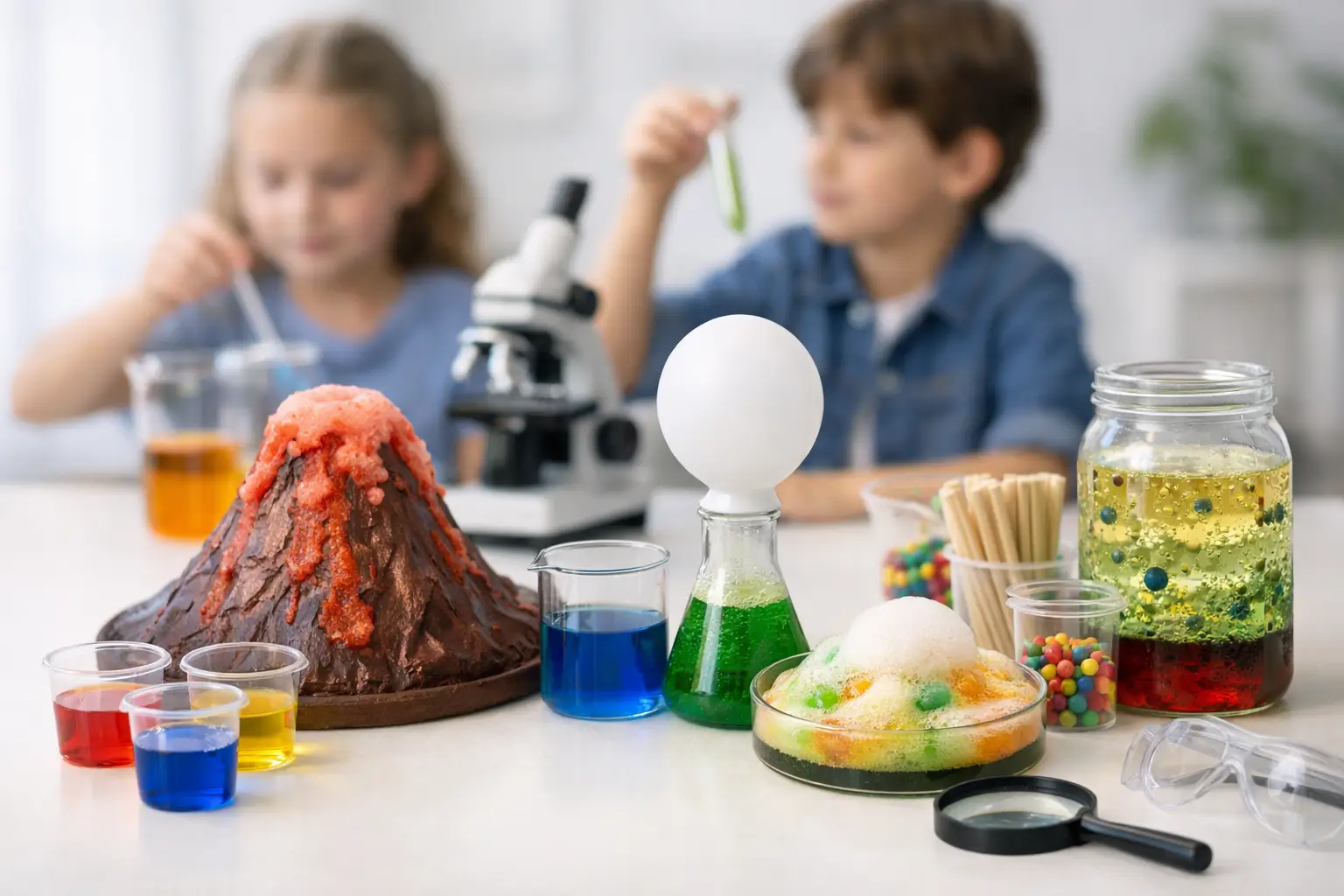
A rainy afternoon, a bored child, and a parent who does not want to set up a complicated craft station – that is exactly when easy science experiments for kids can save the day. The best ones do more than fill 20 minutes. They give your child a chance to ask questions, notice patterns, and feel proud of figuring something out with their own hands.
What makes science at home work is not perfection. It is curiosity, a little patience, and materials you probably already have in the kitchen or recycling bin. If your child is preschool-aged, the goal is simple observation. If they are older, you can layer in predictions, comparisons, and basic explanations. Either way, these activities are meant to feel manageable for real family life.
Why easy science experiments for kids are worth doing
Science activities at home help children practice more than academic skills. They learn to slow down, pay attention, and test ideas. That matters whether your child already loves facts and figures or usually claims they “hate science.”
These experiments also work well for busy parents because they create natural conversation. Instead of asking, “How was your day?” and getting one-word answers, you get questions like, “Why did it fizz?” or “How did the color move like that?” Those moments can feel small, but they build confidence and connection.
There is one helpful trade-off to keep in mind. Hands-on science is engaging, but it can also be messy or slower than expected. Choosing simple setups with clear results usually works better than aiming for something elaborate when everyone is already tired.
Before you start any science activity
A few small choices can make the whole experience smoother. Cover the table if you are using food coloring. Keep paper towels nearby. Pick clothes you do not mind getting messy. And if younger siblings are around, avoid anything that uses very small items.
It also helps to keep your role simple. You do not need to lecture. Ask your child what they think will happen, let them watch closely, and then talk about what they noticed. That approach keeps the activity playful while still making it educational.
1. Baking soda and vinegar volcano
This classic is popular for a reason. Put a few spoonfuls of baking soda in a small cup or bowl, add a drop or two of dish soap if you want more foam, then pour in vinegar. If your child likes bright colors, add food coloring first.
The bubbling happens because the baking soda and vinegar react and release carbon dioxide gas. For younger kids, that explanation is enough. Older children may enjoy comparing what happens when you change the amount of baking soda or vinegar.
If your child is sensitive to loud or surprising reactions, use a larger bowl and a smaller amount at first. The excitement is fun, but some kids prefer a gentler start.
2. Walking water with paper towels
Line up three or five clear cups. Fill every other cup with water and add different food coloring to those cups. Fold paper towels into strips and place one end in a cup with colored water and the other end in an empty cup.
Over time, the water travels up the paper towel and into the empty cup. This shows capillary action, which is the way water can move through small spaces. Children also get to watch colors mix in the middle cups, which adds a nice art element.
This one takes patience. It is better for kids who enjoy checking back than for children who want instant results.
3. Rainbow in milk
Pour a thin layer of milk into a shallow dish. Add drops of different food coloring around the surface. Then dip a cotton swab in dish soap and touch it to the milk.
The colors quickly swirl and move away from the soap. That happens because the soap interacts with the fat in the milk and changes the surface tension. It looks dramatic, but the setup is easy.
Whole milk usually gives the best effect. If you only have lower-fat milk, it may still work, just with less movement.
4. Sink or float test
Fill a large bowl, bin, or sink with water and gather household items like a spoon, toy car, leaf, block, cork, or plastic lid. Ask your child to guess which ones will sink and which will float before testing each item.
This experiment is simple, but it introduces early ideas about density and material types. It is especially good for preschoolers and kindergartners because the concept is easy to see right away.
You can make it more interesting for older kids by asking why a heavy object like a large plastic bowl might float while a small coin sinks. That kind of contrast helps them think beyond size alone.
5. Grow crystals with salt
Stir salt into a cup of warm water until no more seems to dissolve. Tie a string to a pencil and rest the pencil across the top of the cup so the string hangs down into the water. Leave it undisturbed for a few days.
As the water evaporates, salt crystals begin forming on the string. This experiment takes longer, but that slower timeline can actually be useful. It teaches kids that not every result is immediate.
If your child loses interest quickly, this may not be the best first experiment. But for children who like checking progress each day, it can feel rewarding.
6. Balloon inflation with a bottle
Pour vinegar into a bottle. Put baking soda into a balloon using a small funnel or a folded piece of paper. Carefully stretch the balloon over the bottle opening without dumping the baking soda in yet. When ready, lift the balloon so the baking soda falls into the bottle.
The balloon inflates as the reaction creates gas. This is a nice variation on the volcano because the gas gets captured instead of bubbling out in the open.
It is a good choice for children who like visible cause and effect. Just be ready to help with setup, since attaching the balloon can be tricky for little hands.
7. Pepper and soap experiment
Sprinkle black pepper onto the surface of a shallow bowl of water. Ask your child to touch the water with a clean finger first. Not much happens. Then put a little dish soap on their finger and touch the water again.
The pepper quickly moves away. This happens because the soap changes the surface tension of the water. It is one of the fastest easy science experiments for kids, which makes it especially helpful when attention spans are short.
This is also a gentle way to connect science to everyday life. You can talk about why soap is so effective when we wash our hands.
8. Static electricity with a balloon
Blow up a balloon and rub it on your childs hair or a wool sweater. Then hold it near small pieces of tissue paper or puffed rice cereal. The pieces should jump toward the balloon.
This demonstrates static electricity in a way children can see immediately. Dry air usually helps, so results may be stronger in some seasons than others.
If your child has thick or curly hair, the effect can still work, but a sweater may be more reliable than hair rubbing alone.
9. Frozen treasure melt
Freeze small waterproof toys inside a container of water. Once frozen, place the ice block in a tray and let your child use warm water, salt, or child-safe tools like spoons to free the toys.
This is part science experiment, part sensory play. Children observe how heat and salt affect ice while staying engaged with the rescue mission.
It works especially well for younger kids, though older siblings may enjoy timing different melting methods to compare what works fastest.
10. Homemade oobleck
Mix about two parts cornstarch with one part water in a bowl. Stir until it forms a substance that feels solid when squeezed but turns runny when released.
Oobleck is a non-Newtonian fluid, which means it does not behave like a typical liquid or solid. Children love the strange texture, and it naturally leads to questions.
This one is messy. If that feels stressful today, save it for outside play or for a day when cleanup will not push you over the edge.
How to make these experiments feel more educational without making them boring
The easiest way is to ask better questions. Before starting, ask, “What do you think will happen?” During the experiment, ask, “What do you notice?” Afterward, ask, “What changed?” Those three prompts do a lot of work without turning family time into a lesson plan.
You can also invite your child to draw what they saw or compare two versions of the same activity. Maybe they test warm water versus cold water, or more soap versus less soap. Small changes help children understand that science is not magic. It is observation, testing, and noticing patterns.
If your child is reluctant, start with the most visual experiments first. Fast reactions like fizzing, swirling color, or moving pepper tend to build interest better than slower projects. Once they feel successful, they are usually more open to the quieter ones.
When science time does not go as planned
Sometimes the balloon does not inflate much. Sometimes the crystals barely form. Sometimes your child walks away halfway through. That does not mean the activity failed.
Part of doing science at home is showing children that unexpected results are still worth noticing. You can say, “That was different from what we thought. Why do you think that happened?” That response teaches flexibility and problem-solving, which are just as valuable as getting the perfect effect.
You do not need a perfect setup to create meaningful learning at home. A cup, a spoon, some baking soda, and a few curious minutes can be enough. And on an ordinary afternoon, that kind of simple connection can feel like exactly the right thing.
