
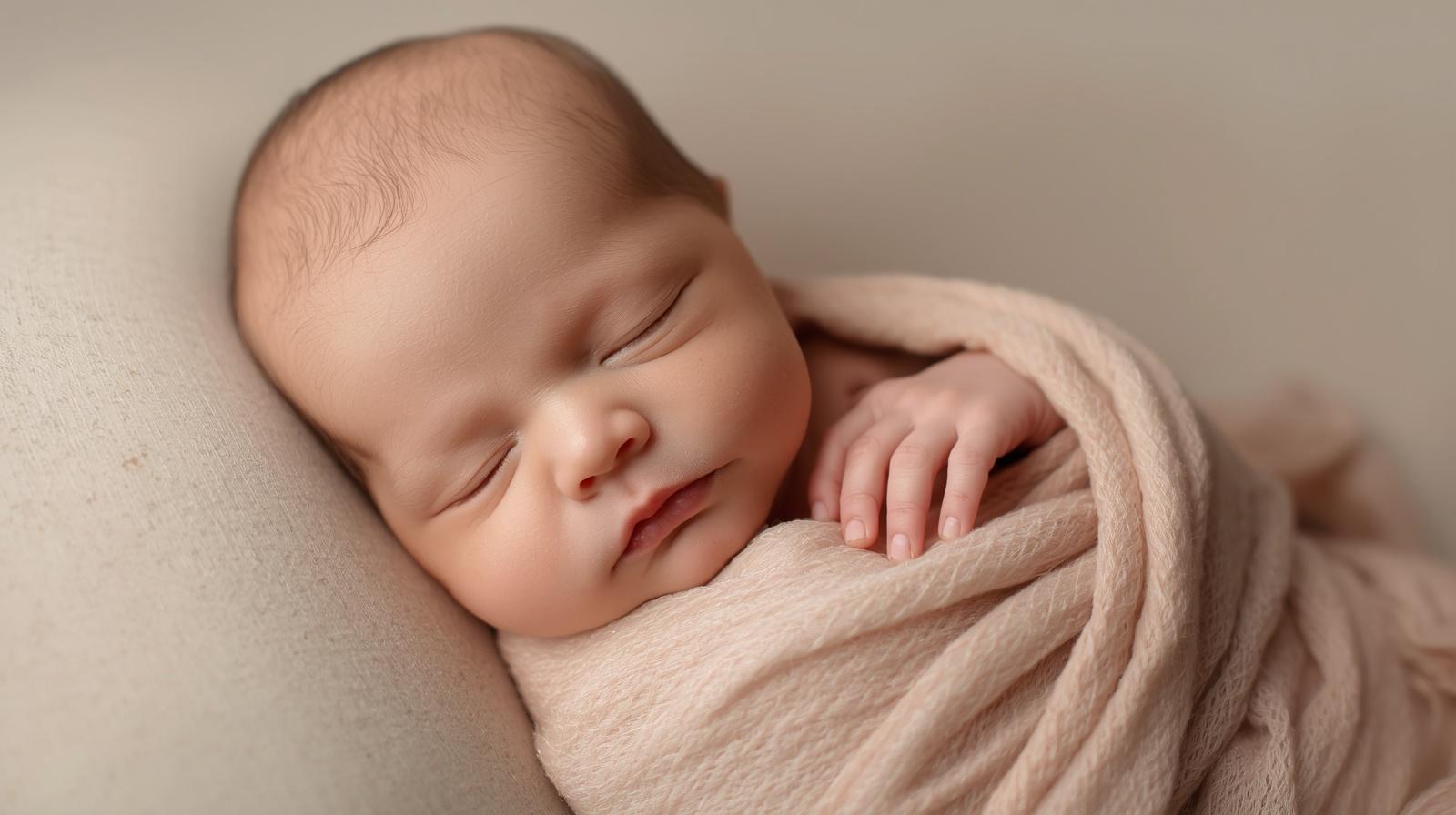
You finally get your newborn settled, arms tucked in tight, and they look peaceful. Then those tiny arms wiggle free, and the whole swaddle falls apart. Sound familiar?
Many moms hit this wall around the 2-3 month mark. Your baby fights the wrap, sleeps less, and you’re left wondering if you’re doing it wrong. You’re not—your baby is just telling you it’s time to try a newborn swaddle with arms out.
Sometimes babies simply want a little more freedom while they sleep. This is when a newborn swaddle with arms outcan help them stay calm and comfortable through the night. Many parents notice their baby settles faster once those little arms are free.
This guide will walk you through everything you need to know. You’ll learn when to make the switch, how to do it safely, and what actually helps babies sleep better with their arms free. At Mom Kid Friendly, we keep things simple, warm, and real—because that’s what moms actually need.
Ready to make sleep a little easier? Save this post and share it with a fellow tired mom who needs it too.
Why Parents Start Searching for a Newborn Swaddle With Arms Out
Most parents search this topic at 2 a.m. while their baby fusses out of a perfectly good swaddle. It’s one of those newborn sleep challenges nobody warns you about. One week the tight swaddle works like magic, and the next week your baby wants nothing to do with it.
Babies go through this phase naturally. Their motor development kicks in, and those little arms start to feel restricted. Once you understand why it’s happening, the fix feels a lot less stressful.
What Is a Newborn Swaddle With Arms Out?
An arms-out swaddle wraps your baby snugly around the torso and lower body while leaving both arms free above the fabric. It still gives your baby that cozy, secure feeling around the belly and hips. The difference is that their arms can move naturally without fighting against the wrap.
Some parents use a traditional muslin blanket folded lower on the chest. Others prefer transitional swaddle products designed specifically for this stage. Either way, the goal is the same—comfort and safety without the tight arm restriction.
Signs Your Baby Is Ready for Arms-Out Swaddling
Every baby moves at their own pace, but a few signs point pretty clearly to readiness. Watch for these common signals:
- Consistently breaking out of a full swaddle during sleep
- Rolling attempts, even small ones, during tummy time or in the crib
- Fussing more than usual when arms are wrapped in tightly
- Startling less at night without needing the full wrap
- Grabbing at objects and showing stronger arm coordination
If your baby shows two or more of these signs, the arms-out swaddle is likely the next right step. Trust your instincts—you know your baby better than anyone.
Must Read: Arms Up Swaddle for Better Newborn Sleep
Benefits of Using an Arms-Out Swaddle for Newborns
Switching to this style of swaddle comes with some real, everyday wins. Here’s what many moms notice once they make the change:
- Better sleep stretches because baby isn’t fighting the wrap
- Safer positioning as rolling risk increases around 8–12 weeks
- Easier self-soothing, since babies can bring hands to their mouth
- Smoother transition to fully unswaddled sleep later on
- Less morning frustration with a swaddle that actually stays on
The arms-out baby sleep method also supports healthy motor development. Giving those little arms room to move helps build the coordination babies need as they grow.
When to Transition From Traditional Swaddling
The American Academy of Pediatrics (AAP) recommends stopping traditional swaddling once your baby shows signs of rolling. For most babies, this happens somewhere between 8 and 16 weeks. Some babies are ready a little earlier, and that’s completely okay.
The arms-out swaddle acts as a helpful middle step. It eases the move from full swaddle to no swaddle without shocking your baby’s sleep routine. Think of it as a gentle bridge, not an overnight overhaul.
How to Safely Swaddle a Baby With Arms Out
You don’t need a fancy product to try this—a regular swaddle blanket works just fine. Here’s a simple step-by-step approach:
- Lay the blanket flat in a diamond shape on a firm surface.
- Fold the top corner down about 6 inches to create a straight edge.
- Place your baby on the blanket with their shoulders just above the folded edge—arms free above the fabric.
- Bring the left side of the blanket across your baby’s chest and tuck it snugly under their right side.
- Fold the bottom up over their feet and tuck it in.
- Bring the right side across and tuck it securely underneath.
The wrap should feel snug but not tight. You should be able to slip two fingers between the blanket and your baby’s chest. Always place your baby on their back to sleep.
Common Mistakes Parents Make With Arms-Out Swaddling
Even with the best intentions, a few small mistakes can make the newborn swaddle with arms out less effective. Watch out for these:
- Wrapping too loosely: A loose swaddle becomes a loose blanket, which is a safety risk. Snug is the goal.
- Positioning arms incorrectly: Some babies do better with arms slightly bent at the sides rather than straight up. Experiment to see what your baby prefers.
- Skipping the transition stage: Going straight from full swaddle to no swaddle can disrupt sleep. The arms-out method makes the change smoother.
- Using the wrong size blanket: A blanket that’s too small won’t wrap securely. Go for at least a 47×47-inch muslin swaddle.
- Continuing past rolling milestone: Once your baby rolls consistently, move to a sleep sack instead.
Catching these early saves a lot of sleepless troubleshooting later on.
Must Read: Sleep Better With The Best Nursery Rockers And Gliders
Helpful Tips to Help Babies Sleep With Arms Free
The first few nights with arms out can feel rocky. Babies sometimes startle themselves awake more often as they adjust. These tips can help smooth the process:
- Try the arms-out swaddle during naps first before using it overnight—less pressure if things don’t go perfectly.
- Use a white noise machine to reduce startling from environmental sounds.
- Stick to a consistent pre-sleep routine—feed, dim the lights, swaddle, and settle in the same order every time.
- Offer extra comfort during the first few nights—a little extra rocking or patting goes a long way.
- Be patient with the adjustment—most babies settle into the new style within 3–5 days.
Some nights will still feel hard. That doesn’t mean the method isn’t working. Give it a full week before deciding it’s not the right fit.
Best Situations to Try an Arms-Out Swaddle
Not every baby needs this swap at the same time, but certain situations call for it more than others:
- Your baby is 8–12 weeks old and consistently breaking out of full swaddles
- Tummy time is going well and your baby is pushing up with their arms
- Your baby sucks on their hands to self-soothe and gets frustrated when arms are restricted
- Nighttime waking has increased without an obvious reason like hunger or illness
- You’re using a transitional sleep product designed for this in-between phase
Meeting your baby where they are developmentally makes every sleep change easier to handle.
Newborn Swaddle With Arms Out: How to Know It’s Working for Your Baby
This is the part every tired mom wants to get to—the confirmation that the switch is actually helping. Here’s what success with a newborn swaddle with arms out looks like in real life:
- Your baby settles faster at the start of sleep
- Night wakings gradually decrease over 5–7 days
- The swaddle stays on through most of the night
- Your baby seems calmer and less frustrated when being wrapped
- Naps start to lengthen slightly
Progress won’t always be linear. Some nights will still be messy. But if you see even small improvements over the first week, you’re heading in the right direction.
You’ve Got This, Mama
Sleep challenges with newborns feel endless when you’re in the thick of them. But knowing when and how to use a newborn swaddle with arms out puts you one step ahead. At Mom Kid Friendly, we believe every mom deserves simple, practical tools that actually work in real life—not just in theory.
You’re paying attention, trying new things, and showing up for your baby every single day. That matters more than getting it perfect. Warm, snug, and safe is always the right direction.
Did this guide help? Drop your questions or experience in the comments below—we’d love to hear how the arms-out swaddle is working for you and your little one!
Must Read: 6 weeks old infant: surviving peak fussiness and growth
Frequently Asked Questions
What is a newborn swaddle with arms out?
A newborn swaddle with arms out wraps your baby snugly around the torso and legs while leaving both arms free. It helps babies feel secure without restricting arm movement.
When should I switch to a newborn swaddle with arms out?
Many parents switch around 2–3 months when babies start breaking out of their swaddles. It is also helpful once babies show stronger arm movement.
Is a newborn swaddle with arms out safe for sleep?
Yes, it can be safe when done correctly. Always place your baby on their back and make sure the swaddle is snug but not tight.
Can babies sleep better with a newborn swaddle with arms out?
Some babies sleep better because they can move their arms freely. This can help with self-soothing and reduce frustration during sleep.
How do I swaddle a baby with arms out using a blanket?
Lay the blanket flat, fold the top edge down, place baby with arms above the fold, wrap the sides snugly, and keep the arms free.
Does arms-out swaddling help babies self-soothe?
Yes, many babies can bring their hands to their mouth. This often helps them calm down and fall back asleep.
What age should babies stop swaddling completely?
Most babies stop swaddling once they roll consistently. This usually happens between 3 and 4 months.
Can I use a swaddle product for arms-out swaddling?
Yes, many transitional swaddles are designed for arms-out sleep. These products help babies move gradually from full swaddling to sleep sacks.
Author

