


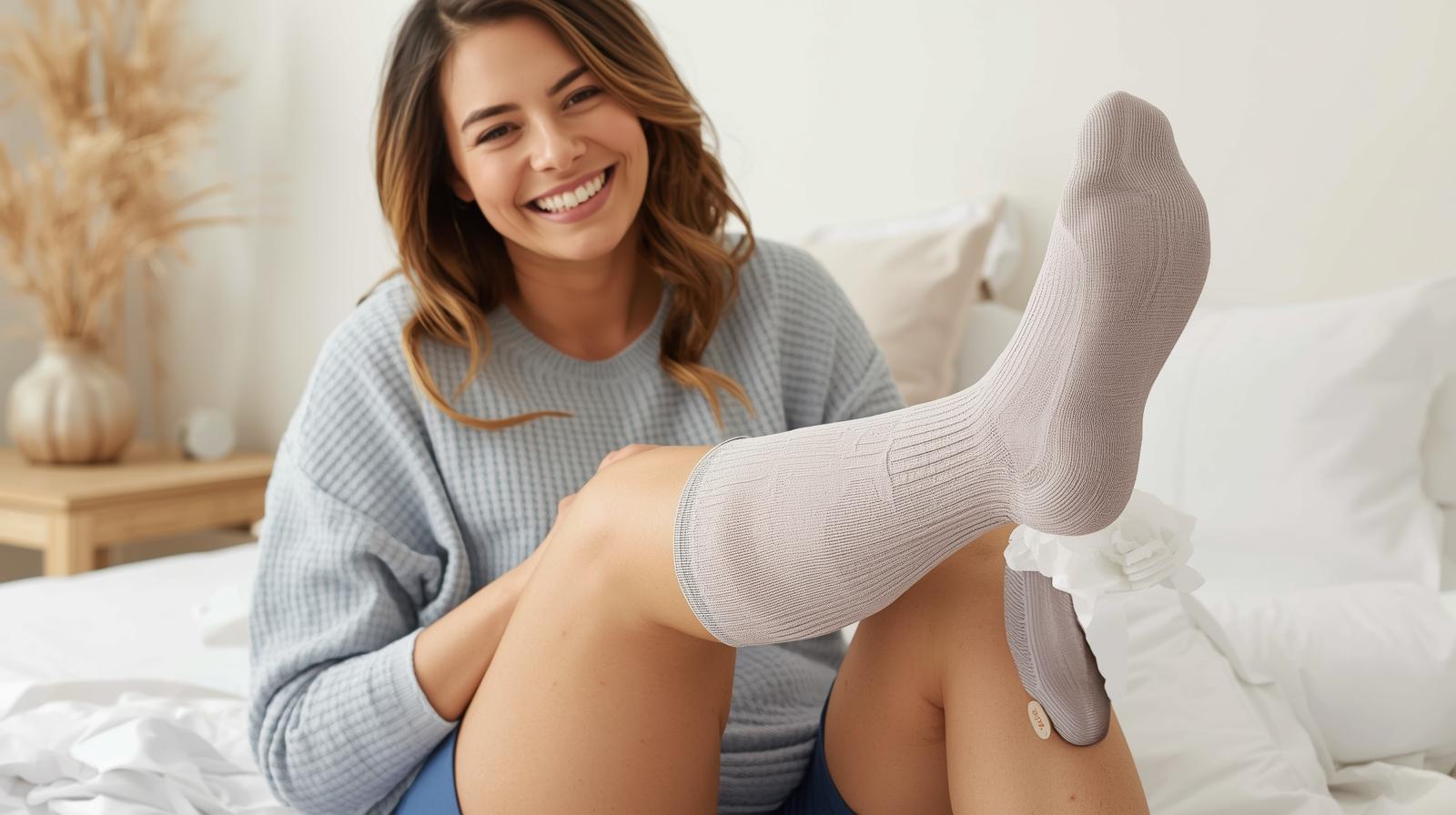
Being pregnant is magical, but let’s be real—it can also be incredibly uncomfortable, and compression socks for pregnant women can help make daily life easier. You might notice your ankles disappearing by 5 PM or your legs feeling heavy and achy after a grocery run, which is why many moms turn to compression socks for pregnant women for extra support. If you’re dealing with swelling, varicose veins, or just tired feet, compression socks for pregnant women might be your new best friend.
Have you tried wearing compression socks during your pregnancy yet? Let us know in the comments below!
Why Pregnancy Legs Need Extra Care
Your body is working overtime right now to grow a tiny human. Your blood volume increases significantly during pregnancy, and your growing uterus puts pressure on your veins. This combination makes it harder for blood to travel from your legs back up to your heart.
When circulation slows down, fluid starts to pool in your lower extremities. This leads to that familiar, uncomfortable swelling in your feet and ankles. Giving your legs a little extra support can make a huge difference in how you feel daily.
What Compression Socks Are (Explained Simply for Moms)
Think of compression socks as a gentle, supportive hug for your calves. They are special stockings designed to squeeze your legs a little bit more at the ankle and less as they go up. This graduated pressure helps push blood flow upward against gravity.
They aren’t just for grandmas or athletes anymore. Maternity compression stockings come in cute patterns and soft fabrics. They are a simple tool to keep your blood moving freely while you go about your busy day.
Common Leg and Foot Issues During Pregnancy
Pregnancy hormones relax your blood vessel walls, which can lead to some annoying symptoms. You might experience edema, which is just a fancy word for swelling caused by excess fluid. It often gets worse later in the day or when it is hot outside.
Varicose veins are another common visitor during these nine months. These are those purple, bulging veins that can be sore or itchy. Spider veins, their smaller cousins, might also pop up on your legs or ankles.
Leg cramps, especially at night, can wake you up from much-needed sleep. These “Charley horses” are painful and frustrating when you are already struggling to get comfortable. Poor circulation is usually the culprit behind these leg woes.
Must Read: The Best Tank Tops for Nursing That Make Feeding Simple
How Compression Socks Help Pregnant Women
Wearing compression socks for pregnant women creates better blood flow. By gently squeezing your legs, they prevent blood from pooling in your veins. This keeps your circulation efficient, even when you are sitting or standing for long periods.
They are fantastic for reducing swelling in your feet and ankles. Many moms find that their shoes fit better and their legs feel lighter at the end of the day. They can also lower your risk of developing deep vein thrombosis (DVT), a serious blood clot condition.
When Pregnant Women Should Start Wearing Compression Socks
You don’t have to wait until your third trimester to start wearing them. You can actually start using maternity compression socks as soon as you find out you are pregnant. Preventing swelling before it starts is often easier than trying to fix it later.
However, most moms start reaching for them around the second trimester. This is usually when the baby bump gets heavier and leg symptoms start to kick in. Ideally, put them on first thing in the morning before swelling has a chance to start.
Types of Compression Socks for Pregnancy
There are a few different styles to choose from depending on your needs. Knee-high socks are the most popular because they are easy to get on and off. They focus on the calf and ankle, where most swelling happens.
Thigh-high stockings offer support all the way up the leg. These are great if you have varicose veins higher up on your legs. Maternity pantyhose provide support for your legs and usually have a stretchy belly panel for your bump.
How to Choose the Right Fit and Compression Level
Getting the right size is crucial for safety and comfort. You should measure your ankles and calves in the morning when swelling is at its lowest. Don’t guess your size based on your shoe size, or they might be too tight.
Compression levels are measured in mmHg (millimeters of mercury). A mild compression of 15-20 mmHg is usually perfect for everyday pregnancy aches. If you have severe swelling or varicose veins, your doctor might recommend a firmer 20-30 mmHg level.
Tips for Wearing Compression Socks Comfortably Every Day
Putting these socks on can be a bit of a workout with a baby bump. Roll the sock down to the heel, slide your foot in, and then unroll it up your leg. Smooth out any wrinkles so the pressure is even against your skin.
Don’t let the top of the sock roll down. This can create a tourniquet effect, which cuts off circulation instead of helping it. If they feel itchy, try applying a little lotion to your legs before putting them on (let it dry first!).
Must Read: Best Pregnancy Books: Your Ultimate Guide for Every Stage
Are Compression Socks Safe During Pregnancy?
Yes, they are generally considered very safe for most pregnant women. They are a non-invasive way to manage pain and swelling without medication. Doctors and midwives often recommend them as a standard part of prenatal care.
However, you should always check with your healthcare provider first. If you have certain arterial conditions or skin infections, they might not be right for you. It is always better to get the green light from your doctor before trying new support wear.
Are Compression Socks for Pregnant Women Worth It?
If you are tired of heavy legs and tight shoes, the answer is a big yes. They are an affordable investment in your physical comfort during a physically demanding time. Plus, you can keep wearing them postpartum to help with recovery fluid retention.
Maternity support hose can help you stay active and energized for your other kids. Taking care of your body now helps you bounce back faster later. Your legs do a lot of heavy lifting, so they deserve the extra support.
Which style of compression socks do you think would work best for your lifestyle? Share your thoughts or questions in the comments below!
Must Read: Finding the Best Post Pregnancy Bathing Suit for You
Frequently Asked Questions
Are compression socks for pregnant women safe to wear every day?
Yes, compression socks for pregnant women are generally safe to wear daily. Many doctors recommend them to reduce swelling, improve circulation, and ease leg discomfort during pregnancy. Always check with your healthcare provider if you have medical conditions.
When should pregnant women start wearing compression socks?
You can start wearing compression socks for pregnant women as early as the first trimester. Most moms begin using them during the second trimester when swelling and leg fatigue become more noticeable.
What compression level is best for pregnant women?
A mild to moderate compression level of 15–20 mmHg is ideal for most pregnant women. Higher compression levels (20–30 mmHg) should only be used if recommended by a doctor.
Do compression socks help with swollen feet during pregnancy?
Yes, compression socks for pregnant women help prevent fluid from pooling in the feet and ankles, significantly reducing swelling and discomfort—especially after long days on your feet.
Can compression socks prevent varicose veins during pregnancy?
While they can’t completely prevent varicose veins, compression socks for pregnant women can slow their progression, reduce pain, and improve circulation throughout pregnancy.
Should compression socks be worn at night during pregnancy?
Most compression socks for pregnant women are designed for daytime use. Wearing them overnight is usually unnecessary unless your doctor advises otherwise.
How long should pregnant women wear compression socks each day?
For best results, put compression socks on in the morning before swelling starts and wear them throughout the day, especially if you’re standing or sitting for long periods.

