
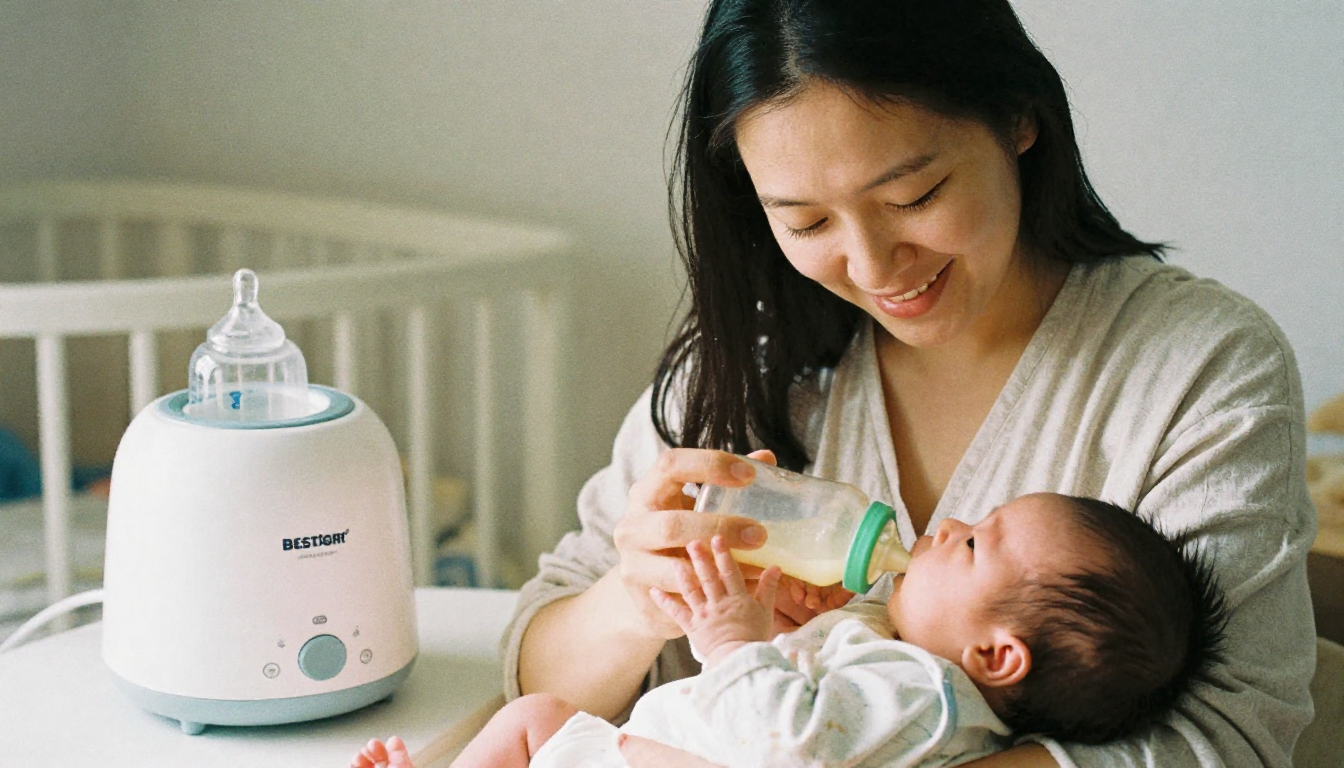
It is 3:00 AM, and the house is completely silent except for one thing. Your hungry newborn is crying, and you are trying to warm a bottle while half-asleep using a bottle warmer for newborn feeds. Every second feels like an hour when you are fumbling in the dark kitchen.
We have all been there, standing by the sink waiting for water to heat up. You just want to feed your baby and get everyone back to sleep without guessing if the milk is ready, which is why a bottle warmer for newborn nights matters so much. This is exactly why finding the right solution for night feeds feels like a survival mission.
In this guide, we will break down everything you need to know about bottle warmers. We will skip the complicated jargon and focus on what actually helps. Let’s make those midnight wake-up calls a little less stressful for you.
Do you have a go-to trick for night feeds? Drop a comment below and join our Mom Kid Friendly community to share your experience!
Why midnight feedings feel harder than they should
Night feedings are exhausting because your body is desperate for rest. You are operating on very little sleep and purely on instinct. Trying to measure water or check temperatures feels like high-level math in the middle of the night.
The crying adds a layer of stress that makes your heart race. You worry the noise will wake up the rest of the house or the neighbors. You rush through the process, which often leads to spills or mistakes.
Your baby doesn’t understand that milk takes time to warm up. They are hungry right now, and their patience is zero. This pressure makes a simple task feel overwhelming.
Must Read: Best sippy cups to transition from bottle moms actually trust
Why parents start looking for a bottle warmer fast
Most parents start looking for gadgets the morning after a particularly rough night. You realize that holding a bottle under a running tap takes way too long. You start Googling solutions while drinking your morning coffee.
Speed becomes your top priority. You want a device that does the thinking for you. A consistent temperature every single time sounds like a dream come true.
Consistency is the other big factor driving this purchase. You don’t want to guess if the milk is too hot or too cold. You want to push a button and know it is perfect.
Why a bottle warmer for newborn matters
Newborn feeding needs and temperature safety
Newborns have very sensitive tummies. They are used to breastmilk, which comes out at perfect body temperature. A bottle warmer helps replicate that natural warmth safely.
Safety is actually more important than convenience. You need to avoid burning your baby’s delicate mouth. Precise heating tools prevent dangerous overheating accidents.
Consistent temperature also helps with digestion. Cold milk can sometimes cause cramping in tiny stomachs. A good warmer removes that variable from your feeding routine.
How warm milk affects feeding comfort
Warm milk is incredibly soothing for a fussy baby. It reminds them of the comfort of the womb. This comfort can make the difference between a calm feed and a struggle.
It also helps transition them back to sleep faster. A cozy, warm belly usually leads to a “milk coma.” This means you get to go back to sleep sooner too.
Temperature consistency helps your baby accept the bottle. If the milk is sometimes hot and sometimes cold, they might reject it. A bottle warmer for newborn feeds ensures the experience is always the same.
Bottle warmer vs other warming methods
Using warm water bowls
The old-school method involves placing the bottle in a bowl of hot water. This is cheap and requires no extra equipment. However, it is agonizingly slow when you have a screaming infant.
It is also hard to get the temperature right. The water cools down as the milk warms up. You have to constantly check and refill the bowl.
This method is messy, especially at night. Water drips everywhere when you take the bottle out. It is just one more thing to clean up when you are tired.
Microwaves and why parents avoid them
You should never use a microwave to heat a baby bottle. Microwaves heat liquid unevenly and create “hot spots.” The bottle might feel cool, but the milk inside could burn your baby.
These burns can be serious and happen instantly. It is simply not worth the risk for a few saved minutes. Safety guidelines universally advise against this practice.
Microwaving breastmilk also destroys valuable nutrients. The high heat breaks down the antibodies your baby needs. You want to preserve every bit of that liquid gold.
Types of bottle warmers for newborns
Electric countertop warmers
These are the most common units you will see in stores. You plug them into the wall, and they use steam or water baths. They are generally the fastest option for home use.
Some models have dials, while others have digital displays. They usually sit permanently on your kitchen counter. They are reliable workhorses for daily feeding schedules.
They come in various price ranges to fit any budget. Some represent basic utility, while others are high-tech gadgets. Most moms find a mid-range model works perfectly.
Portable travel warmers
Travel warmers are a lifesaver for active families. Some plug into your car’s adapter for road trips. Others use battery power or thermal insulation technology.
They are slower than wall-plug units. However, they give you freedom to leave the house. You don’t have to rush home for every single feeding.
These are great for park dates or visiting grandparents. They are compact and fit right in your diaper bag. Having one reduces anxiety about feeding on the go.
Must Read: Finally Find the Best Kids Water Bottle That Won’t Leak
Multi-function warmers with defrost options
Some warmers do more than just heat milk. They can sterilize pacifiers or heat up baby food jars. This versatility saves you counter space and money.
The defrost setting is crucial for breastfeeding moms. It gently thaws frozen breastmilk bags without overheating them. This protects the nutrients while getting the milk ready.
These units often have “keep warm” features. This holds the bottle at temp for a set time. It is great if the baby falls asleep before the bottle is ready.
Features to look for in a bottle warmer
Fast and even heating
Speed is usually the number one feature moms want. Look for a warmer that heats in under 4 minutes. A hungry newborn does not have the patience for a slow machine.
Even heating is just as critical as speed. You want a system that circulates water or steam effectively. This prevents those dangerous hot spots we mentioned earlier.
Check reviews to see if the speed claims are true. Real-world testing by other moms is valuable info. Mom Kid Friendly recommends looking for consistent heating reports.
Auto shut-off and safety features
Mom brain is a real thing, and you will forget to turn things off. An auto shut-off feature is non-negotiable for safety. It prevents the unit from burning out or becoming a fire hazard.
It also prevents the milk from overheating if you get distracted. You might start the warmer and then go change a diaper. You don’t want the milk to be boiling when you come back.
Audible beeps are also helpful features. A gentle beep lets you know the bottle is ready. It stops you from hovering over the machine constantly.
Compatibility with different bottle brands
Not all bottles fit in all warmers. Wide-neck bottles need a warmer with a wider opening. Tall bottles might not fit under certain lids or covers.
Check the product description carefully before buying. If you use Dr. Brown’s or Comotomo, ensure they fit. You don’t want to buy a new warmer and new bottles.
Some warmers come with baskets for breastmilk bags. This is a nice bonus feature to look for. Universal warmers are usually the safest bet for compatibility.
Is a bottle warmer safe for newborns
What pediatricians usually say
Doctors generally agree that bottle warmers are safe when used correctly. They emphasize the importance of temperature limits. They prefer warmers over microwaves every single time.
They also stress hygiene and cleaning. Warm, moist environments can grow bacteria if ignored. Pediatricians recommend following the manufacturer’s cleaning schedule.
Always ask your own doctor if you have specific concerns. They know your baby’s health needs best. They can give personalized advice for your situation.
Common safety mistakes to avoid
The biggest mistake is leaving the bottle in too long. Even with auto shut-off, residual heat continues to warm the milk. Remove the bottle as soon as the cycle ends.
Another mistake is guessing the temperature. Always test the milk on your wrist before feeding. The warmer is a machine, and machines can sometimes glitch.
Don’t reuse milk that has been warmed once. Bacteria grow rapidly in warm milk after a feed. Throw away any leftovers to keep your baby safe.
How to use a bottle warmer correctly
Step-by-step basics for new parents
First, fill the reservoir with the recommended amount of water. Too little water can overheat the unit. Too much water might float the bottle and spill.
Place the bottle inside and select your setting. Usually, you choose the starting temp (fridge or room temp) and volume. Press start and go soothe your baby.
When the timer beeps, remove the bottle carefully using tongs or the basket. Dry the outside of the bottle with a towel. Shake it gently to mix the heat evenly.
How to test milk temperature safely
The wrist test is the gold standard for safety. Shake the bottle gently to distribute the heat first. Then, sprinkle a few drops on the inside of your wrist.
The skin there is thin and sensitive to heat. The milk should feel neutral or lukewarm, not hot. If you flinch, it is definitely too hot for the baby.
If it is too hot, run the bottle under cold water. Test it again before offering it to the baby. It is always better to be too cool than too hot.
Common problems parents face with bottle warmers
Overheating issues
Sometimes, warmers get hotter than they claim. This often happens if you use less milk than the setting indicates. It takes some trial and error to find the sweet spot.
Steam warmers can make the bottle nipple extremely hot. Be careful when grabbing the bottle out. Always check the nipple temp separately from the glass or plastic.
If overheating keeps happening, check your water levels. Mineral buildup on the heating plate can also cause sensors to fail. Regular maintenance helps prevents this.
Slow warming times
Some warmers take longer than the box says. This is frustrating when your baby is screaming. This usually happens with warmers that use water baths instead of steam.
Cold tap water can also slow down the process. Using room temperature water might speed it up. Plan ahead if you know your warmer is on the slow side.
Patience is hard to find at 3 AM. If speed is your main need, read speed-test reviews carefully. Don’t settle for a slow machine if it stresses you out.
Cleaning and maintenance concerns
Mineral scale builds up on the heating element over time. This looks like white or brown crusty spots. It can make the warmer smell bad or work poorly.
You need to descale it regularly with vinegar. Most manuals suggest doing this once a month. It is one more chore, but it keeps the machine running.
Mold can grow in the water reservoir if left wet. Empty the remaining water after every use. Let it air dry completely to keep it sanitary.
When a bottle warmer may not be necessary
Situations where other methods work
If you mostly breastfeed, you might rarely need a warmer. Freshly pumped milk is already warm enough. You can save money and counter space in this case.
If you have a very patient baby, hot water bowls work fine. Some babies don’t mind waiting a few minutes. You might not need an electric gadget at all.
You can simply hold the bottle under hot running water. It uses more water but requires no equipment. This works well for occasional bottle usage.
Budget and space considerations
Bottle warmers are an extra expense. You have plenty of other things to buy for a newborn. If your budget is tight, this is an item you can skip.
Kitchen counter space is valuable real estate. Bottle warmers add to the clutter of drying racks and formula tins. You might prefer a clearer kitchen over a faster bottle.
Some babies actually prefer cold or room-temperature milk! If your baby takes cold milk, you have hit the jackpot. You can serve it straight from the fridge with zero prep.
Must Read: The Best Bottles for Babies: A Simple Guide for New Moms
Final thoughts on choosing the best bottle warmer for newborn
Finding the right bottle warmer for newborn feeding is about your personal needs. Consider your budget, your counter space, and your baby’s temperament. There is no single “perfect” warmer for every family.
Remember that this phase is temporary. Eventually, your baby will move on to sippy cups and solids. Choose a tool that makes your life easier right now.
At Mom Kid Friendly, we believe in doing what works for you. If a gadget helps you get 10 more minutes of sleep, it is worth it. Trust your gut and do what helps you survive the night.
Frequently Asked Questions
What is the best bottle warmer for newborn night feeds?
The best bottle warmer for newborn use heats evenly, works fast, and has auto shut-off for safety during night feeds.
Is a bottle warmer for newborn safe to use?
Yes, a bottle warmer for newborn feeding is safe when used correctly and preferred over microwaves by pediatricians.
How long does a bottle warmer for newborn usually take?
Most bottle warmer for newborn models heat milk in two to four minutes depending on milk volume and starting temperature.
Can I use a bottle warmer for newborn with breastmilk?
Yes, a bottle warmer for newborn feeds works well for breastmilk and helps protect nutrients when warmed gently.
Do I really need a bottle warmer for newborn babies?
A bottle warmer for newborn babies is not required, but it makes night feeds faster, calmer, and more consistent.
Author

