
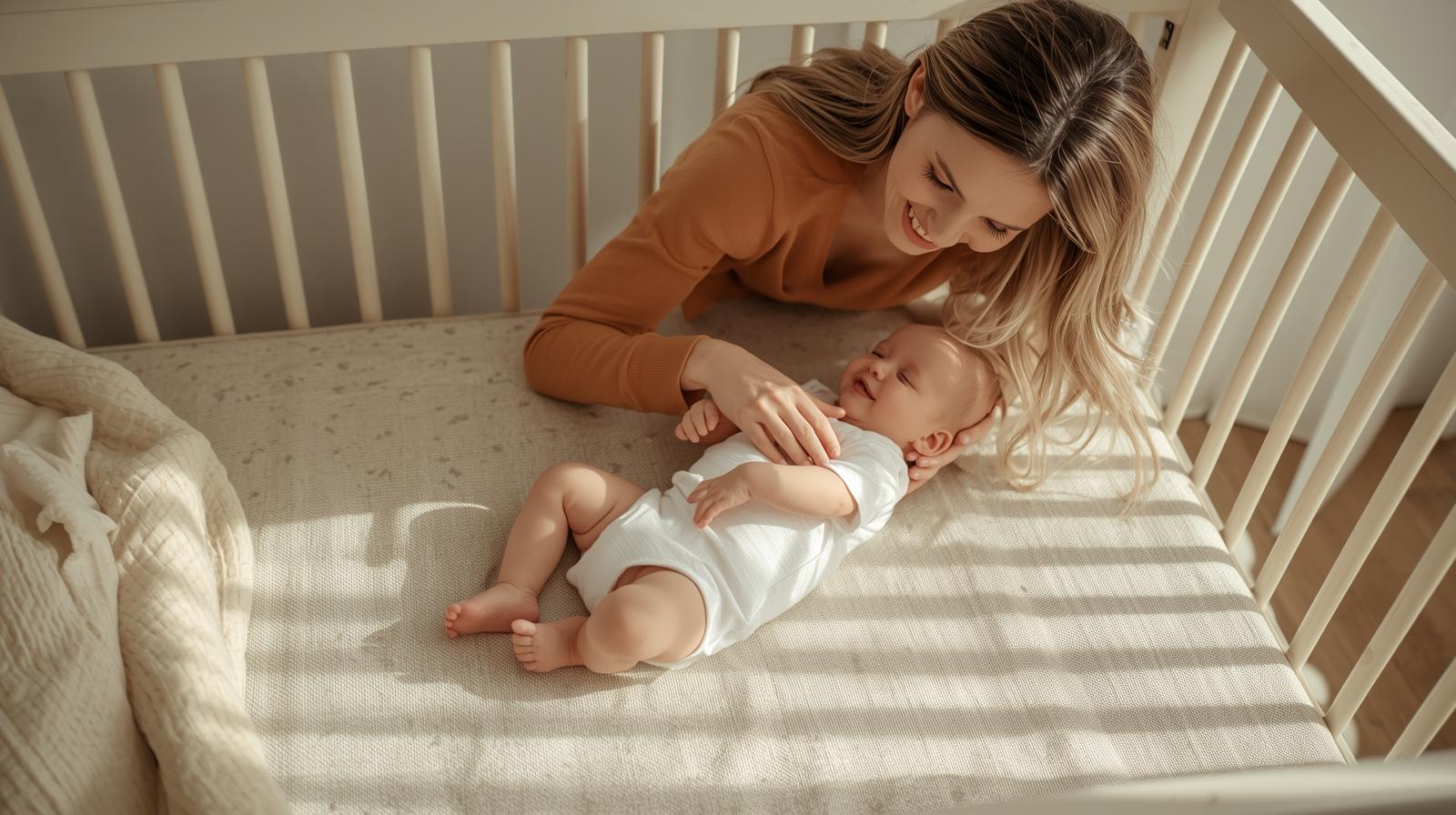
You’re in the baby aisle again, staring at all those crib mattresses, trying to spot the best crib mattress, but honestly? Everything looks the same.
But here’s the deal. Your baby spends more time on that sleeping surface than anything else during their early years. That alone makes picking the best crib mattress a big decision.
I get it. The options feel endless, and you just want to know which one actually deserves your money.
You want a baby crib mattress that keeps your little one safe. It must fit the baby crib just right and give the support they need.
Let me walk you through what really matters when choosing the right option for your nursery.
Table Of Contents:
- What Makes a Crib Mattress Actually Safe
- Innerspring vs Foam: Which Type Should You Pick
- Why Organic and Non-Toxic Options Are Worth Considering
- Understanding Mini Crib Mattresses
- Waterproofing: Do You Really Need It
- Dual-Sided Mattresses: Are They Worth the Extra Money
- Breathability Claims: What Is Real and What Is Marketing
- Budget-Friendly Options That Don’t Sacrifice Safety – Finding the best crib mattress Without Overspending
- Nursery Essentials: Beyond the Mattress
- Top Picks Based on What Matters Most to You
- Product Registration and Maintenance
- Frequently Asked Questions
- How to Test Your Mattress When It Arrives
- Conclusion
What Makes a Crib Mattress Actually Safe
Safety is not just a buzzword here. It is the main reason you spend hours researching mattress brands.
Federal safety standards underwent updates in 2022. This means newer crib mattresses meet stricter guidelines than older hand-me-downs might.
Firmness is non-negotiable. Babies need a firm surface to sleep on because soft mattresses increase suffocation risks.
Here is a simple test you can do in the store. Press your hand into the center of the mattress and watch how quickly it bounces back.
A good crib mattress should spring back immediately. It should not leave an indentation where your hand was.
Mattress fit is equally critical. The mattress should fit snugly in your crib with no gaps bigger than two fingers between the mattress edge and the bed frames.
Gaps create dangerous spaces where babies can get trapped. Nobody wants that risk in their home.
You also want to look closely at the product instructions provided by the manufacturer. They often detail specific weight limits and usage guidelines.
Check the label label on the product itself to verify materials and compliance codes. It sounds tedious, but safety testing relies on these details.
Innerspring vs Foam: Which Type Should You Pick
This is where many parents get stuck because both options work well. It usually comes down to preference and lifestyle.
Innerspring crib mattresses use a steel innerspring system for support. They are typically heavier and more durable.
The extra weight means they often hold up better if you plan on having multiple kids. However, that mattress weight can make changing sheets a workout.
When you are comparing innerspring options, look for a high coil count. More coils usually mean better support and longer-lasting firmness.
On the other hand, a foam mattress is lighter. This makes it easier to lift out of the crib during late-night cleanups.
High-density foam provides the firmness babies need without the heavy lifting. Just make sure you are getting quality foam.
Cheap foam breaks down quickly. You want a premium foam crib mattress that maintains its shape over time.
Both types provide a safe sleeping surface. Your choice really comes down to your budget and how much lifting you want to do.
Related Reading: Teaching Kids Healthy Habits: A Guide for Parents
Why Organic and Non-Toxic Options Are Worth Considering
Research shows that some standard mattresses emit potentially harmful chemicals. This often happens at higher rates than parents expect.
That is not meant to scare you. It is just good to know what you are dealing with regarding crib mattress materials.
Organic mattresses use materials like organic cotton, wool, and natural latex. These are grown and processed without synthetic pesticides.
You should look for certifications that carry weight in the industry. Greenguard Gold certification tests for low chemical emissions.
This certification verifies that the product meets strict air quality standards. It helps ensure the mattress reduces indoor air pollution.
Another big one is the Global Organic Textile Standard (GOTS). This confirms the textile standard of the materials is truly organic.
You might also see the Global Organic Latex Standard for rubber components. These labels help you verify organic claims.
The Avocado Green mattress is a popular choice here. The Avocado Eco Organic Crib Mattress uses recycled steel coils.

It weighs around 21 pounds. It is one of the most affordable fully organic options currently available.
If you prefer foam, the Naturepedic organic breathable models are excellent. Naturepedic organic lines are known for eliminating questionable chemicals.
There are also “green mattress” options that mix natural and synthetic materials. Always read the fine print to see what “eco organic” really means for that brand.
Understanding Mini Crib Mattresses
Not everyone has space for a full-size nursery. This is where the mini crib comes into play.
A mini crib is smaller than a standard crib. Naturally, it requires a specific mini crib mattress.
Do not try to jam a standard mattress into a mini frame. It will not work, and it creates safety hazards.
You can find an organic mini crib mattress if you look for it. Brands are starting to make more specialized sizes.
The organic mini options often use the same materials as their larger counterparts. You get the benefits of organic textile covers in a smaller package.
Check the dimensions of your mini crib carefully. Sizes can vary slightly more than with standard cribs.
Just like with the big ones, you want a firm mini crib mattress. Softness is still a risk factor regardless of size.
Waterproofing: Do You Really Need It
Short answer? Yes, you absolutely do.
Babies are messy. Diaper leaks, spit-up, and other fluids happen more often than you think.
Keeping the mattress dry is essential for hygiene and longevity. A wet mattress is a breeding ground for mold.
Some mattresses come with a waterproof cover built in. Others require you to buy a separate protector.
The Babyletto Pure Core includes a waterproof cover. It has also earned Greenguard Gold certification.

The Babyletto Pure line is generally well-regarded for being easy to clean. It sells for a reasonable price given the features.
Watch out for vinyl covers, though. Some cheaper waterproof covers use vinyl.
Vinyl can contain phthalates and other chemicals you probably want to avoid. Look for covers made from food-grade polyethylene instead.
These provide a waterproof barrier without the toxicity. It keeps the mattress dry while maintaining safety standards.
Dual-Sided Mattresses: Are They Worth the Extra Money
Dual-sided mattresses offer longevity dual-sided features. They have a firm side for infants and a softer side for toddlers.
In theory, this sounds great. You flip the mattress when your baby transitions to a toddler bed.
This extends the life of your purchase. You use the infant side until they are roughly 12 months old.
Then, you flip it to the toddler mattress side. This side offers a bit more cushion for a heavier child.
However, there is a catch. Some parents report difficulty telling which side is which.
If you choose this route, make sure the sides have a clear label. You do not want to guess.
The Moonlight Slumber Little Dreamer is a popular dual-sided option. It is a foam mattress known for being very lightweight.
Dual-sided options are also great for potty training. The waterproof backing protects the core from accidents as your toddler learns.
Breathability Claims: What Is Real and What Is Marketing
You will see many ads on social media about breathable mattresses. They claim babies can breathe right through them.
The concept is that air can pass through the mattress core. This theoretically reduces suffocation risk if the baby rolls over.
The Newton Essential Crib Mattress is a famous example. It uses a polymer core that allows air to flow freely.
A breathable organic option combines this airflow with natural materials. It attempts to give you the best of both worlds.
However, experts say the data backing up these specific breathability claims is limited. The safest practice is still placing the baby on their back.
Close contact with a breathable surface is better than a non-breathable one, theoretically. But it is not a substitute for supervision.
Do not let marketing terms replace standard safety rules. Keep the crib empty except for a fitted sheet.
Budget-Friendly Options That Don’t Sacrifice Safety – Finding the best crib mattress Without Overspending
You do not have to spend 400 dollars to get a safe baby mattress. There are great value picks out there.
The Graco Premium Foam Crib and Toddler Mattress is a strong contender. It provides good support at a fraction of the cost.
This Graco premium foam crib option is widely available. It fits standard bed frames and meets safety codes.
Just make sure you do not cut corners on essential safety. Avoid mattresses that feel flimsy or smell strongly of chemicals.
Sometimes budget options skip expensive certifications. That might be fine if you trust the mattress brand.
However, if you want organic claims verified, you usually have to pay more. It is a balancing act between features and price.
Related Reading: Keeping Kids Active for Health and Happiness
Nursery Essentials: Beyond the Mattress
While the mattress is key, you need other gear. A changing pad is often the next purchase.
Changing pads usually go on top of a dresser. Like the mattress, they need to be waterproof and easy to wipe down.
You can find organic changing pads now too. They match your organic mattress if you are going for a chemical-free theme.
Make sure the changing pad has a safety strap. This keeps your wiggly baby from rolling off during a change.
Consider your car seat choice as well. While unrelated to the crib, it is another surface your baby sleeps on during travel.
Safety testing for car seats is rigorous. However, babies should not sleep in a car seat once removed from the vehicle.
Transfer them to their crib mattress for safe sleep. The crib is always the safest place for a nap.
Top Picks Based on What Matters Most to You

Let me break down solid options based on different priorities. This helps you cut through the noise.
The Best Organic Pick
If organic is your top concern, look at the Avocado Eco Organic. It offers global organic textile standard materials at a fair price.
The Best Washable Pick
For a mattress that handles messes, the Babyletto Pure Core is great. The waterproof cover is effective and removable.
The Best Lightweight Pick
The Moonlight Slumber Little Dreamer is easy to handle. It makes those 2 AM sheet changes much less stressful.
The Best Breathable Pick
If airflow is your main worry, check out the Halo DreamWeave. It is a breathable baby crib mattress with Greenguard Gold certification.
The Best Budget Pick
The Graco Premium Foam Crib mattress wins here. It is safe, firm, and leaves room in your budget for other kids products.
Product Registration and Maintenance
Once you buy a mattress, your job is not done. You need to fill out the product registration card.
You can usually do this online. You might see a checkbox label regarding marketing emails.
Read the privacy policy if you are worried about data. But do not skip the registration part.
Registration ensures the company can contact you if there is a recall. It is a vital safety step.
Check the customer service details on the card. Keep the receipt and the manual in a safe place.
Sometimes you need to confirm the checkbox label label on digital forms to proceed. It can be annoying, but it verifies your ownership.
Inspect the mattress regularly. Look for tears or sagging spots.
If you see collaboration requests or influencers pushing a brand, look for independent testing. Social media is marketing, not science.
Related Reading: Best Family Christmas Gift Ideas in 2025
Frequently Asked Questions
Here are some common questions parents ask when shopping for a sleeping surface.
Do I need a box spring? No, cribs use slats or a metal grid. You just need the mattress itself.
Can I use a full-size mattress for a toddler? Eventually, yes. But a toddler bed usually uses the same mattress as the crib.
What if the mattress is too firm? It is supposed to be firm. Do not add soft toppers as they are a safety hazard.
How do I know if it fits my crib? Use the two-finger test. If you can fit more than two fingers between the mattress and frame, it is too small.
Are all foam mattresses toxic? No. Many use safe materials and hold certifications like Greenguard Gold.
Is an organic breathable mattress worth it? If you have the budget, it offers peace of mind. It combines chemical safety with airflow features.
| Feature | Innerspring | Foam |
|---|---|---|
| Weight | Heavy (20-30 lbs) | Light (8-15 lbs) |
| Durability | Very High | High (if high density) |
| Price Point | Mid to High | Low to High |
| Bounce | More Bounce | Less Bounce |
How to Test Your Mattress When It Arrives
Do not just assume your new mattress is perfect right out of the box. Manufacturing defects happen to every brand.
First, do the firmness test immediately. Push down on different areas of the mattress and watch how it responds.
It should bounce back quickly without leaving any hand impressions. If it feels soft or squishy anywhere, that is a red flag.
Check the corners. They should be square and firm, not rounded or sagging.
Verify the fit inside your specific crib. Assemble the crib first, then place the mattress inside.
Perform the two-finger test we discussed earlier. If there is too much room, do not use it.
Check for any chemical smells. A slight “new car” smell is common with foam, but it should dissipate quickly.
If the smell is overpowering, let it air out in another room. If it stays strong for days, contact customer service.
Conclusion
Choosing the best crib mattress feels like a huge project. But it really boils down to safety, fit, and materials.
Whether you choose a Dreamer crib mattress or a global organic textile standard option, firmness is key. The mattress must support your baby properly.
Remember that the mattress reduces risks only when used correctly. Keep the crib bare and follow safe sleep guidelines.
Consider your lifestyle. If you travel or move furniture often, a lighter foam mattress helps.
If you want a product that lasts through three kids, a steel innerspring might be better. There is no single perfect choice for everyone.
Take your time to read the labels. Look for those gold certification logos if air quality worries you.
Once you make your choice, register the product. Then, you can rest easier knowing your baby has a safe place to sleep.
Author

