
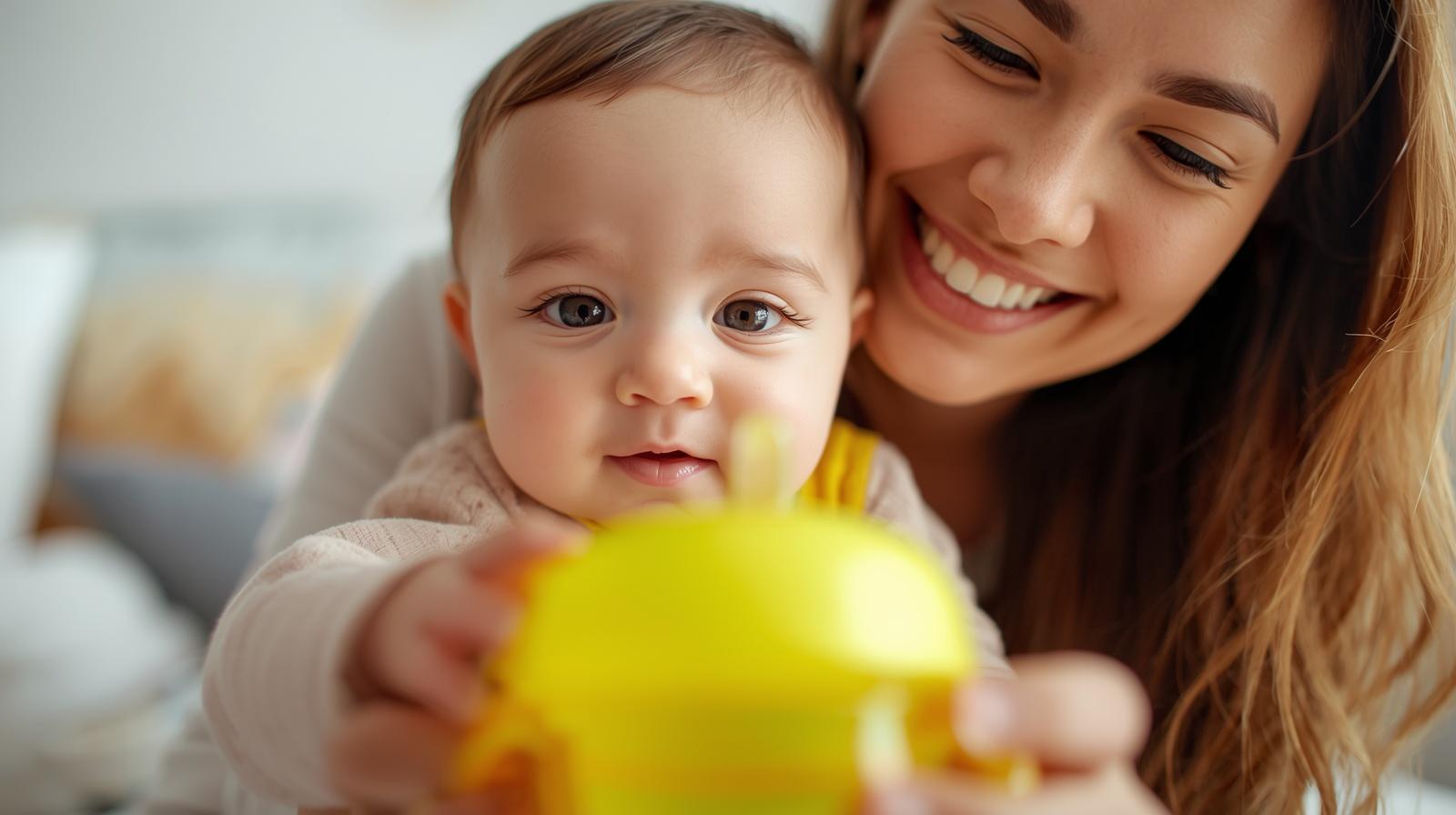
You hand your baby their brand new cup, hoping for a peaceful sip. Instead, they stare at it, chew on the side, and toss it right onto the floor. Moving away from the beloved bottle can feel like a daily battle.
Many babies refuse to give up their bottles because they bring comfort and routine. A new cup feels completely different in their little hands and mouths. But finding the best sippy cup for transitioning from bottle can change everything.
The switch does not have to feel like a constant struggle at home. With the best sippy cup for transitioning from bottle, your baby slowly learns a new way to drink without frustration. Small wins each day build confidence for both you and your little one.
The right cup makes your baby feel confident and eager to drink. It bridges the gap between what they know and what they need to learn. By the end of this guide, you will know exactly how to make this milestone a breeze.
Want more simple parenting hacks? Join our Mom Kid Friendly community below to get weekly tips straight to your inbox!
Why transitioning from bottle matters
Moving away from the bottle is a major milestone for your growing child. It might seem easier to just let them keep it a little longer. However, making the switch at the right time provides huge benefits for their development.
Impact on teeth and speech development
Prolonged bottle use can actually affect how your baby’s teeth grow. Constant sucking on a bottle nipple can push their front teeth out of alignment. Dentists often call this “bottle mouth,” and it is completely preventable.
Using a cup also supports healthy speech development. Drinking from an open cup or a straw works different facial muscles. These are the exact same muscles your baby needs to form new words and sounds.
When most parents start the switch
Pediatricians usually recommend introducing a cup around six months of age. At this stage, your baby is likely starting solid foods and sitting up. Offering a few sips of water with meals is a perfect, low-pressure start.
Most experts suggest fully weaning off the bottle by their first birthday. Of course, every child operates on their own unique timeline. Do not stress if your little one needs a couple of extra months to adjust.
Signs your baby is ready
Your baby will often show you when they are ready to try something new. You might notice them reaching for your water glass during dinner. This curiosity is a huge green light to introduce their own cup.
Another great sign is when they can sit up steadily without support. They also need enough hand-eye coordination to bring objects to their mouth. If your baby is successfully eating finger foods, they are definitely ready for a cup.
Must Read: Best Sippy Cup for Baby: A Stress-Free Guide for Moms
What to look for in a sippy cup
Walking down the baby aisle can feel incredibly overwhelming. There are hundreds of cups, and they all promise to be the absolute best. You just need to look for a few simple features to find the right fit.
Soft vs hard spouts
Soft silicone spouts are usually the easiest first step for bottle-fed babies. The texture feels very similar to a bottle nipple, providing instant comfort. This familiarity helps them accept the new cup without a total meltdown.
Hard spouts are better suited for older toddlers who like to chew on everything. A teething baby can easily bite through a soft silicone spout in days. Transitioning to a hard spout later saves you from constantly buying replacement parts.
Spill-proof vs free-flow
Spill-proof cups are a lifesaver for busy moms trying to keep the house clean. They have a special valve that stops liquid from leaking when dropped. This means you can toss it in your diaper bag without a second thought.
Free-flow cups do not have a valve, meaning the liquid pours out easily. Speech therapists actually prefer free-flow cups because they teach babies to sip naturally. You might want to use free-flow cups at the highchair and spill-proof cups for travel.
Handles and grip size
Tiny hands need easy-to-hold shapes to feel secure. Cups with two handles are perfect for beginners learning how to lift and tilt. The handles give them control and help prevent frustrating drops.
As your baby grows, you can look for cups with a contoured middle. A textured silicone grip also stops the cup from slipping out of messy hands. Removable handles are great because the cup grows with your child.
Easy cleaning for busy moms
You do not have time to scrub a million tiny cup parts. Look for cups that have three pieces or fewer. Fewer parts mean a much faster wash at the end of a long day.
Always check if the cup is top-rack dishwasher safe. Avoid cups with complicated valves that you cannot easily take apart. Hidden corners trap old milk, which leads to nasty mold growth.
Must Read: Best sippy cups to transition from bottle moms actually trust
Types of sippy cups explained
Every baby has their own unique preference when it comes to drinking. What works perfectly for your friend’s toddler might completely fail with yours. Here is a simple breakdown of the most popular cup styles on the market.
Soft spout cups for beginners
Soft spout cups are the perfect bridge between a bottle and a real cup. The top is made of flexible silicone that bends just like a nipple. Babies naturally know how to suck on these, making the learning curve very small.
These cups are gentle on tender, teething gums. They usually come with handles to help your baby figure out the tilting motion. Once your baby masters this, they can easily move on to other styles.
Straw cups for natural drinking
Straw cups are highly recommended by pediatricians and speech therapists. Drinking from a straw pulls the tongue to the back of the mouth. This motion strengthens the mouth muscles needed for clear speech and safe swallowing.
Weighted straw cups are amazing for active babies. The weight stays in the liquid, so they can drink from any angle. Even if they tip the cup upside down, they will still get a sip.
360 cups for older babies
A 360 cup looks just like a regular open cup, but with a magic lid. The silicone rim seals automatically when your child stops drinking. They can sip from any side of the rim without spilling a single drop.
These cups teach kids how to drink properly without the mess. There are no spouts or straws to clean, making them a favorite at Mom Kid Friendly. They are the ultimate stepping stone before introducing a real open glass.
Trainer cups that mimic bottles
Trainer cups take the exact bottle your baby loves and swap out the top. You just replace the traditional nipple with a sippy spout. The familiar bottle base brings them immediate comfort.
This gentle approach is fantastic for babies who strongly refuse new things. They get to keep their favorite bottle shape while learning a new skill. It is a stress-free baby feeding hack that saves plenty of tears.
Common mistakes moms make
We all make mistakes when navigating these tricky parenting milestones. It is completely normal to hit a few bumps along the way. Knowing what to avoid can make this transition much smoother for everyone.
Switching too fast
Quitting the bottle cold turkey often ends in disaster and tantrums. Babies rely on their bottles for emotional comfort, especially at bedtime. Taking it away suddenly can disrupt their sleep and eating habits.
Instead, try a slow and steady approach. Swap out just one daytime bottle for a cup to start. Once they master that, you can slowly replace the rest over a few weeks.
Choosing complicated designs
Some cups look adorable but are a total nightmare to use. Cups with heavy lids or strange shapes confuse babies who are just learning. Keep it as simple as possible.
You also want to avoid cups that require a very hard suck to get liquid. If a baby cannot get a drink easily, they will just give up. Test the cup yourself to make sure the water flows without too much effort.
Ignoring baby preferences
Babies have strong opinions, even at six months old. Your baby might hate a soft spout but absolutely love a straw. Do not force a cup style just because it was highly rated online.
Pay attention to how they interact with the cup. If they keep spitting out the spout, try a 360 rim instead. Follow their lead, and the process will be much faster.
Giving up too early
Learning a new skill takes time, patience, and lots of practice. Your baby might play with the cup for a week before taking a real sip. This is completely normal behavior.
Do not panic and hand the bottle back right away. Keep offering the cup calmly at every single meal. Consistency always wins in the end.
Must Read: Best No Spill Sippy Cup Guide for Mess-Free Drinks
Mom-tested tips that actually work
You do not need a perfect strategy to make this work. You just need a few reliable mom hacks in your back pocket. Here is what actually works in real homes with real toddlers.
Start with water instead of milk
Putting breastmilk or formula in a new cup can be very confusing for a baby. They expect their milk to come from their familiar bottle. When it comes from a strange plastic spout, they might reject it entirely.
Offer an ounce or two of water in the new cup during solid food meals. Water is easy to clean up when they inevitably drop the cup on the floor. Once they drink water easily, you can transition their milk into the cup.
Offer during playtime
Mealtime can sometimes feel a bit stressful for a learning baby. Try leaving the new cup on their play mat surrounded by their favorite toys. Let them crawl over to it and investigate it on their own terms.
They might just chew on the handles or bang it on the floor. This exploration helps them realize the cup is safe and fun. Soon enough, they will try taking a sip all on their own.
Let your baby explore the cup
Take the lid off the cup and let your baby look inside. Show them the water splashing around. You can even guide their hands to help them feel the different textures of the cup.
Sometimes taking a sip yourself shows them exactly what to do. Babies are fantastic mimics who love copying their moms. Smile, say “ahh,” and offer them a turn.
Stay consistent without pressure
Pressure creates pushback, especially with strong-willed babies. If they throw the cup, just calmly pick it up and say, “We drink from the cup.” Never force them to drink if they are turning their head away.
Keep the cup visible and accessible throughout the day. Praise them warmly when they finally take a successful sip. Your calm confidence will help them feel secure in trying this new skill.
How to clean and maintain sippy cups
Keeping transition cups clean is vital for your baby’s health. Old milk spoils quickly and creates a breeding ground for bacteria. A solid cleaning routine saves you from dealing with smelly, ruined cups.
Daily cleaning routine
Take the cup apart completely as soon as your baby finishes drinking. Rinse all the pieces immediately with warm water to prevent milk from hardening. Wash everything with a gentle, baby-safe dish soap.
Invest in a set of tiny bottle brushes. These little tools are perfect for scrubbing out narrow straws and tight spouts. Always let the pieces air dry completely before putting the cup back together.
Hidden mold spots to watch
Mold loves dark, damp spaces inside silicone valves. Check the underside of 360 cup lids and the inside of soft spouts daily. If you see any black spots, it is time to throw that piece away.
Squeezing the silicone spout while washing helps push soapy water through the tiny slit. This clears out trapped liquids that cause mold. Boiling the silicone parts once a week also provides a great deep clean.
When to replace cups
Plastic cups do not last forever, especially when toddlers use them. If a cup gets heavily scratched, bacteria can easily hide inside those grooves. Toss any cup that looks cloudy, cracked, or warped.
Silicone spouts and straws should be replaced every few months. Teething babies often chew tiny holes in the silicone, which can become a choking hazard. Keep a few spare spouts in your kitchen drawer just in case.
Best sippy cup for transitioning from bottle based on real mom needs
You have made it through the hardest part of the research. Now it is time to confidently pick the best sippy cup for transitioning from bottle. Just remember that the best choice is the one that fits your child’s specific needs.
If your baby is just starting out, a soft spout trainer cup is a gentle first step. If you want to encourage excellent speech development, grab a weighted straw cup. For older babies ready to ditch spouts entirely, a 360 cup is a brilliant choice.
You are doing a fantastic job navigating this transition. Keep offering the cup, stay patient, and celebrate those messy little sips. You and your baby have got this!
Did this guide help you feel more prepared? Drop a comment below and let us know which cup you plan to try first—we love hearing from you!
Frequently Asked Questions
What is the best age to start using a sippy cup for transitioning from bottle?
Most babies can start around 6 months when they begin solids and can sit up steadily.
How do I choose the best sippy cup for transitioning from bottle?
Pick a cup with a soft spout or straw, easy grip handles, and simple parts for cleaning.
Why is my baby refusing a sippy cup?
Your baby may prefer the bottle’s comfort, so try different cup styles and stay consistent.
Should I use a straw cup or spout cup first?
Start with a soft spout for familiarity, then move to a straw cup for better oral development.
How long does it take to transition from bottle to sippy cup?
It varies, but most babies adjust within a few weeks with daily practice.
Are spill-proof cups better than free-flow cups?
Spill-proof cups help with mess, while free-flow cups support natural drinking skills.
Can I put milk in a sippy cup right away?
Start with water first, then slowly introduce milk once your baby gets used to the cup.
When should I stop using bottles completely?
Most experts recommend fully weaning off bottles by 12 to 18 months.
How do I clean sippy cups properly?
Disassemble all parts, wash with baby-safe soap, and check for hidden mold areas daily.
What if my baby only plays with the cup?
This is normal. Exploration helps them get comfortable before actually drinking.
Author

