
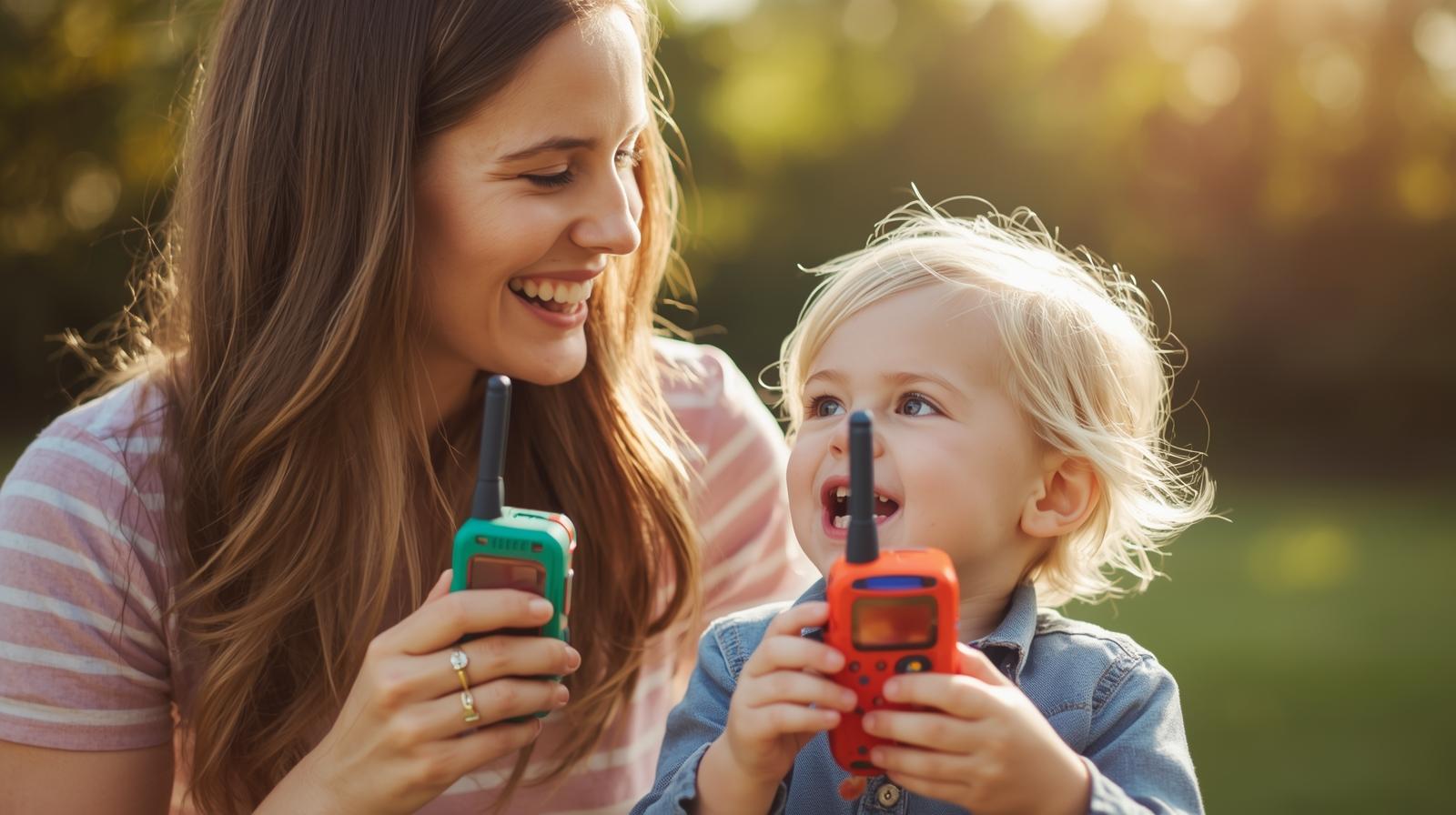
We have all been there, standing at the back door screaming for the kids to come inside for dinner, wishing the best kids walkie talkies were already in their hands. You yell until your throat hurts, but they are too busy playing deep in the backyard to hear you. There has to be a better way to communicate that doesn’t involve shouting across the neighborhood.
Enter the humble walkie talkie, a classic toy that doubles as a serious parenting hack. Finding the best kids walkie talkies can give your children a taste of independence while keeping them just a button press away. It is the perfect middle ground before you are ready to hand over a cell phone.
At Mom Kid Friendly, we know you want gear that actually works without breaking the bank. We are here to help you navigate the static and find a set that survives the playground. Let’s dive into what makes a great radio for your little adventurers.
Join the Mom Kid Friendly community below for more parenting hacks!
Why parents look for the best kids walkie talkies
Safety is usually the number one driver for parents buying these gadgets. You want to let your kids ride bikes around the block, but you also want to know they are okay. A quick “check-in” over the radio gives you peace of mind instantly.
Beyond safety, they are incredibly fun for imaginative play. Kids love pretending to be spies, explorers, or secret agents on a critical mission. It gets them off screens and running around outside, which is a win for everyone.
They are also surprisingly useful for indoor management. If you have a sick child in bed, they can radio you for water without yelling. It saves your legs from running up and down the stairs all day.
What kids really use walkie talkies for at home and outside
In the eyes of a child, a walkie talkie transforms the backyard into a jungle or a secret base. My kids use them to coordinate “sneak attacks” on their dad while he is washing the car. It adds a layer of strategy and excitement to their regular games.
Inside the house, they become tools for “top secret” pillow fort communication. They whisper passwords and coordinate snack deliveries from the kitchen. It turns a rainy afternoon into an engaging spy thriller.
When we go camping or hiking, the radios become essential gear. The kids feel like professional explorers reporting back on bugs or cool rocks they found. It keeps them engaged with nature while ensuring they don’t wander too far off the trail.
Must Read: Laser Tag Guns and Vests: The Ultimate Guide to Screen-Free Family Fun
At what age kids can safely use walkie talkies
You might be wondering if your toddler is ready for a two-way radio. generally, kids as young as three can enjoy the novelty of a walkie talkie. However, they might struggle with the “push-to-talk” coordination until they are a bit older.
By age four or five, most children understand how to hold the button down while speaking. This is the sweet spot where the toy becomes actually functional for communication. They can follow simple instructions and understand the concept of taking turns to talk.
For older school-age kids, the usage shifts from play to practical communication. They can handle more complex devices with multiple channels and longer ranges. This is when you can really start using them for neighborhood freedom.
Key features parents should check before buying
Not all radios are created equal, especially when they are marketed for children. The best kids walkie talkies need to be simple enough for a child but strong enough to actually work. You don’t want to buy a set that is just a plastic prop.
First, look at the size and weight of the handset. It needs to fit comfortably in a small hand without being too heavy to clip on a belt. If it is too bulky, they will just leave it on the grass.
Check the button layout carefully before purchasing. You want a prominent “talk” button that is easy to find without looking. Too many tiny buttons for settings will just confuse your child and lead to frustration.
Range and signal quality
Marketing on walkie talkie boxes can be very misleading about distance. You will often see claims of “up to 3 miles range,” but that is in a perfect, flat open space. In a neighborhood with houses and trees, the range will be significantly shorter.
For most families, a realistic range of half a mile to one mile is plenty. This covers the house, the yard, and usually the local park down the street. Don’t overpay for massive range unless you are specifically buying them for hiking trips.
Signal quality is just as important as distance. You want a clear voice transmission, not a garbled mess of static. Good quality radios will have technology that filters out background noise.
Durability and drop resistance
Let’s be real, these radios are going to hit the pavement. Durability is non-negotiable when it comes to electronics for kids. Look for models with rubberized grips or bumpers that act as shock absorbers.
Hard plastic shells can crack easily if dropped on a driveway. A good walkie talkie should survive a tumble from a playground slide. If it feels flimsy in the package, it won’t last a week in your house.
Water resistance is another feature to consider seriously. Kids drop things in puddles, or leave them out in the damp grass. A splash-proof rating can save you from buying a replacement set.
Battery life and charging options
There is nothing sadder than a toy dying in the middle of a game. Standard AA or AAA batteries can get expensive if your kids leave the units on overnight. We have all gone through a 24-pack of batteries in a single month.
Rechargeable walkie talkies are often the better choice for your wallet. Many modern sets come with USB charging cables, just like your phone. This makes it easy to plug them in at night so they are ready for the next day.
However, if you are camping, standard batteries might actually be better. You can’t plug into a wall in the woods, but you can swap out batteries instantly. Think about where you will use them most before deciding.
Must Read: Best Hoverboard for Kids: A Mom’s Guide to Safe Riding
Sound clarity and volume control
Kids are loud, but their toys don’t always have to be. You definitely want a set with adjustable volume control. There is nothing worse than a loud burst of static waking up a napping baby.
The microphone sensitivity matters a lot for younger children. Some kids whisper, while others shout directly into the speaker. The best kids walkie talkies can handle both without distorting the sound too much.
Look for a “squelch” feature if you can find it. This automatically cuts off the speaker when no one is talking. It prevents that constant, annoying hissing sound that drives parents crazy.
Safety and privacy features
This is a big one for peace of mind. Standard radios operate on public channels, meaning anyone nearby on that channel can hear. You don’t want strangers communicating with your children.
Look for models that offer “privacy codes” or sub-channels (CTCSS/DCS). This filters out other transmissions so you only hear your family’s radios. It adds a necessary layer of security for neighborhood play.
Teach your kids never to share personal info over the airwaves. Even with privacy codes, radios aren’t encrypted like cell phones. It is a good opportunity to teach digital safety early on.
Best kids walkie talkies for toddlers and preschoolers
For the littlest users, simplicity is the ultimate goal. You want big, colorful buttons and zero complex screens. If it looks like a cartoon character, that is a bonus for engagement.
Durability is the highest priority for this age group. These units will be thrown, chewed, and buried in the sandbox. Look for chunky designs that are easy to grip with uncoordinated fingers.
Avoid units with removable antennas for toddlers. They can be a choking hazard or just get snapped off immediately. Integrated, stubby antennas are much safer and last longer.
Best kids walkie talkies for school-age kids
Once kids hit six or seven, they want gear that looks “real.” They will appreciate designs that look like tactical gear or spy equipment. Camouflage prints or sleek black designs are usually big hits.
At this age, features like a built-in flashlight become very exciting. They love using them for reading under the covers or playing flashlight tag. It adds functionality that extends playtime into the evening.
These kids can also handle multi-channel radios. This allows them to have a “kid channel” and a “parent channel.” It gives them a sense of control over their communication.
Best kids walkie talkies for outdoor play and travel
If your family loves camping or hiking, you need robust gear. You should look for radios with weather alerts (NOAA) built-in. This can give you a heads-up about storms when you are out of cell service.
Range becomes much more important in the wilderness. Trees and hills block signals, so you need a more powerful transmitter. Do not rely on toy-grade radios for serious hiking safety.
Battery life is crucial when you are away from power outlets. Look for units that have a “power save” mode. This extends the standby time significantly so they work when you need them.
Common mistakes parents make when buying walkie talkies
One common error is buying complex adult radios for young kids. If there are too many knobs, the child will accidentally change the channel. Then they can’t reach you, and everyone panics.
Another mistake is ignoring the battery compartment security. Kids are curious and will open anything they can. Ensure the battery door has a screw or a very stiff clip.
Many parents forget to test the range before the first real outing. Don’t wait until you are at the crowded amusement park to find out they don’t work. Test them in your neighborhood first to know the limits.
How to teach kids to use walkie talkies without frustration
The concept of “push to talk, release to listen” is harder than it looks. Kids naturally want to talk and listen at the same time, like on a phone. You have to practice this specific rhythm with them.
Role-play with them in the same room first. Show them that if they push the button while you are talking, they won’t hear you. Make a game out of saying “over” when they are done speaking.
Teach them to hold the microphone a few inches from their mouth. If they hold it too close, it will just sound like muffled noise. If they hold it too far, you won’t hear them at all.
Fun games and activities using walkie talkies
Hide and Seek gets a massive upgrade with radios. The hider can give clues to the seeker over the radio. It turns a quick game into a long-lasting scavenger hunt.
Try a game of “blind” obstacle course. One child wears a blindfold while the other guides them via radio. It builds trust and communication skills in a hilarious way.
You can also play “Capture the Flag” with teams. Radios allow teammates to coordinate strategy across the yard. It encourages teamwork and keeps them running for hours.
Must Read: Why a Children’s Scooter With Big Wheels Is the Best Ride for Kids
Choosing the best kids walkie talkies
Picking the right set comes down to your specific needs. If you just want backyard fun, a cheaper toy set is totally fine. If you want safety during camping, invest in higher-quality gear.
Read reviews from other parents before you buy. They will tell you the truth about battery life and durability. Real-world testing is always more accurate than the description on the box.
Remember that technology should make parenting easier, not harder. The right walkie talkies reduce shouting and increase fun. It is a small investment for a lot of peace of mind.
Conclusion
Finding the best kids walkie talkies opens up a new world of play and connection for your family. It bridges the gap between constant supervision and total independence. Your kids get to feel like explorers, and you get to feel like a relaxed parent.
Whether you are coordinating dinner from the kitchen or hiking a trail, clear communication is key. Start simple, teach them the basics, and watch their imaginations take over. You might even find yourself having just as much fun with them as the kids do.
Share your favorite family adventure tips in the comments below!
Frequently asked questions
What are the best kids walkie talkies for backyard play?
The best kids walkie talkies for backyard play are simple models with clear sound, easy push-to-talk buttons, and enough range to cover your home and yard. You do not need extreme distance for this use. Durability matters more than fancy features.
Are walkie talkies safe for kids to use?
Yes, walkie talkies are safe for kids when used with basic rules. Parents should choose models with privacy codes and teach kids not to share personal information. These devices can actually improve safety during play.
What age can kids start using walkie talkies?
Most kids can start enjoying walkie talkies around age three, mainly for pretend play. By age four or five, they usually understand how to press the button and take turns talking. Older kids use them more for real communication.
Do kids walkie talkies really work inside the house?
Yes, the best kids walkie talkies work well indoors for room-to-room communication. Thick walls may reduce range slightly, but most homes are covered easily. They are great for calling parents without yelling.
How far do kids walkie talkies actually reach?
In real life, most kids walkie talkies work best within half a mile to one mile. Box claims often assume open fields with no obstacles. Houses, trees, and walls shorten the range.
Should I choose rechargeable or battery-powered walkie talkies?
Rechargeable walkie talkies are easier for daily home use and save money over time. Battery-powered models can be better for camping or travel where charging is not possible. The best choice depends on how your family plays.
Can different kids walkie talkies talk to each other?
Most kids walkie talkies can communicate if they share the same channel and privacy code. Brands usually work together on standard channels. Always test them before relying on them outside.
Author

