
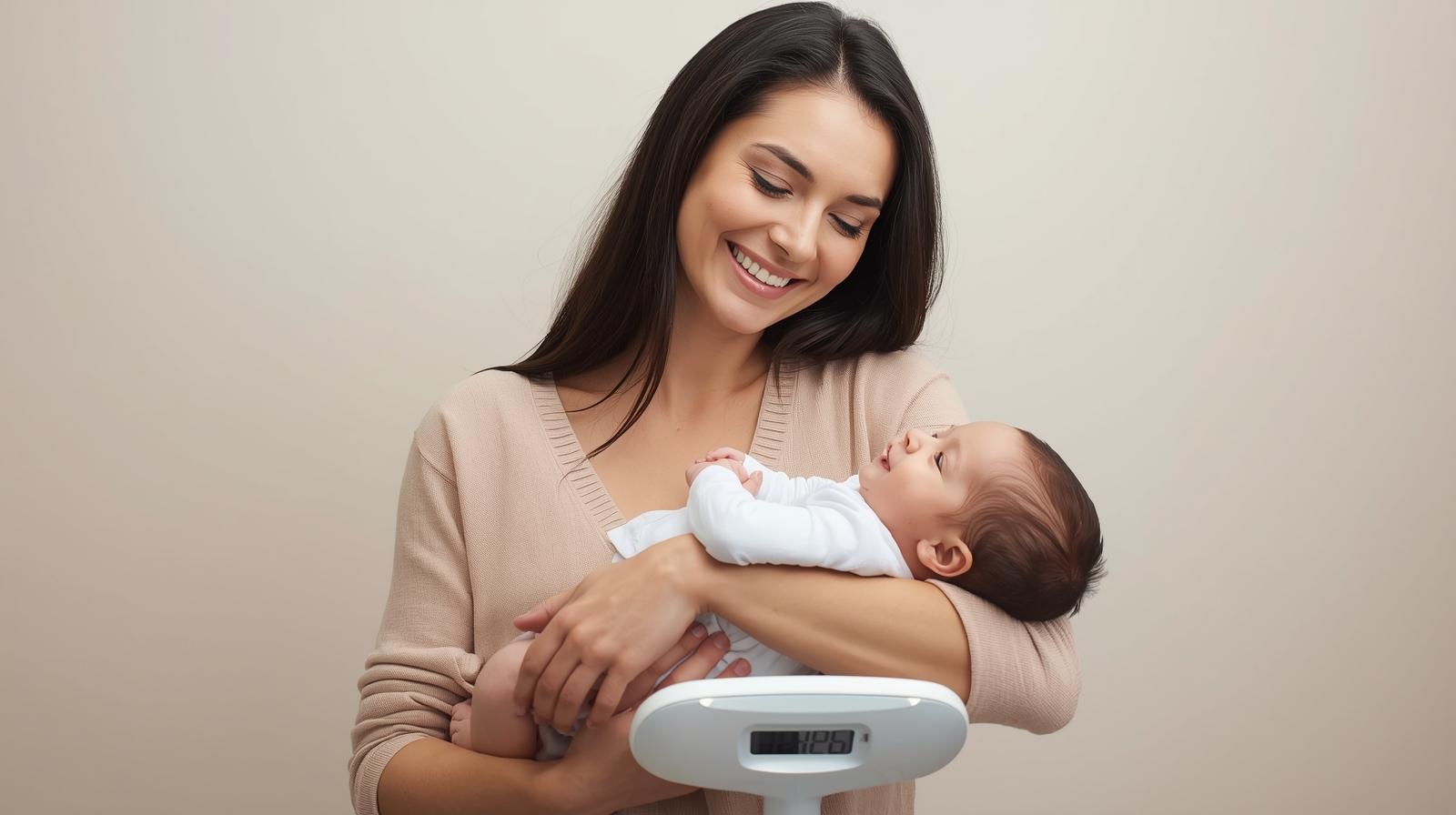
Do you remember those first few days after bringing your baby home? You stare at their tiny fingers and wonder if they are getting enough to eat. It is completely normal to worry about every single ounce.
Doctors and nurses talk so much about weight gain in the hospital. Then you get home, and suddenly you have no way to measure it without the best infant scale. That silence can feel incredibly loud for a worried mom.
Finding the best infant scale can bring you some much-needed peace of mind. You don’t need to guess or wait for the next pediatrician appointment. You can get accurate numbers right from your nursery.
At Mom Kid Friendly, we understand that you just want reassurance, not another gadget to dust. We are here to help you figure out if a scale is right for you. Let’s make this decision easy and stress-free.
Not sure if your baby’s growth is on track? Download our free Growth Chart Tracker to keep handy alongside your new scale!
Why Parents Stress About Baby Weight in the First Year
The pressure to track weight starts the moment your baby is born. The medical team celebrates every gram gained. It sets a tone that weight equals health.
This focus makes sense medically, but it is hard on parents emotionally. You might feel like your success as a parent is tied to a number on a scale. It is a heavy burden to carry when you are sleep-deprived.
Breastfeeding moms often feel this anxiety the most. You cannot see the ounces in a bottle, so you have to trust your body. It is hard to trust when you are exhausted and recovering.
Formula-feeding parents worry too. Maybe the baby spits up often, or they seem to finish bottles too quickly. You just want to know they are thriving.
That is why the search for the best infant scale usually happens at 2 AM. You want data to quiet the worry in your head. You want proof that your little one is okay.
Must Read: Top Picks for the Best Double Stroller: A Mom’s Guide
What an Infant Scale Actually Measures and Why It Matters
An adult scale measures your total body mass in pounds. An infant scale is much more sensitive. It needs to measure tiny fluctuations in grams or ounces.
Adult scales often ignore small changes under half a pound. For an adult, half a pound doesn’t matter much. For a newborn, half a pound is a huge milestone.
The best infant scale will show you weight gain in very small increments. This precision is vital for tracking “weighted feeds.” This is when you weigh baby before and after eating to see how much milk they transferred.
It also measures growth trends over time. One weigh-in doesn’t tell the whole story. The trend over weeks is what really matters for health.
Accuracy is the most important part of this tool. If the scale fluctuates wildly, it causes more panic than peace. You need a device designed specifically for wiggly, light bodies.
When Parents Really Need an Infant Scale at Home
Not every family needs a scale in the nursery. For many healthy babies, doctor visits are enough. However, there are specific times when having one is incredibly helpful.
Premature babies often need close monitoring. Their growth needs to be steady to ensure they are catching up. A home scale saves you from constant trips to the clinic.
Babies with jaundice or feeding difficulties benefit from home weighing too. If your baby falls asleep at the breast or struggles to latch, weight is a key indicator. It tells you if they are getting the nutrition they need.
Moms dealing with low milk supply anxiety find scales helpful. Seeing the numbers go up can validate that breastfeeding is working. It can give you the confidence to keep going.
Sometimes, you just live far from the doctor. If getting to a clinic is a long drive, a home scale adds convenience. It lets you spot potential issues early without the travel time.
Key Features to Look for in the Best Infant Scale
Shopping for baby gear can be overwhelming. There are so many bells and whistles on products today. Here is what actually matters when looking for a scale.
The Tare Function
This is non-negotiable. The “Tare” button allows you to zero out the scale. This means you can put a blanket down first.
Babies hate cold surfaces. You put the blanket on, hit Tare, and the scale ignores the blanket’s weight. It ensures you only measure the baby.
The Hold Function
Babies rarely stay still. They kick, wiggle, and wave their arms. This makes the numbers on the screen jump around wildly.
A “Hold” button locks onto the weight despite the movement. It calculates an average while the baby moves. This feature saves you from guessing which number was correct.
A Curvature or Tray Design
Safety is everything. A flat surface can feel dangerous for a rolling infant. You want a scale with curved edges.
A contoured tray keeps the baby centered. It prevents them from rolling off easily. It also makes them feel a bit more secure and swaddled.
Easy-to-Read Display
You might be weighing your baby in a dim room at night. You do not want to squint at tiny numbers. Look for a large, backlit LCD screen.
It helps if the display stays on for a few seconds. You want to focus on picking up your baby safely. You can look at the number after you have them in your arms.
Must Read: Top 7 Best Pacifiers for Newborns: A Mom’s Guide
Digital vs. Mechanical Infant Scales for Home Use
You will see two main types of scales online. Digital scales run on batteries and have electronic screens. Mechanical scales use springs and a sliding weight, like at the doctor’s office.
Digital scales are generally better for home use. They are lighter and easier to move around the house. They also give you a specific number instantly.
Mechanical scales are very durable. They don’t need batteries, which is a plus. However, they are heavy and bulky to store.
Reading a mechanical scale takes practice. You have to slide the weights until the beam balances. This is hard to do with a crying, moving baby.
Digital scales often have better features for parents. Things like memory storage to track previous weights are common. For most families, digital is the clear winner for convenience.
Accuracy, Sensitivity, and Weight Range Explained Simply
Accuracy and sensitivity are not the same thing. Sensitivity refers to the smallest amount of weight the scale can detect. For a baby, you want high sensitivity.
Look for a scale that measures in 5-gram or 10-gram increments. If a scale only measures in quarter-pounds, it is useless for newborns. You need to see those tiny changes.
Accuracy means the scale tells the truth. If you put a 5-pound weight on it, it says 5 pounds every time. A good scale shouldn’t give you different numbers five minutes apart.
Weight range is how long you can use the scale. Some infant scales max out at 20 pounds. Others convert to a toddler scale and go up to 40 or 60 pounds.
A convertible scale offers better value for money. You can use it as your child grows into a toddler. Just make sure it is still sensitive enough for the infant stage.
Safety and Comfort Features Parents Often Overlook
We often look at the technology first. But comfort is what makes the weigh-in successful. If the baby cries, the process becomes stressful for everyone.
Look for a scale made of warm, smooth plastic. Cold metal trays are a recipe for tears. Some scales come with a soft pad included.
Non-slip feet on the bottom of the scale are crucial. You might place the scale on a dresser or table. You do not want it sliding around while the baby wiggles.
Check for sharp edges or pinch points. The tray should be smooth and seamless. You don’t want delicate skin getting caught on anything.
Stability is key. Press on the edge of the tray before buying. The scale should not tip over easily if weight is off-center.
How to Use an Infant Scale Correctly Without Stressing Your Baby
Using a scale seems simple, but small errors add up. To get the best data, consistency is your best friend. Follow these steps for a calm experience.
First, place the scale on a hard, flat surface. Carpets and rugs will give you wrong readings. A changing table or kitchen counter works best.
Always weigh your baby naked. Diapers, even clean ones, have weight. Clothes vary in weight and can throw off your tracking.
If it is cold, use the Tare function with a blanket. Weigh the baby at the same time each day. Weight fluctuates based on feeding and dirty diapers.
Don’t weigh every single day unless a doctor told you to. Daily fluctuations can drive you crazy. Once or twice a week is usually plenty to see a trend.
Keep a notebook or use an app to write it down. You will forget the number five minutes later. Seeing the numbers over weeks helps you see the bigger picture.
Common Mistakes Parents Make When Weighing Babies
It is easy to make simple mistakes that ruin the data. The biggest one is using different scales. Don’t compare your home scale to the doctor’s scale.
Scales are calibrated differently. Stick to one device for tracking trends. The trend matters more than the specific number comparing two devices.
Another mistake is forgetting to zero the scale. If you leave a toy or pacifier on the tray, the weight is wrong. Always hit the zero button before starting.
Weighing right after a huge meal can be misleading. Weighing right after a massive poop changes things too. Try to find a neutral time, like before a bath.
Don’t obsess over “weighted feeds” without guidance. It is very easy to do these incorrectly at home. It can lead to thinking your baby isn’t eating enough when they are fine.
Finally, don’t ignore your instincts. If the scale says baby is fine, but they seem lethargic, call the doctor. You know your child better than a machine does.
Who Should Buy the Best Infant Scale and Who Can Skip It
Buying an infant scale is a personal choice. It depends on your personality and your baby’s health needs. Here is a quick breakdown to help you decide.
You should buy one if:
- You have a preemie or a baby with medical needs.
- You are extremely anxious about milk supply and need reassurance.
- You live very far from medical care.
You can probably skip it if:
- Your baby is full-term and feeding well.
- You tend to obsess over numbers and data.
- You have regular, easy access to pediatric check-ups.
For some parents, having the scale adds anxiety. They check it too often and panic over normal fluctuations. If you are that type of person, it is okay to skip it.
Trust that your pediatrician will catch growth issues. You can use other signs of health. Wet diapers and alert moments are great indicators too.
Best Infant Scale Buying Checklist for First-Time Parents
Ready to shop? Take this checklist with you. It cuts through the marketing noise.
- Sensitivity: Does it measure in 5g or 10g increments (0.5 ounces or less)?
- Tare Function: Can you zero out a blanket easily?
- Hold Button: Does it lock the weight for wiggly babies?
- Weight Limit: Will it last past the newborn stage?
- Surface: Is the tray curved and secure?
- Display: Is the screen backlit and easy to read?
- Size: Will it fit on your changing table safely?
- Power: Does it use standard batteries you have at home?
- Cleanability: Can you wipe it down easily?
If a scale ticks all these boxes, it is a winner. You don’t need WiFi or Bluetooth unless you really love tech. Simple is usually better for tired parents.
Keeping Perspective on Your Baby’s Growth
Remember that a scale is just a tool. It gives you data, but it doesn’t measure love or happiness. Your baby is more than a number on a screen.
The best infant scale is one that helps you feel confident, not worried. Use it to support your parenting, not to dictate your mood. Mom Kid Friendly is all about making your life easier, not more stressful.
If the numbers ever confuse you, reach out to your pediatrician. They are the experts in interpreting that data. You are the expert in loving your baby.
You are doing a great job, no matter what the scale says today. Take a deep breath. You’ve got this.
Want more practical tips for the first year? Join our Mom Kid Friendly community forum to chat with other moms who are right there with you!
Must Read: Best Baby Bouncer That Keeps Your Little One Happy
Frequently Asked Questions
What is the best infant scale for home use?
The best infant scale is accurate, sensitive to small changes, and easy to use at home for tracking baby weight.
Do I really need the best infant scale at home?
You may need the best infant scale if your baby is premature, has feeding issues, or if weight checks ease your anxiety.
How accurate is the best infant scale compared to the doctor’s office?
The best infant scale is accurate for tracking trends, even if readings differ slightly from clinic scales.
Can I use a regular bathroom scale instead of the best infant scale?
No, a bathroom scale lacks the sensitivity needed to measure small weight changes in babies.
How often should I weigh my baby using the best infant scale?
Once or twice a week is usually enough unless your pediatrician recommends more frequent checks.
Is a digital option better when choosing the best infant scale?
Yes, digital models are easier to read, more precise, and better suited for home use.
Author

