


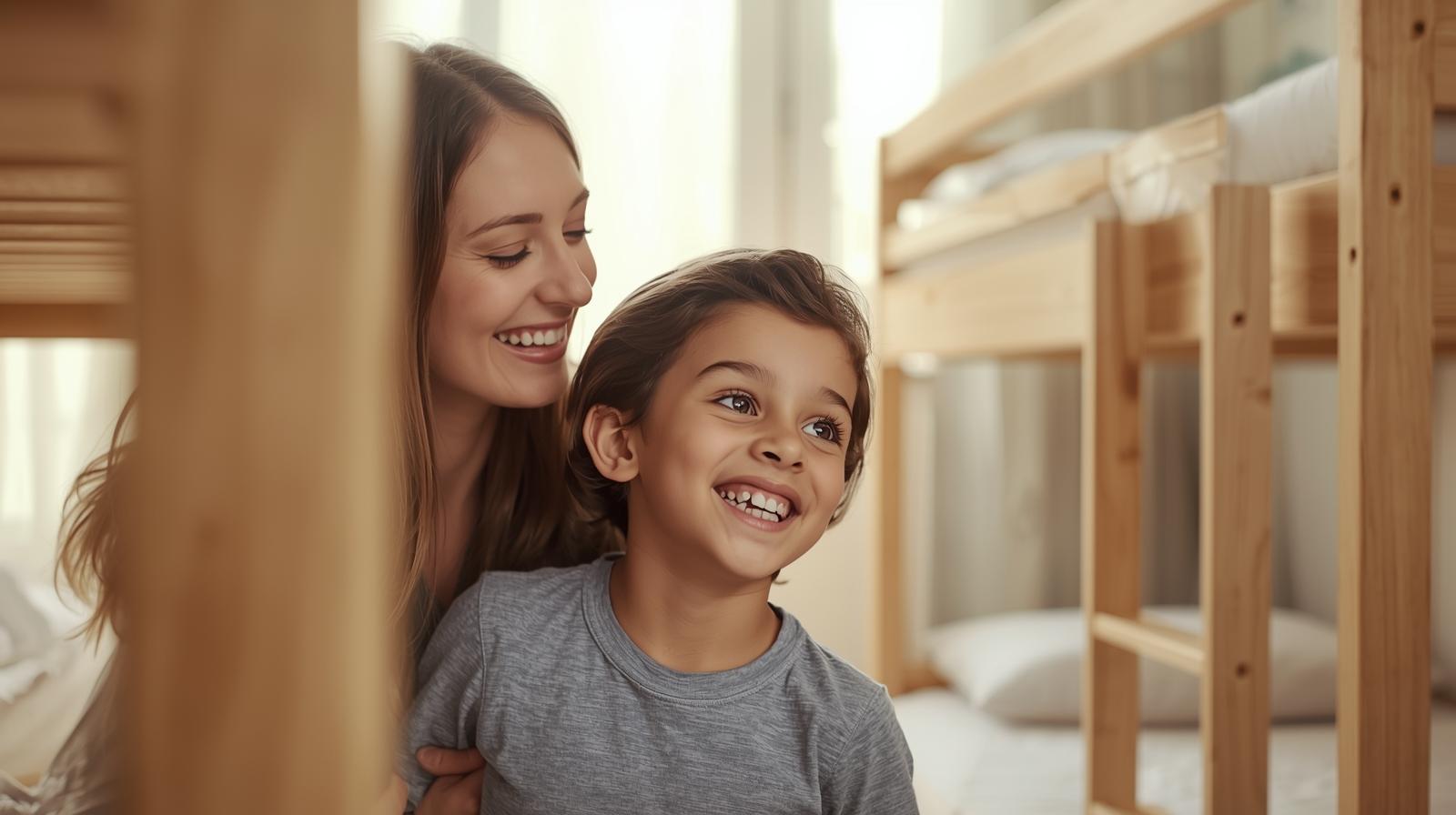
You’re staring at a tiny bedroom with two kids who need beds and zero floor space left for toys. The struggle is real when siblings share a room and you’re juggling safety, storage, and style all at once. Finding the best childrens bunk beds can solve your space problem while making bedtime feel like an adventure instead of a battle.
Ready to find the perfect bunk bed for your family? Browse our top picks for the best childrens bunk beds at Mom Kid Friendly and make bedtime stress-free. Create a room your kids love while keeping things simple and safe.
Why Parents Look for the Best Childrens Bunk Beds
Small bedrooms don’t give you much wiggle room. When two kids share one space, you need furniture that works double duty without making the room feel cramped. Bunk beds for kids free up floor space for play areas, toy bins, and room to breathe.
Sibling room-sharing can get messy fast. One kid wants the light on, the other wants darkness, and bedtime turns into chaos. Kids bunk beds with built-in features like curtains or storage help each child claim their own little zone.
Making bedtime fun changes everything. Kids get excited about climbing into their “top bunk fort” or their “bottom bunk cave.” The right childrens bunk beds turn a nightly struggle into something your kids actually look forward to.
Are Bunk Beds Safe for Kids
Age matters more than you think. Most experts recommend waiting until your child is at least six years old before letting them sleep on the top bunk. Younger kids don’t always have the coordination to climb safely, and that’s a risk you don’t want to take.
Guardrails and sturdy ladders are non-negotiables. The top bunk needs rails on all sides to prevent falls during sleep. The ladder should attach securely and feel stable when your child climbs up or down.
Mattress height and ceiling clearance keep everyone comfortable. Leave at least two feet of space between the top mattress and the ceiling so your child can sit up without bumping their head. Measure twice before you buy so you don’t end up with a bunk bed that doesn’t fit.
Types of Bunk Beds to Consider
Standard twin-over-twin bunk beds fit most kids’ rooms. They work well for siblings close in age and take up the smallest footprint. You get two twin beds stacked vertically, and that’s it—simple and effective.
Twin-over-full bunk beds give you flexibility as your family grows. The bottom bunk fits a full-size mattress, which works for an older kid, a parent camping out during sick nights, or sleepovers with friends. It’s a smart choice if you want the bed to last through different life stages.
L-shaped bunk beds create extra floor space in the corner. These beds position the bunks at a right angle, which opens up the middle of the room for play. They also feel less towering than traditional stacked beds.
Loft-style beds turn the bottom space into something useful. Instead of a second bed, you get a built-in desk, storage cubbies, or play space underneath. This setup works great for older kids who need homework stations or younger kids who want a reading nook.
Bunk beds with storage drawers save you from buying extra furniture. Built-in drawers slide under the bottom bunk or tuck into the stairs. You can stash clothes, toys, or extra bedding without crowding the room with dressers.
Must Read: Why Low Bunk Beds Are Becoming a Mom Favorite for Small Spaces
How to Choose the Right Size and Layout
Measure your child’s room before you fall in love with a bunk bed online. Grab a tape measure and check the length, width, and height of the space where the bed will go. Write those numbers down and compare them to the bed dimensions before clicking “add to cart.”
Check your ceiling height to avoid surprises. Most rooms need at least eight feet of ceiling clearance for standard bunk beds. If your ceilings are lower, look for low-profile or loft beds designed for smaller spaces.
Plan space for play areas and movement. Leave at least two feet of clearance on all sides of the bed so kids can walk around safely. You don’t want them squeezing past furniture or bumping into walls every time they get up.
Materials That Last
Solid wood frames feel sturdy and hold up through years of jumping, climbing, and roughhousing. Wood bunk beds tend to cost more upfront, but they last longer and handle higher weight limits. Pine, oak, and birch are popular choices.
Metal frames offer a modern look and come at a lower price point. They’re lightweight and easy to move, but they can feel less stable than wood. Check the weight limits carefully if you go with metal.
Weight limits and durability matter more than you’d think. Most bunk beds for kids support 200 to 400 pounds per bunk, but always double-check the manufacturer’s guidelines. You want a bed that can handle active kids without wobbling or creaking.
Easy-to-clean finishes save you time on upkeep. Look for painted or sealed wood that wipes down quickly when sticky hands leave their mark. Metal frames usually just need a damp cloth to stay looking fresh.
Features Parents Actually Appreciate
Built-in storage solves so many problems. Drawers under the bed, shelves at the foot, or cubbies in the stairs give you places to tuck away clothes, books, and toys. You’ll thank yourself every time you skip a trip to the closet.
Sturdy ladders feel safer than wobbly ones, but stairs take it up a notch. If your budget allows, go for bunk beds with built-in staircases instead of ladders. They’re easier for younger kids to climb and double as storage when designed with drawers inside each step.
Convertible designs grow with your child. Some childrens bunk beds split into two separate twin beds when your kids eventually want their own rooms. That flexibility means you won’t need to buy new beds down the road.
Smart Safety Checklist Before Buying
Look for certifications and safety standards on the product listing. ASTM International and CPSC (Consumer Product Safety Commission) certifications mean the bed passed safety tests. Don’t skip this step—it’s your peace of mind.
Follow secure assembly tips to the letter. Use all the screws, bolts, and brackets included in the box. Tighten everything properly and double-check stability before your kids climb on. A wobbly bed is a safety hazard waiting to happen.
Set clear rules with your kids from day one. No jumping on the top bunk, no roughhousing near the ladder, and always use the ladder to climb down. Kids need boundaries to stay safe, and bunk beds are no exception.
Must Read: 3 Year Old Sleep Regression: Why It Happens & How to Survive It
Decorating Ideas to Make Bunk Beds Fun
Themed bedding turns the bed into an experience. Dinosaur sheets for the bottom bunk and space-themed blankets for the top make each kid feel special. Let them pick their own bedding so they’re excited about their new sleep setup.
Curtains add privacy and a cozy vibe. Hang fabric panels around the bottom bunk to create a little hideaway. It helps kids feel like they have their own space even when sharing a room.
Nightlights and reading corners make bedtime smoother. Clip-on reading lights for the top bunk and a small bookshelf near the bottom bunk encourage quiet time before sleep. You’ll appreciate the calm routine.
Common Mistakes to Avoid
Ignoring room measurements causes headaches. You don’t want to haul a bunk bed upstairs only to find it doesn’t fit. Measure the doorways, stairways, and the final room before ordering.
Choosing style over safety is never worth it. That trendy metal frame might look cool, but if it wobbles or lacks proper guardrails, it’s not the right choice. Safety comes first, always.
Forgetting long-term needs means buying twice. Think about where your family will be in three to five years. Will your kids still share a room? Will they need desks for homework? Pick a bed that adapts as they grow.
Trust Your Instincts and Make the Right Choice
Choosing the best childrens bunk beds doesn’t have to feel overwhelming. You know your kids, your space, and your budget better than anyone. Go with a bed that checks your safety boxes, fits your room, and makes your kids smile.
Start with measurements, check the safety features, and pick materials that last. Add fun touches like themed bedding or curtains to make the bed feel special. Your kids will love their new setup, and you’ll love the extra floor space.
Got questions or tips to share? Drop a comment below and let’s help each other out at Mom Kid Friendly. We’re all figuring this out together.
Must Read: Navigating the 17 Month Sleep Regression
Frequently Asked Questions
What age is safe for the top bunk?
Most experts suggest children should be at least six years old before sleeping on the top bunk for safety reasons.
Are bunk beds safe for small bedrooms?
Yes, the best childrens bunk beds are designed to save space while meeting safety standards when installed correctly.
How much ceiling height do you need for bunk beds?
You should have at least eight feet of ceiling height to allow safe sitting space on the top bunk.
What is better, wood or metal bunk beds?
Solid wood feels sturdier and lasts longer, while metal costs less and works well in modern rooms.
Can bunk beds be separated later?
Many best childrens bunk beds can split into two separate beds, giving you more flexibility as kids grow.
Do bunk beds come with storage?
Yes, many models include built-in drawers, shelves, or staircase storage to reduce clutter.

