
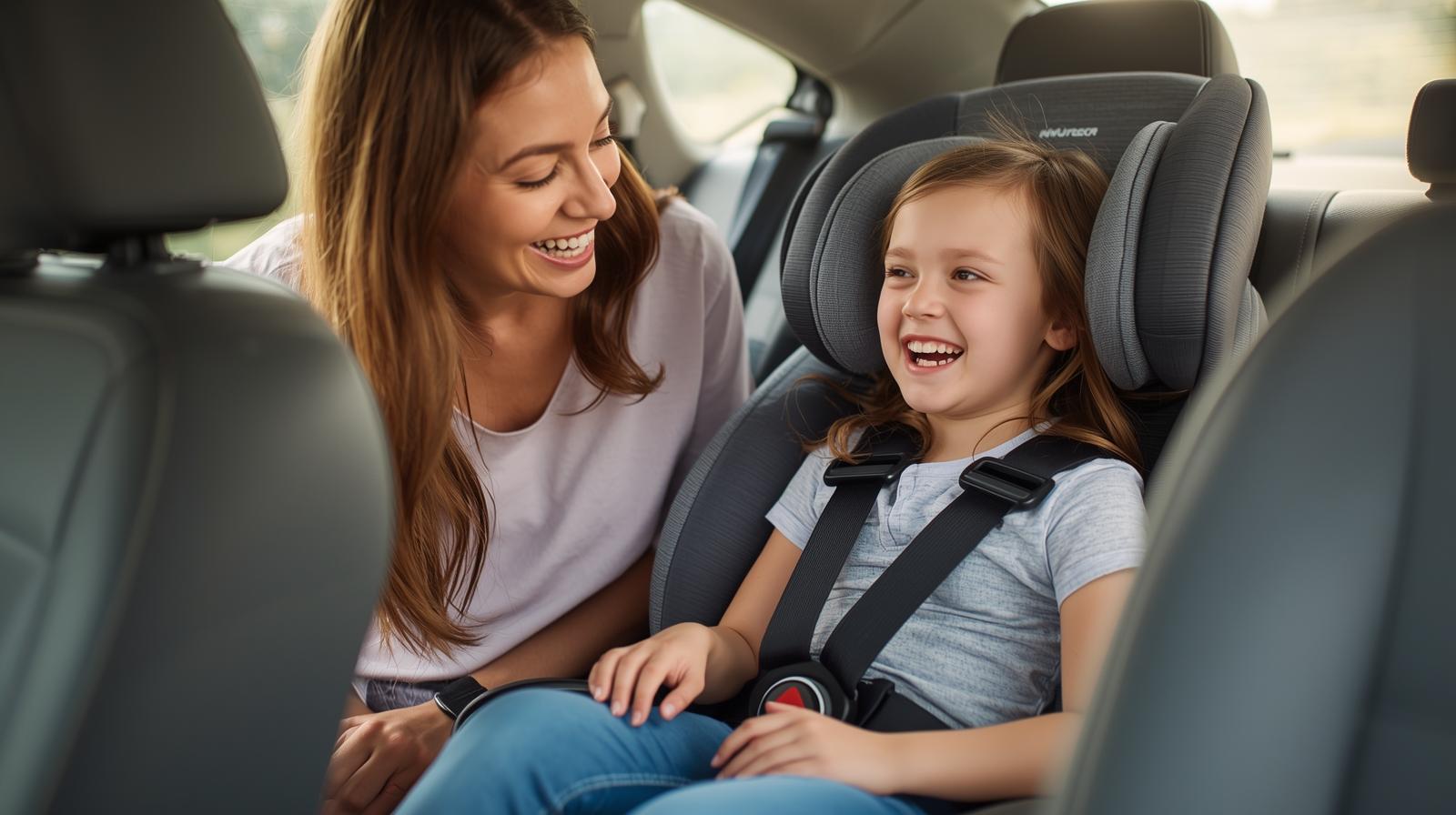
You have hit that major milestone. They’ve outgrown the forward-facing setup, and now you’re hunting for the best booster seat that won’t drive you nuts on every trip.
The options available today can feel overwhelming. You see high-back boosters, backless boosters, and combination seats that claim to do everything.
Which one actually keeps your child safe? Which one won’t make every car ride a battle?
The transition from convertible car seats can be confusing. You want the best booster seat that actually supports your growing kid without turning car rides into a circus.
Let me walk you through what actually matters when choosing the right booster car seat for your family.
Table Of Contents:
- Why Your Child Needs a Booster Seat
- High-Back vs Backless Booster Seats
- Top Booster Seats Worth Your Money: Finding the Best Booster Seat for Your Child
- Special Situations: Travel and Carpooling
- Combination Seats That Grow With Your Child
- What to Look for When Shopping
- State Laws and Recommendations
- Installation Tips for Maximum Safety
- Common Mistakes Parents Make
- Maintaining and Cleaning Your Booster Seat
- When to Transition Out of a Booster
- Conclusion
- Frequently Asked Questions
Why Your Child Needs a Booster Seat
Here is the truth about seat belts in cars. They are designed for adults, not kids.
When a child sits in a vehicle seat without a booster, the lap belt sits too high. It crosses their stomach instead of their hips.
The shoulder belt cuts across their neck or face. In a crash, these poorly positioned belts can cause serious injuries.
A booster seat lifts your child up. This simple elevation makes the seat belt fit correctly across their body.
The lap belt sits low across the strong hip bones. The shoulder belt crosses the chest and collarbone.
Most kids need a booster seat until they are at least 8 years old. Some need one until age 12.
Height matters more than age. Your child is ready to ditch the booster when they can sit with their back against the vehicle seat.
Their knees should bend comfortably at the edge. The days of the infant car seat are long gone, but safety remains the priority.
High-Back vs Backless Booster Seats
The two main types of booster seats are high-back and backless models. Both serve the same basic purpose but work differently.
High-back boosters are generally recommended because they offer additional head and neck support. They also help with seat belt positioning, especially in a side-impact crash.
These seats work great if your vehicle does not have headrests in the back seat. The high back provides that crucial protection your child needs.
Backless boosters are more portable and easier to move between vehicles. They are perfect for older children who are mature enough to sit properly without added support.
The catch with backless boosters? Your child needs to be responsible enough to stay positioned correctly.
If they slouch or wiggle around a lot, a high-back booster is the safer choice. The extra support keeps them in place.
Many high-back boosters eventually convert to backless boosters. This versatility gives you more value over the seat years.
Related Reading: Teaching Kids Healthy Habits: A Guide for Parents
Top Booster Seats Worth Your Money: Finding the Best Booster Seat for Your Child
After looking at crash test data and real parent reviews, some clear winners emerge. The Consumer Reports booster ratings helped narrow down the field.
We evaluated various options to see which seats provide the best mix of safety and value. Here are the top contenders.
Nuna AACE

The Nuna AACE consistently ranks as one of the best overall options. It scored exceptionally well in safety tests.
This seat transitions from high-back to backless as your child grows. The regular price sits around $300, which is an investment.
However, the quality and safety features justify the cost for many families. The seat accommodates kids from 40 to 120 pounds.
Chicco KidFit Zip Air Plus
For budget-conscious parents, the Chicco KidFit Zip Air Plus 2-in-1 delivers impressive value. It earned high crash test scores without the premium price tag.
The zip-off cover makes cleaning easy. The padded leg lounger adds comfort on longer trips.
Parents love how straightforward it is to install and adjust. You can find this one for around $92.
Peg Perego Viaggio Flex 120
The Peg Perego Viaggio Flex 120 stands out for ease of use. Both parents and kids find it simple to work with.
It achieved favorable crash test ratings. The adjustability means it grows well with your child.
The seat fits kids up to 120 pounds. Price typically runs about $199.
The Peg Perego Viaggio line is known for style and safety. This model features rigid LATCH connectors for stability.
Clek Oobr
The Clek Oobr is built like a tank. It features a magnesium sub-frame for structural integrity.

This high-back booster offers a rigid LATCH system. It locks the booster into place securely.
It also reclines, which is a rare feature in booster seats. This makes it comfortable for sleeping children.
Uppababy Alta
The Uppababy Alta is another strong contender in the premium market. It features a SecureFit belt routing system.
This system helps position the lap belt correctly. It prevents the belt from riding up on the stomach.
The side impact pods absorb energy during a crash. It is a sleek option for modern families.
Graco Turbobooster
The Graco Turbobooster is a classic choice. It is affordable and reliable.
It converts from a high-back to a backless booster. It is lightweight and easy to move.
Many parents choose the Graco Turbobooster backless model for carpools. It fits well in most vehicles.
| Model | Type | Weight Range | Key Feature |
|---|---|---|---|
| Nuna AACE | High-Back & Backless | 40-120 lbs | Customizable fit |
| Chicco KidFit Zip Air | High-Back & Backless | 40-110 lbs | Zip-off washable cover |
| Peg Perego Viaggio Flex | High-Back | 40-120 lbs | Foldable for storage |
| Clek Oobr | High-Back & Backless | 40-100 lbs | Magnesium frame |
| Graco Turbobooster | High-Back & Backless | 40-100 lbs | Affordable & lightweight |
Special Situations: Travel and Carpooling
Sometimes you need something more portable. Maybe you are traveling or your child rides in multiple vehicles regularly.
Compact travel requires different solutions. You do not want to lug a heavy seat through an airport.
The BubbleBum inflatable booster seat solves this problem brilliantly. It is lightweight, compact, and incredibly easy to use.

This backless option inflates in seconds. When deflated, it fits in a backpack or purse.
It is perfect for carpooling, taxis, or flights where you will need a rental car. It meets all safety standards despite its distinct design.
Parents rave about how convenient it is. One reviewer called it an “ingenious product, compact, high quality and extremely useful.”
The BubbleBum works for kids aged 4 to 11 years. Just remember it is a backless booster, so your child needs to be mature enough to sit properly.
Another great travel option is the Peg Perego Viaggio Shuttle. It is a rigid backless booster that offers great comfort.
The Viaggio Shuttle includes a cup holder and a handle for carrying. It is more substantial than inflatable options but still portable.
If you are using a car or booster seat in an Uber, Lyft, or shuttle, having a portable option makes life so much easier.
Combination Seats That Grow With Your Child
Want a seat that lasts longer? Combination seats convert from a forward-facing harness to a booster.
These are often called “harness-to-booster” seats. They allow you to keep your child in a 5 point harness longer.
The Graco Tranzitions 3-in-1 offers versatility that saves money. It starts as a forward-facing harness seat for toddlers.
Later it converts to a high-back booster. Finally, it becomes a backless booster.
This means one seat can potentially last from age 2 to 10. The price point makes it attractive for families on a budget.
The Britax Grow With You ClickTight provides excellent head and torso support. The maximum height settings accommodate taller children.
Installation is simple thanks to the ClickTight system. You just open the seat, thread the belt, and close it.
These combination seats work well if you want fewer transitions. Your child stays in a familiar seat as they grow.
If you skipped the convertible car seat stage or need a new seat after an infant car, these are great.
Related Reading: Best Family Christmas Gift Ideas in 2025
What to Look for When Shopping
Safety ratings should top your list. Look for seats that have been crash tested by independent labs.
MGA Research works with the National Highway Transportation Safety Administration on car seat tests. Seats tested there carry extra credibility.
Look for EPP foam in the headrest and side wings. This foam absorbs energy during a collision.
Make sure the car seat is the right fit for your vehicle. Not every seat works well in every car.
Check your vehicle’s seat dimensions. Measure the width if you need to fit three seats across.
Your child’s size and maturity level matter too. They need to be able to sit properly for the entire ride.
Installation features make a difference in real-world use. Look for easy-to-use LATCH systems.
Some boosters attach with LATCH to keep them stable when empty. This prevents the seat from becoming a projectile in a crash.
Comfort features like a cup holder, extra padding, and adjustable headrests matter for longer trips. An uncomfortable child will not stay positioned correctly.
Consider the weight limit and weight range of the seat. A higher limit allows your child to use the booster longer.
Check if the seat meets current federal requirements. Child passenger safety technology evolves, so newer seats often have better features.
State Laws and Recommendations
Laws vary by state, so check your local requirements. Georgia laws on child seat belts, car seats and booster seats differ from other states.
Most states require booster seats until age 8. Some specify height or weight minimums instead.
But legal requirements represent the bare minimum. Safety experts recommend keeping kids in boosters longer.
The American Academy of Pediatrics says kids should use a booster until the seat belt fits properly. This usually happens between ages 8 and 12.
Your child should meet all these criteria before ditching the booster. They can sit with their back against the vehicle seat.
Their knees bend comfortably at the seat edge. The lap belt lies across the upper thighs.
The shoulder belt crosses the chest and shoulder. They can maintain this position for the entire trip.
Safety guidelines emphasize that every child passenger is different. Do not rush to remove the booster just because of age.
Installation Tips for Maximum Safety
Even the best booster seat will not protect your child if installed incorrectly. Start by reading both the seat’s manual and your vehicle’s manual.
Place the booster in the back seat. The center position is safest if the seat belt fits properly there.
If using LATCH connectors, make sure they click securely. Give the seat a firm tug to check it is stable.
For a booster secured with LATCH, check that the connectors are tight. This keeps the seat in place when the child is not in it.
Position your child in the seat before buckling. The lap belt should lie flat across the tops of the thighs.
The shoulder belt should cross the middle of the chest and shoulder. Never tuck the shoulder belt under the arm or behind the back.
If the belt does not fit right, the booster seat may not be appropriate yet. Or you might need a different style of booster.
A Certified Child Passenger Safety Technician can check your installation for free. Many police and fire departments offer this seat check service.
Easy install features like color-coded belt guides help parents. Look for these when shopping for your booster car seat.
Common Mistakes Parents Make
Moving to a booster too soon is the biggest error. Your child should max out their forward-facing car seat first.
That typically means reaching the height or weight limit. The top of their ears should not extend above the seat back.
Skipping the high-back booster is another common mistake. Going straight to backless works for some kids but not all.
If your child tends to fall asleep in the car, stick with a high-back. The side wings keep their head positioned safely.
Letting your child sit incorrectly defeats the purpose of a booster. They need to stay seated properly the whole trip.
No slouching, leaning, or playing with the seat belt. This is where maturity really matters.
Using a booster past its expiration date compromises safety. Plastic degrades over time.
Check the expiration date on your seat. Most boosters expire 6 to 10 years after manufacture.
If you are ever in a collision, replace the seat immediately. Seat crash forces can cause invisible damage to the plastic.
Booster safety depends on the structural integrity of the seat. Do not take chances with second-hand seats national highway safety data warns against it.
Maintaining and Cleaning Your Booster Seat
Booster seats get dirty. Spilled drinks, crumbs, and mystery stains are part of life with kids.
Check if the cover is removable and machine washable. This feature makes cleaning so much easier.
The Chicco KidFit Zip Air Plus has a zip-off cover that parents love. Just unzip, toss in the wash, and you are done.
Models like the Chicco KidFit Zip offer similar convenience. The Zip Air feature helps with breathability and cleaning.
For seats without removable covers, use a damp cloth with mild soap. Avoid harsh chemicals that could damage the plastic.
Clean the buckles and LATCH connectors regularly. Crumbs and debris can prevent them from working properly.
Inspect your booster seat after any crash, even a minor one. Contact the manufacturer for guidance.
Many companies will replace seats involved in crashes. Some insurance policies cover replacement too.
Keeping the seat clean helps you spot any damage. Regular maintenance is a key part of passenger safety.
Related Reading: Keeping Kids Active for Health and Happiness
When to Transition Out of a Booster
It might seem like booster time lasts forever. Eventually, your child will be ready for just the vehicle seat belt.
Your child is ready to use just a seat belt when they pass the five-step test. They can sit all the way back against the vehicle seat.
Their knees bend comfortably at the edge of the seat. Their feet touch the floor.
The lap belt lies across the upper thighs, not the stomach. The shoulder belt crosses the shoulder and chest, not the neck.
They can maintain this position for the whole trip. Most kids reach this point between ages 8 and 12.
Height is often the determining factor. Kids typically need to be at least 4 feet 9 inches tall.
Do not rush this transition. Keeping your child in a booster longer is always safer than moving them out too early.
Remember that backless boosters like the Perego Viaggio Shuttle are great for that final stage. They give that last bit of height needed for belt fit.
Conclusion
Finding the best booster seat comes down to understanding your child’s needs and your lifestyle. Safety should always be your top priority.
The Nuna AACE offers premium protection for families who can afford it. The Chicco KidFit Zip Air Plus delivers excellent value without sacrificing safety.
If you appreciate Italian design, the Peg Perego Viaggio Flex or the Perego Viaggio Shuttle are excellent choices. They offer robust safety features and style.
For travel and carpooling, the BubbleBum solves portability problems. Combination seats like the Graco Tranzitions work well if you want longevity.
The Graco Turbobooster backless is a solid budget-friendly pick. The Clek Oobr offers rigid latch technology for extra stability.
Remember that the best booster seat is one your child will actually use correctly. Take them shopping so they can test comfort.
Check that the seat fits your vehicle properly. And keep your child in a booster seat until they truly outgrow it.
Your child’s safety is worth the investment. A quality booster seat protects them during a critical stage of growth.
Frequently Asked Questions
1. What is the best booster seat for everyday use?
Most parents pick high-back boosters because they keep the seat belt in the right spot and help with comfort on long rides.
2. When can my child switch to a booster seat?
Kids usually move to a booster around age 5 or 6, but height and belt fit matter more. The shoulder belt must sit on the chest, not the neck.
3. Do I need a high-back booster or backless booster?
High-back boosters work better for younger kids or cars with no headrests. Backless boosters are fine for older kids who sit still.
4. Which booster seat is safest?
Top performers include the Nuna AACE, Chicco KidFit Zip Air Plus, Clek Oobr, and Peg Perego Viaggio Flex 120.
5. How long does my child need a booster seat?
Most kids need one until around 4’9” tall. Many reach that height between ages 8–12.
6. Can I use a booster seat on airplanes?
Booster seats don’t work with airplane lap belts. Use a harnessed travel seat or packable options like BubbleBum for the car after landing.
7. Are expensive booster seats worth it?
Premium models offer easier installs, better padding, and sturdier frames. Budget seats still meet safety standards, so it depends on your needs.
Author

