
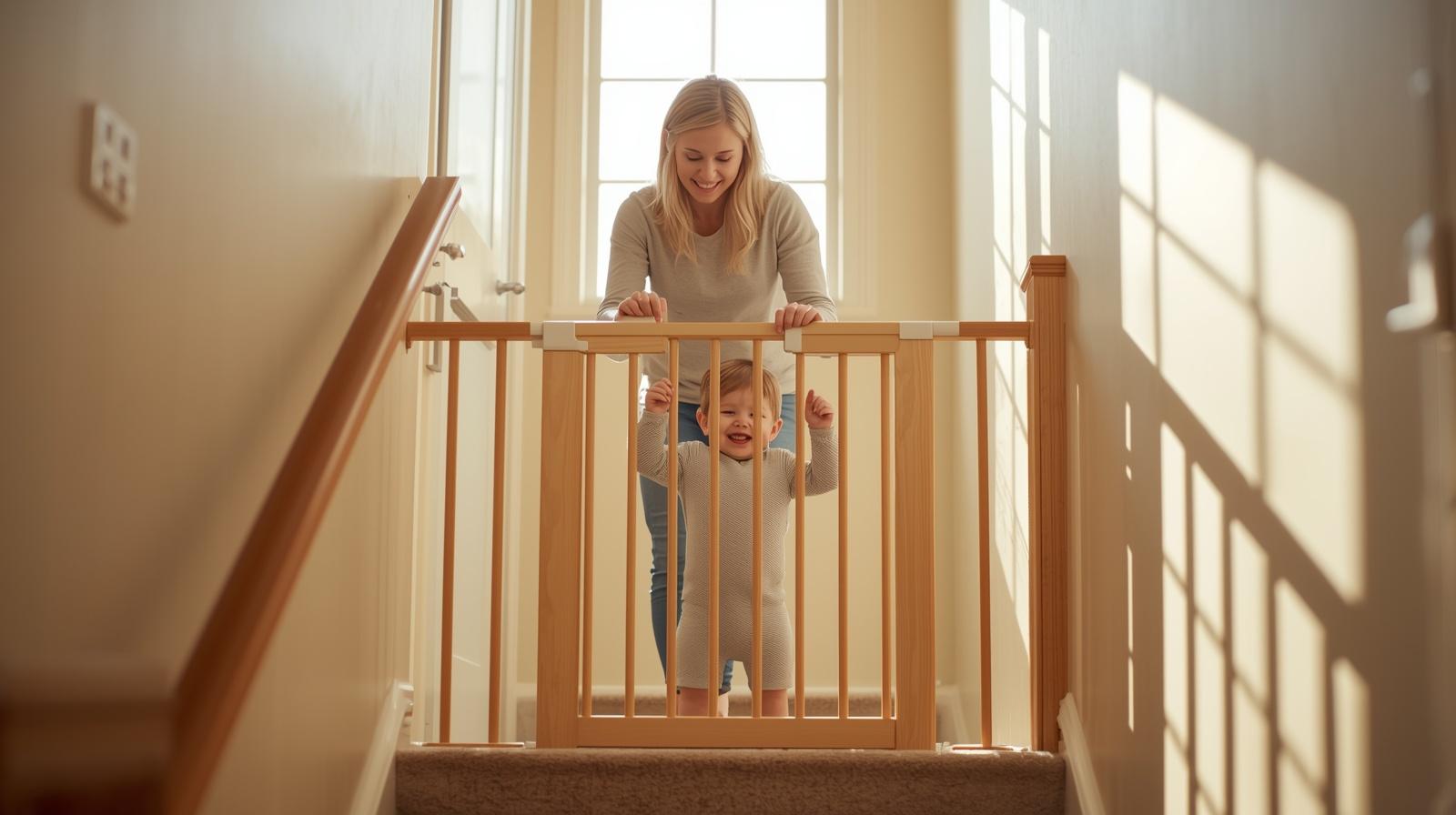
You turn your back for one single second to grab a wipe. In that tiny moment, your newly crawling baby makes a mad dash right for the staircase, making you think about a banister gate for stairs. Your heart completely drops as you scoop them up just in time.
That sudden panic is a feeling every single mom knows too well. Once your little one starts moving, your house suddenly feels like a giant obstacle course, and a banister gate for stairs becomes a must. This is exactly why finding a reliable banister gate for stairs becomes your top priority.
You need something that keeps them safe without destroying your beautiful woodwork. It can feel really overwhelming to figure out which baby safety gate actually works best. Here at Mom Kid Friendly, we want to help you make your home a safe, stress-free zone.
Want more simple parenting hacks and safety tips? Join our supportive Mom Kid Friendly community below to share your stories and get daily advice!
The real risk: why stairs are one of the most dangerous spots for toddlers
Babies and toddlers have absolutely zero sense of danger when they start exploring. A staircase looks like a really fun mountain to climb for a curious one-year-old. Sadly, falling down the stairs is a leading cause of bumps and bruises for kids.
Your child’s motor skills develop much faster than their actual judgment. They might figure out how to climb up, but they have no idea how to get back down. This creates a very scary trap for a child who is left unsupervised for even a minute.
You cannot possibly watch your child every single second of the day. A ringing doorbell or a boiling pot on the stove will eventually pull your attention away. Creating a physical toddler stair barrier is the only way to truly protect them.
What is a banister gate for stairs and how it works
A banister gate for stairs is a special child safety barrier designed for tricky staircase setups. Many modern homes feature decorative wooden or metal spindles instead of flat walls. Standard gates simply slide off these rounded posts or damage the expensive wood.
These specialized gates use clever adapters and mounting kits to attach securely to your railing. They wrap around the spindles tightly without requiring you to drill holes into the wood. This gives you a rock-solid barrier that protects your baby and your home.
The best part is how easily they function for tired parents. You can usually open them with one hand while holding a baby on your hip. They provide incredible peace of mind during those chaotic daily routines.
Types of banister gate for stairs parents can choose from
Walking into a baby store can make your head spin with all the different choices. Every box claims to be the absolute best childproof stairs solution on the market. Let us break down the three main types so you know exactly what you need.
Pressure-mounted gates
Pressure-mounted gates push outward against the walls or banisters to stay securely in place. They are usually very quick to set up and do not require heavy tools. Many moms love them because they are generally budget-friendly and easy to move around.
However, you should never ever use this type of gate at the top of a staircase. They can slip if your toddler pushes on them with enough force. Save these gates for flat hallways or the bottom of the steps only.
Hardware-mounted gates
Hardware-mounted gates physically screw into the wall or use heavy-duty banister adapters to lock in. This is the absolute safest option for protecting your child from dangerous falls. They will not budge even if your busy toddler shakes them violently.
You must use a hardware-mounted gate at the top of any staircase in your home. Special banister kits allow you to attach the hardware safely without drilling into your actual wooden posts. It takes a little more time to install, but the safety payoff is huge.
Retractable gates
Retractable gates feature a flexible mesh fabric that rolls up tightly when you open it. They look incredibly sleek and practically disappear when your kids are sleeping. Many moms appreciate that there is no bottom bar to trip over while carrying laundry.
These gates work beautifully for tight spaces or wide custom staircases. You can find excellent hardware-mounted retractable options that use banister adapters for a secure fit. Just make sure the mesh is locked tight so a sneaky toddler cannot crawl underneath it.
Must Read: Cool Childrens Bunk Beds Kids Actually Love
Key features to look for in a banister gate for stairs
Not all baby gates are created equal when it comes to everyday mom life. You need a gate that actually makes your daily routine easier, not harder. Here are the most important features to check before you buy anything.
Strong and secure fit
A wobbly gate is honestly worse than having no gate at all. Your child will eventually test the strength of the barrier by shaking it or leaning on it. You need a mounting system that grips the banister tightly without slipping down.
Look for kits that include thick, rubberized straps or solid wood clamps. These materials grip the rounded spindles firmly and keep the whole structure stable. Always give the gate a firm shake yourself to ensure it holds up.
Easy one-hand opening
Moms rarely have two completely free hands as they walk around the house. You are usually carrying a baby, a laundry basket, or a cup of cold coffee. Your gate must have a latch that you can squeeze and open with just one hand.
Test the locking mechanism carefully before you throw away the receipt. It should be tricky for a toddler to figure out, but smooth for an adult to operate. Avoid gates that require you to push down and lift with all your body weight.
No damage to banisters
Your home is a massive investment, and you want to keep it looking nice. Drilling holes directly into expensive wooden banisters will ruin them forever. A proper banister gate for stairs uses smart adapters to protect your beautiful woodwork.
Look for mounting kits that feature soft rubber padding on the inside. This padding prevents ugly scratches when you tighten the clamps against the wood. When your kids finally grow up, you can remove the gate without leaving a trace.
Proper height and spacing
Tall toddlers can easily climb over a gate that is too short for their age. Ensure the gate you choose stands at least 22 inches tall, though taller is always better. The vertical bars must also be spaced very closely together.
The gap between the bars should never be wider than three inches. This strict measurement prevents a curious child from getting their head trapped between the spindles. A simple tape measure check will save you from a terrifying emergency.
Best places to install a banister gate for stairs at home
Figuring out exactly where to put your gates can feel like a tricky puzzle. Every single house has a unique layout that requires a different strategy. Here is exactly where you need to focus your childproofing energy.
Top of stairs
The top of the stairs is completely non-negotiable for child safety. A fall from this height can cause very serious injuries to a small child. You absolutely must use a hardware-mounted gate secured with proper banister adapters here.
Never use a gate with a bottom crossbar at the top of your steps. That little metal bar becomes a massive tripping hazard for you when you walk downstairs. Choose a gate that swings open entirely, leaving the walkway completely clear.
Bottom of stairs
The bottom of the staircase is another major hotspot for climbing toddlers. They love to try and crawl up the carpeted steps when you turn away. A sturdy pressure-mounted gate works perfectly fine for this specific area.
Blocking the bottom step prevents them from getting halfway up and tumbling backward. It also keeps them safely contained in the living room while you cook dinner. Just make sure the gate swings outward, away from the steps, for easier access.
Split-level areas
Split-level homes often have sunken living rooms with just two or three steps. These tiny staircases might look harmless, but they still cause nasty falls for wobbly early walkers. You should block these small drop-offs just like a regular staircase.
A long, configurable baby safety gate works best for wide room dividers. You can angle the panels to wrap around the tricky banisters of a split-level floor. This keeps your active toddler safely corralled on the upper level while they play.
Must Read: The Best Kids Walkie Talkies for Adventures
Common mistakes parents make when choosing a banister gate for stairs
Parenting is a constant learning curve, and we all make honest mistakes along the way. One huge mistake is buying a gate just because it looks pretty on social media. Safety must always come before aesthetics when protecting your precious child.
Another common error is waiting too long to actually buy and install the gate. Babies can suddenly learn to crawl literally overnight while you are sleeping. You need to have your gates fully installed before your baby starts rolling or scooting.
Finally, many parents forget to measure their baseboards before buying a gate. Thick baseboards can push the bottom of the gate out, making the top part completely unaligned. Always measure the top width and the bottom width of your staircase separately.
How to install a banister gate for stairs safely step by step
Installing a baby gate can feel like a really frustrating weekend chore. Grab a cup of coffee, take a deep breath, and read the instructions thoroughly first. Most kits come with paper templates that you can tape directly to the wall.
Start by attaching the banister adapters to your wooden posts without tightening them all the way. Line up the gate hinges so the barrier hangs perfectly straight and level across the opening. A cheap spirit level from the hardware store will help you get this exactly right.
Once everything is lined up beautifully, tighten all the straps and screws completely. Open and close the gate ten times to make sure the latch catches perfectly every single time. Give it a firm push to ensure it will survive a toddler tantrum.
Tips to make your banister gate for stairs more effective daily
Even the best gate in the world is completely useless if you leave it open. Get into the strict habit of listening for the “click” every time you walk through it. Older siblings are notorious for leaving baby gates swinging wide open.
Take time to teach your older kids exactly how to close the gate behind them. Praise them heavily when they remember to lock it to keep their little sibling safe. You can even stick a fun reminder sticker near the latch for them.
Check the tension of the gate every single month as part of your cleaning routine. Toddlers leaning on the gate will eventually loosen the bolts over time. A quick tightening with a wrench will keep the barrier safe and secure.
When to stop using a banister gate for stairs
Kids grow up incredibly fast, and eventually, the gate becomes more dangerous than helpful. Most manufacturers recommend removing the gate when your child turns two years old. By this age, many kids learn how to physically climb over the top of the barrier.
If your child can easily open the latch themselves, the gate is no longer protecting them. A child who climbs over the gate can fall from an even higher, more dangerous distance. This is the perfect time to start teaching them safe stair-climbing habits instead.
Take down the gates, but keep holding their hand every time they use the stairs. Teach them to scoot down on their bottom safely until they master their footing. Celebrate this fun new milestone as they grow into a capable preschooler!
Final thoughts: choosing the right banister gate for stairs for your family
Keeping your energetic kids safe does not have to be a stressful, overwhelming chore. You can absolutely protect your baby and keep your beautiful home looking pristine. Finding the right banister gate for stairs simply takes a little bit of measuring and patience.
Remember that you are doing a fantastic job navigating this crazy motherhood journey. Every safety measure you take shows just how much you love and care for your little ones. Give yourself some grace on the hard days and celebrate the tiny victories.
At Mom Kid Friendly, we are always right here cheering you on through every messy, beautiful milestone. You have got this, mama, and your home is going to be incredibly safe.
How did you handle childproofing your tricky staircases at home? Drop your questions or share your best mom-tested tips in the comments below so we can help each other out!
Must Read: Best Baby Night Light: A Simple Guide for Better Baby Sleep
Frequently Asked Questions
1. What is a banister gate for stairs?
A banister gate for stairs is a baby safety gate designed to attach securely to stair railings without damaging them.
2. Do I need a banister gate for stairs at the top of stairs?
Yes, the top of stairs is the most dangerous area, and a secure hardware-mounted gate is strongly recommended.
3. Can I use a pressure-mounted gate on stairs?
You can use it at the bottom of stairs, but never at the top because it can slip under pressure.
4. Will a banister gate for stairs damage my wood railing?
No, most modern gates use padded clamps or straps to protect your banister from scratches and holes.
5. What height should a baby gate be for stairs?
A safe gate should be at least 22 inches tall, though taller options offer better protection for active toddlers.
6. When should I install a baby gate?
Install it before your baby starts crawling, as mobility can happen very quickly.
7. Are retractable gates safe for stairs?
Yes, as long as they are hardware-mounted and locked tightly to prevent crawling underneath.
8. How do I know if the gate is secure enough?
Give it a firm shake after installation; it should not move or wobble at all.
9. Can toddlers open stair gates?
Some can, which is why you should choose a gate with a childproof latch system.
10. When should I remove a banister gate for stairs?
Most parents remove it around age two or when the child can climb over or open it.
Author

