
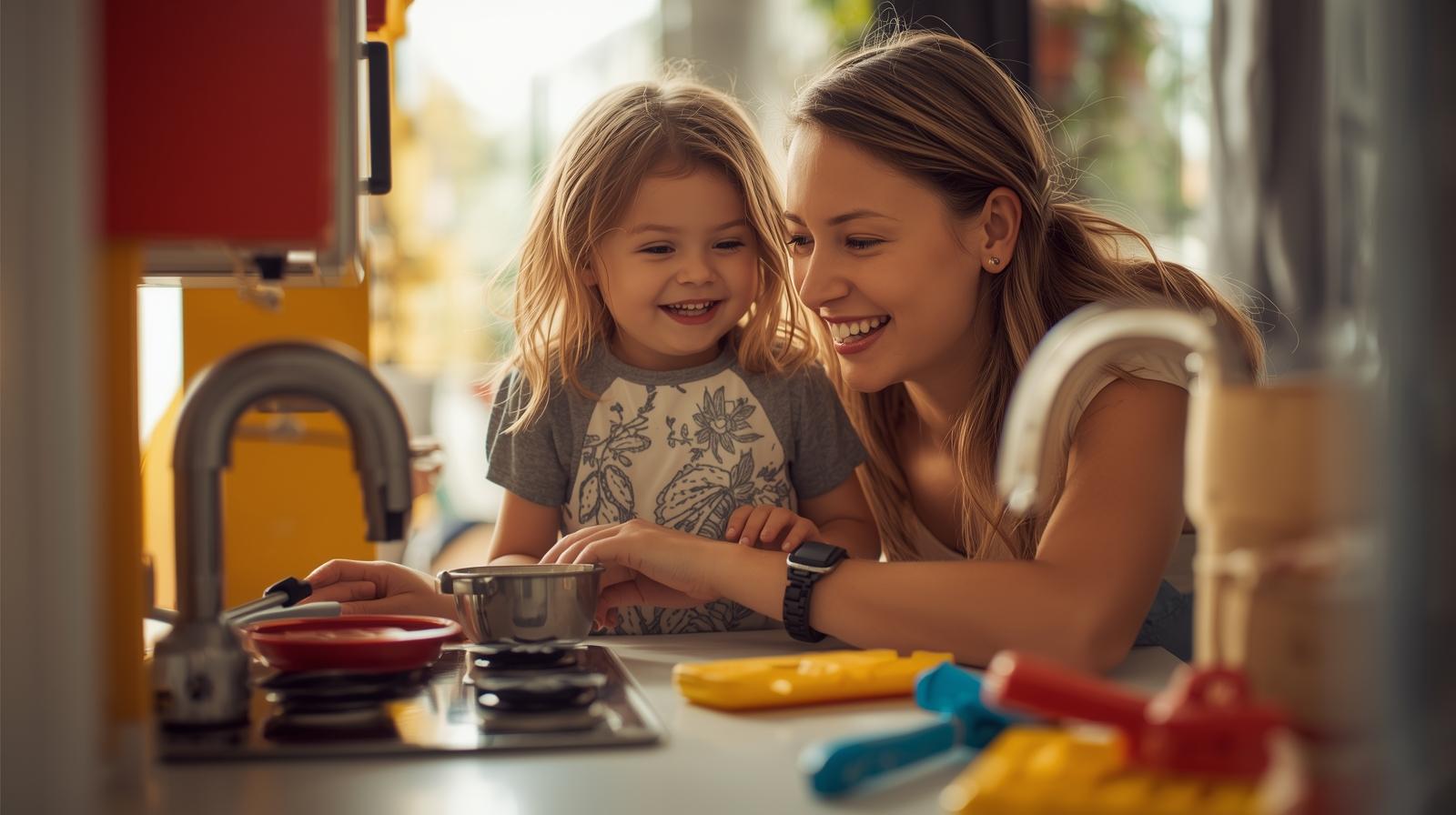
You are trying to get dinner on the table, but your toddler wants to “help” with everything. It usually ends with pots on the floor and flour in places you didn’t know existed. A childrens play kitchen changes that dynamic completely and gives you a few minutes of peace.
This classic toy gives your little one a space of their own to explore. They can chop, stir, and bake without any actual mess or danger using a childrens play kitchen. It is one of the best investments you can make for your sanity and their development.
Here at Mom Kid Friendly, we know that picking the right big toy feels overwhelming. You want something that lasts, fits your space, and actually gets used. We have broken down everything you need to know to find the perfect match for your family.
Ready to find the best kitchen for your little chef? Keep reading for our top tips!
Why a childrens play kitchen is a favorite in so many homes
There is a reason you see a play kitchen in almost every house with young kids. It is one of the few toys that actually grows with your child. A one-year-old enjoys opening the doors, while a five-year-old cooks elaborate imaginary feasts.
It also provides a wonderful break from screen time. Kids get lost in their own little world of restaurant management or house play. You can sit nearby with a coffee while they serve you endless cups of plastic tea.
Parents love them because they encourage independent play. Your child learns to entertain themselves without needing your constant direction. That little bit of freedom is golden on a busy Tuesday afternoon.
Another reason they are a favorite is the aesthetic appeal. Modern play kitchens come in beautiful colors that match your home decor. You don’t have to hide them away when guests come over.
Must Read: Why a Toddler Kitchen Is a Game-Changer for Busy Moms
What kids learn while playing with a play kitchen
It looks like simple fun, but serious learning happens at the fake stove. Pretend play builds essential social and emotional skills. Your child practices empathy when they cook a meal for a “hungry” teddy bear.
Fine motor skills get a major workout too. turning knobs, opening small doors, and chopping velcro vegetables requires coordination. These small movements prepare their hands for writing and dressing themselves later on.
Language development explodes during kitchen play. They learn words like “stir,” “bake,” “hot,” and “cold.” You will hear them narrating their actions or taking orders from imaginary customers.
Problem-solving is another hidden benefit. They have to figure out how to fit all the pots in the oven. They learn that the big pan doesn’t fit in the small sink, which teaches spatial awareness.
Best age to introduce a childrens play kitchen
Many parents wonder when to buy this big-ticket item. You can introduce a childrens play kitchen as early as 18 months. At this age, they will mostly bang pots and open doors.
The sweet spot for imaginative play usually hits around age two or three. This is when they start to understand the concept of cooking and serving. They will begin to mimic what they see you doing in the real kitchen.
Don’t worry if your child is already four or five. Older kids use play kitchens for more complex role-playing games. They might turn it into a bakery or a restaurant with written menus.
Most kids will play with their kitchen until they are six or seven years old. That is years of play value from a single toy. It is definitely worth the floor space it takes up.
Wooden vs plastic childrens play kitchen options
The debate between wood and plastic is common in parenting circles. Wooden kitchens are sturdy and often look like real furniture. They tend to last longer and can be passed down to younger siblings.
However, wooden options can be heavy and harder to assemble. They are usually more expensive upfront. You also have to be careful about water damage if your child uses real water to “wash” dishes.
Plastic kitchens have their own set of benefits. They are lightweight, so you can easily move them from room to room. They often come with more built-in accessories and electronic sounds.
Cleaning a plastic kitchen is incredibly easy. You can wipe it down with a disinfectant wipe in seconds. They are also generally more budget-friendly if you are watching your spending.
Must-have features in a childrens play kitchen
Not all play kitchens are created equal. Look for a model with plenty of storage space for fake food and pots. If there is no storage, those accessories will end up scattered all over your floor.
Clicking knobs are a simple feature that kids love. The sensory feedback makes the experience feel more realistic. It keeps them engaged for longer periods.
A sink with a faucet is crucial for pretend washing. Kids love the routine of cooking and then cleaning up. Some modern versions even have running water pumps, but a dry basin works just fine.
Check the height of the countertop before you buy. You want something your child can grow into, not out of. A taller kitchen will serve you better in the long run.
Must Read: Best Toys for 18 Month Old: A Mom’s Guide to Fun and Learning
Small-space childrens play kitchen ideas for apartments
Living in an apartment doesn’t mean you have to skip the play kitchen. There are plenty of compact options designed for tight spaces. Look for narrow, vertical designs rather than wide, sprawling ones.
Tabletop kitchens are a fantastic alternative. You can place them on a dining table for play and tuck them away in a closet later. They offer the same fun without the permanent footprint.
Corner kitchens are another smart use of space. They tuck neatly into unused nooks and open up the center of the room. This layout often feels larger than it actually is.
You can also DIY a kitchen using a small bedside table. Paint some burners on top and use the drawer for storage. It is a creative solution that saves both money and space.
How to set up a childrens play kitchen at home
Location is everything when setting up your new toy. The best spot is often right near your real kitchen. This allows your child to “cook” alongside you while you prepare actual meals.
If that isn’t possible, the living room is a great second choice. It keeps them in the center of family action. Avoid putting it deep in a bedroom where they might play alone less often.
Organization is key to keeping the kitchen fun. Use small baskets or bins to sort play food by type. Keep fruits in one bin and veggies in another.
Don’t overwhelm the space with too many accessories at once. Rotate the pots and pans every few months to keep it fresh. A cluttered play kitchen is harder for little hands to manage.
Easy pretend play ideas using a childrens play kitchen
Sometimes kids need a little nudge to get the play started. Suggest opening a pizza parlor for the family. You can order toppings and let them “bake” your custom pie.
Host a tea party for all the dolls and stuffed animals. Set the table with plates and cups. Encourage your child to serve everyone a drink and a snack.
Play “grocery store” using the kitchen shelves. You can be the shopper and they can be the cashier stocking the fridge. This is great for practicing counting and social skills.
Create a cooking show video with your phone. Let your child be the star chef explaining their recipe. They will love watching themselves back later.
Safety tips parents should know about childrens play kitchen toys
Safety is always the top priority for Mom Kid Friendly families. Always anchor taller wooden kitchens to the wall. Toddlers love to climb, and a heavy unit can tip over easily.
Check the accessories for small parts regularly. Play food can sometimes break into choke-able pieces. Throw away anything that looks cracked or loose immediately.
Be mindful of the batteries in electronic kitchens. Ensure the battery compartment is screwed shut tightly. Loose batteries are a serious danger to young children.
Inspect the kitchen for sharp edges or loose screws every few months. Wear and tear happens, especially with enthusiastic chefs. A quick check keeps everyone safe and happy.
How a childrens play kitchen supports everyday routines
You can use the play kitchen to help with daily transitions. When it is time to make dinner, invite them to their kitchen. Say, “I am making chicken, what are you making?”
This keeps them busy during the “witching hour” before dinner. They feel included in the process rather than pushed away. It turns a stressful time into a bonding moment.
Use it to teach table manners and setting the table. Practice saying “please” and “thank you” during pretend meals. These lessons translate beautifully to the real dinner table.
It can also help with picky eating habits. Let them “cook” vegetables they might be afraid to eat. touching and playing with the concept of broccoli makes it less scary on a real plate.
Budget-friendly childrens play kitchen picks parents love
You do not need to spend a fortune to get a great kitchen. IKEA offers a very popular, simple wooden kitchen that is affordable. It is a blank canvas that is easy to customize with paint.
Check online marketplaces for second-hand gems. These toys are built to last, so buying used is often a smart move. A little cleaning makes them look good as new.
Look for plastic models from brands like Little Tikes or Step2. They are virtually indestructible and offer great value. They hold their resale value well, too.
Wait for holiday sales to make your purchase. Black Friday and post-holiday clearances are prime times for kitchen deals. You can save a significant chunk of change with a little patience.
Final thoughts on choosing the right childrens play kitchen
Choosing a childrens play kitchen is exciting for the whole family. It is a space where memories are made and skills are learned. Whether you pick wood or plastic, large or small, your child will love it.
Remember that the best kitchen is the one that fits your home and budget. Don’t stress about having the fanciest features. Your child’s imagination will fill in all the blanks.
We hope this guide helps you feel confident in your choice. Enjoy the delicious plastic meals coming your way. You are doing a great job, mom!
Do you have a favorite play food recipe? Share your creative ideas in the comments below!
Must Read: Best Childrens Karaoke Machine: Fun, Confidence, and Family Bonding
Frequently Asked Questions
What age is best for a childrens play kitchen?
Most kids enjoy a childrens play kitchen from around 18 months up to six or seven years old, with peak pretend play starting at ages two to four.
Is a wooden or plastic childrens play kitchen better?
Wooden kitchens last longer and look like furniture, while plastic kitchens cost less, weigh less, and clean faster, so the better choice depends on space and budget.
How much space do you need for a childrens play kitchen?
Many childrens play kitchen models fit in small spaces, and tabletop or corner styles work well in apartments or shared living rooms.
Are childrens play kitchen toys safe for toddlers?
Childrens play kitchen toys are safe when anchored properly, checked for small parts, and used with age-appropriate accessories.
Does a childrens play kitchen help child development?
Yes, a childrens play kitchen supports fine motor skills, language growth, social play, and problem-solving through pretend cooking routines.
Can siblings share one childrens play kitchen?
Most childrens play kitchen sets support shared play, which helps kids practice turn-taking, cooperation, and imaginative storytelling.
Author

