


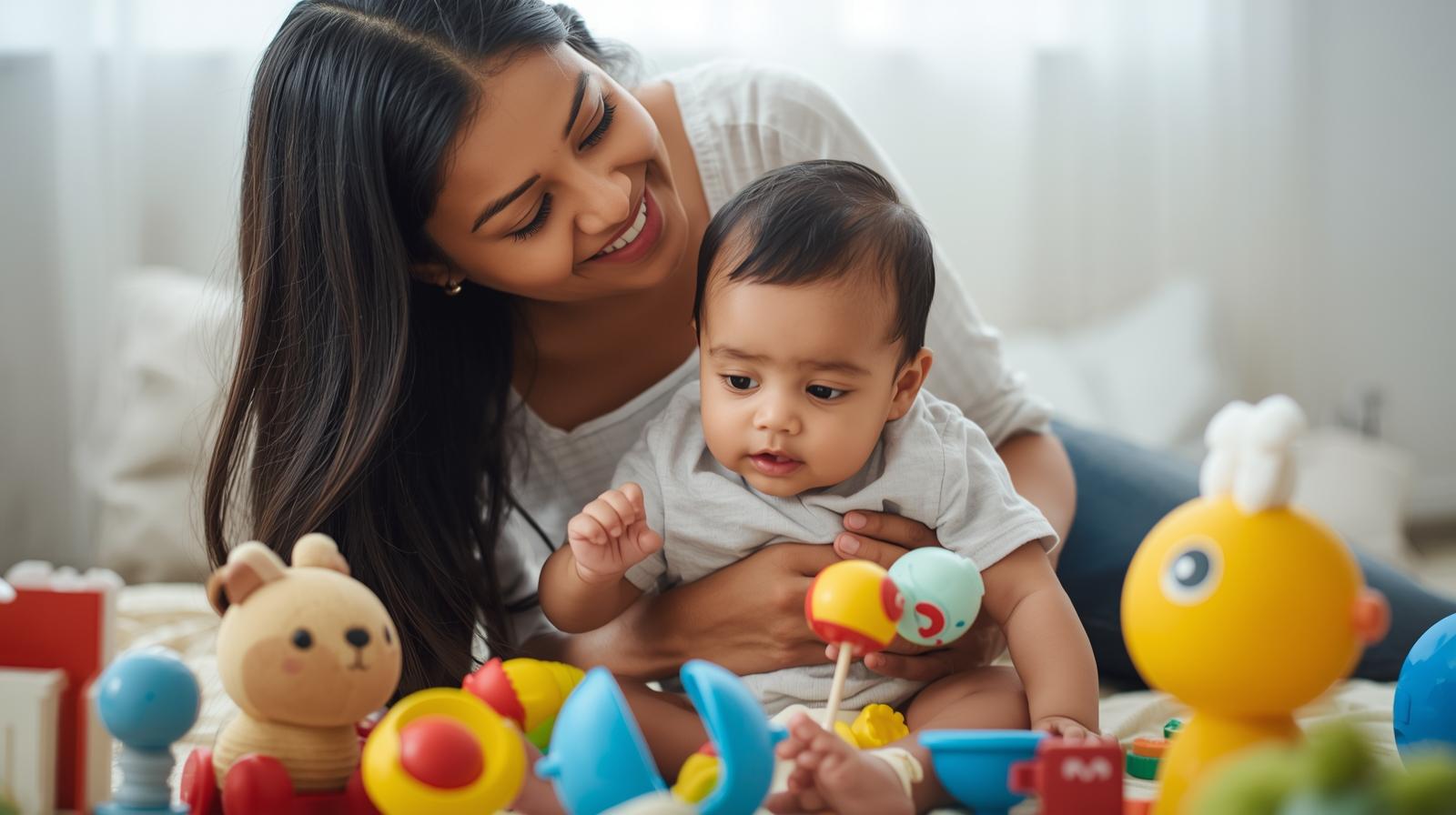
Do you ever look at your sweet baby and wonder what’s going on in that little head? At three months old, your baby is waking up to the world in a whole new way. This is the perfect time to introduce the best toys for 3 month old baby as they start tracking movement, reaching for objects, and maybe even gifting you that first gummy smile.
It can be overwhelming to walk down the toy aisle with so many flashing lights and loud noises begging for your attention. You might worry you aren’t doing enough to help them learn, but the truth is, they don’t need much. The best toys for 3 month old baby are often the simplest ones that encourage them to explore at their own pace.
This guide is here to take the stress out of playtime and help you find tools that actually support their growth. We will look at safe, engaging options that help with tummy time, reaching, and seeing clearly. Let’s make playtime easier and more fun for both of you.
Ready to find the perfect toys for your little one? Check out our favorite picks below and let us know which one your baby loves the most!
Why the Best Toys for 3 Month Old Baby Really Matter
What a 3 month old is learning right now
Right now, your baby is going through a massive growth spurt, both physically and mentally. They are moving past the sleepy newborn phase and becoming an active participant in their daily life. Their vision is sharpening, allowing them to see colors and patterns more clearly than before.
They are also discovering their hands and realizing they can make things happen by batting or grabbing. This is a crucial window for connecting what they see with what they can touch. Simple toys help bridge that gap between observation and action.
How play supports brain and body growth
Play is not just a way to pass the time; it is the primary way your baby’s brain builds connections. Every time they track a rattle with their eyes or feel a crinkly fabric, neurons are firing. These little moments of focus build the foundation for later skills like reading and writing.
Physically, play encourages them to lift their heads, kick their legs, and stretch their arms. These movements strengthen the neck, back, and core muscles needed for rolling over and eventually crawling. The right toys make these physical challenges feel like a fun game.
What moms often worry about at this stage
It is normal to worry that you aren’t entertaining your baby enough or that they are bored. You might see other babies doing more and feel a pang of anxiety about milestones. Please take a deep breath and remember that you are doing a great job.
Your baby doesn’t need a three-ring circus to be happy or to learn effectively. Overstimulation is real, and sometimes a quiet moment staring at a ceiling fan is enough. You are their favorite playmate, and your face is their favorite toy.
Development Milestones at 3 Months
Tummy time progress
By three months, tummy time starts to look a little different than it did in the early weeks. Your baby might be lifting their head much higher now, perhaps even to 45 or 90 degrees. They are building the neck strength that will support them for months to come.
Some babies start to push up on their forearms, looking like little turtles peering out of a shell. This is hard work, so don’t be surprised if they get frustrated quickly. Short, frequent bursts of tummy time are often better than one long struggle.
Visual tracking and focus
Your baby’s world is expanding from a blurry haze to clear, distinct images. They can now track a moving object across their field of vision much more smoothly. You might notice them staring intently at your face or following a toy you move back and forth.
They are also starting to perceive depth, though this skill is still very new. This means they are beginning to understand how far away things are. This visual development is the first step toward reaching out and grabbing things intentionally.
Early hand and arm movements
Those little fists are starting to unfurl, and open hands are becoming more common. Your baby is discovering that those hands belong to them and can do cool things. You might catch them staring at their fingers in wonder or bringing them to their mouth.
They are also starting to bat at objects that are within reach, though their aim might be off. This “swiping” motion is the precursor to grabbing and holding. It is exciting to watch them realize they have control over their own body.
Cooing and social smiles
One of the most rewarding parts of this age is the social engagement. Your baby isn’t just a sleeping, eating machine anymore; they are a little person. You will start to hear sweet cooing sounds as they experiment with their voice.
And then there are the smiles—genuine, full-face smiles that light up the room. They smile when they see you, when they hear a familiar voice, or when they are enjoying a toy. These interactions are the building blocks of communication and bonding.
Must Read: Learning Toys for 2 Year Old That Help Toddlers Grow
What to Look for When Choosing Toys
Safe materials and simple design
At this age, everything eventually ends up in the mouth, so safety is your top priority. Look for toys made from non-toxic, BPA-free materials that are easy to clean. Natural woods, food-grade silicone, and organic cottons are excellent choices for peace of mind.
Avoid toys with small parts that could break off or become a choking hazard. Simple designs are often better because they don’t overstimulate or confuse your baby. You want the toy to be sturdy enough to handle some drool and gentle gumming.
High-contrast colours for vision
While your baby can see colors now, high-contrast patterns are still the easiest for them to process. Black, white, and red combinations stand out clearly against a blurry background. These bold patterns grab their attention and hold their gaze longer than pastels.
Toys with stripes, checkerboards, or bullseyes are particularly engaging for visual development. They give your baby’s eyes a clear target to focus on and track. This helps strengthen the eye muscles and improves their ability to concentrate.
Lightweight and easy to grasp
Your baby’s grip is getting stronger, but they can’t hold heavy or bulky items yet. Look for toys that are lightweight and have thin handles or loops. Rattles with narrow centers or O-ball style toys are perfect for small fingers.
If a toy is too heavy, your baby will drop it immediately and might get frustrated. A lightweight toy allows them to succeed at holding it for a few seconds. This success encourages them to try again and keeps them engaged in play.
Toys that encourage interaction
The best toys are the ones that invite you to play along with your baby. Look for items that you can use to engage them, like puppets or books. These tools help facilitate connection and show your baby that play is a social activity.
Toys that react to your baby’s movements, like a rattle that makes noise when shaken, also teach cause and effect. They learn that their action produces a specific result. This is a huge cognitive leap for a three-month-old mind.
Best Toys for Visual Development
Black and white cards
Simple art cards with black and white images are a nursery essential for this age. You can prop them up during tummy time to give your baby something interesting to look at. This can help extend tummy time sessions by distracting them from the effort.
You can also tape these cards to the wall next to the changing table. It gives them a focal point while you tackle the diaper situation. They are an inexpensive but highly effective tool for visual tracking.
Crib mobiles with bold patterns
A mobile isn’t just for decoration; it is a workout for your baby’s eyes. Look for one with high-contrast shapes that face downward toward the baby. Many mobiles are designed for adults to look at from the side, but your baby sees them from below.
Movement is key here, as a slowly rotating mobile encourages visual tracking. Keep it out of reach, of course, for safety reasons. It can be a great way to keep them entertained in the crib for a few minutes.
Soft books with strong contrast
It is never too early to start reading, and soft books are perfect for this stage. Look for “accordion style” books that unfold and can stand up on the floor. These often feature bold, simple illustrations that capture a baby’s attention.
Soft books also introduce the idea of turning pages and following a sequence. They are durable, washable, and safe for chewing. You can point to the pictures and describe what you see to help build language skills.
Best Toys for Tummy Time
Tummy time mats
A dedicated play mat gives your baby a clean, comfortable space to work on those muscles. Look for mats with interesting textures, crinkle sounds, or flaps to lift. These sensory details encourage your baby to reach out and explore while on their belly.
Some mats come with arches, but for tummy time, the focus is on the floor. Bright colors and patterns on the mat itself keep them interested in looking down. It creates a safe “gym” for their daily workout.
Baby-safe mirrors
Babies absolutely love looking at faces, especially their own. A floor mirror is one of the best investments you can make for tummy time. Place it in front of them, and watch as they lift their head to gaze at the “other baby.”
This encourages them to hold their head up for longer periods without realizing they are exercising. They might smile or coo at their reflection, boosting social development. Just ensure the mirror is shatterproof and designed specifically for infants.
Small prop pillows
Sometimes your baby needs a little extra help to get comfortable on their tummy. A small, U-shaped pillow can provide support under their chest and armpits. This elevation gives them a better view of the room and takes some pressure off their arms.
Many activity gyms come with these pillows, or you can use a rolled-up towel in a pinch. Just make sure their arms are over the pillow, not trapped under it. It can make tummy time much more tolerable for babies who usually fuss.
Must Read: Toddler Toys for Boys That Actually Get Played with
Best Toys for Early Grasping Skills
Soft rattles
The classic rattle is a classic for a reason; it works. Look for soft, plush rattles that won’t hurt if your baby accidentally bonks themselves in the face. These are great for practicing that initial grasp and shake.
The sound provides immediate feedback, teaching them that their movement caused the noise. Choose rattles with high-contrast patterns or friendly animal faces. They are easy to toss in the diaper bag for entertainment on the go.
Fabric rings
Fabric rings or “donuts” are easy for little hands to clutch. They are soft, lightweight, and often come in different textures like velvet or corduroy. This variety gives your baby tactile stimulation while they practice holding on.
You can stack them, toss them, or let your baby chew on them safely. They are simple, open-ended toys that grow with your child. Plus, they are usually machine washable, which is a huge plus for moms.
Textured sensory balls
textured balls offer a unique sensory experience for curious hands. Look for balls with bumps, ridges, or soft spikes that are easy to grip. The different surfaces send interesting signals to your baby’s brain.
You can gently roll the ball across their arms or legs to introduce new sensations. Eventually, they will learn to grab the ball with two hands. It is a simple toy that supports both motor skills and sensory processing.
Best Toys for Social and Language Growth
Parent-led singing toys
While we usually avoid noisy battery-operated toys, some musical ones can be helpful tools. Look for toys that play gentle, simple melodies rather than loud, chaotic noises. Use these as a background for your own singing, not a replacement.
Sing along with the toy to show your baby that music is a shared activity. Your voice is the most important sound they will hear. Use the music to clap their hands or move their feet to the rhythm.
Simple sound-making toys
Toys that squeak or crinkle when touched are great conversation starters. Squeeze a squeaky toy and say, “Hear that sound?” to your baby. Then bring it close so they can try to touch it.
This back-and-forth interaction teaches the basics of conversation and turn-taking. You create a sound, they react, and you respond to their reaction. It is a simple game that builds a strong connection.
Face-to-face play tools
Sometimes the best “toy” is something that draws attention to your face. Wear a colorful necklace (baby-safe silicone) or a funny hat to grab their attention. Peek-a-boo is the ultimate face-to-face game that never gets old.
Puppets are another fantastic tool for face-to-face engagement. You can make the puppet talk, sing, or kiss your baby’s tummy. It brings a new character into your play and delights your baby.
Simple Play Ideas Using the Best Toys for 3 Month Old Baby
Short daily play routines
You don’t need to spend hours playing; short bursts are better. Try a few minutes of tummy time after a diaper change. Or spend five minutes rattling a toy while they sit in their bouncer.
Consistency is key, so try to weave play into your existing routine. Sing a song while you are getting them dressed. These little moments add up to a lot of learning throughout the day.
Rotating toys to avoid overstimulation
If your living room looks like a toy store exploded, your baby might be overwhelmed. Try keeping just a few toys out at a time and putting the rest away. Every few days, swap them out for “new” ones from the basket.
This keeps the toys fresh and exciting for your baby. It also helps them focus deeply on one object rather than flitting between many. Plus, it helps keep your home a little less cluttered.
Making the most of the best toys for 3 month old baby at home
Remember, the goal isn’t to have the most expensive gear on the block. The goal is to find tools that help you connect with your baby. The best toys for 3 month old baby are the ones that make you both smile.
Use these toys as bridges to interaction, not babysitters. Get down on the floor, make silly noises, and enjoy this fleeting stage. Mom Kid Friendly is all about making these days easier, so trust your instincts.
Conclusion
Navigating the first few months of parenthood is a journey filled with guessing games and sweet surprises. Finding the right tools for your baby doesn’t have to be another source of stress. The best toys are the ones that invite you to slow down and simply enjoy watching them discover the world.
Whether it is a simple mirror or a soft rattle, these items are just props for the real magic, which is your interaction. You are doing a wonderful job helping them grow every single day. Trust that you know what your baby needs and don’t be afraid to keep it simple.
Which of these toys are you excited to try with your little one? Drop a comment below and share your favorite playtime moments with the Mom Kid Friendly community!
Must Read: Best Toys for 5 Year Old Boys They’ll Actually Play With
Frequently Asked Questions
What are the best toys for 3 month old baby?
The best toys for 3 month old baby include high-contrast cards, soft rattles, baby-safe mirrors, tummy time mats, and lightweight sensory balls.
Do 3 month old babies really need toys?
Yes, simple toys help support visual tracking, grasping, tummy time strength, and early brain development at three months.
Are light-up toys good for a 3 month old?
Most babies this age benefit more from simple, high-contrast, and soft toys rather than loud or overstimulating light-up toys.
How long should a 3 month old play each day?
Short play sessions of 3 to 10 minutes several times a day work best and prevent overstimulation.
What toys help with tummy time at 3 months?
Baby-safe mirrors, high-contrast cards, textured mats, and small prop pillows help make tummy time easier and more engaging.
Can a 3 month old hold toys?
Yes, many babies can briefly grasp lightweight rattles, fabric rings, and soft toys designed for small hands.

