

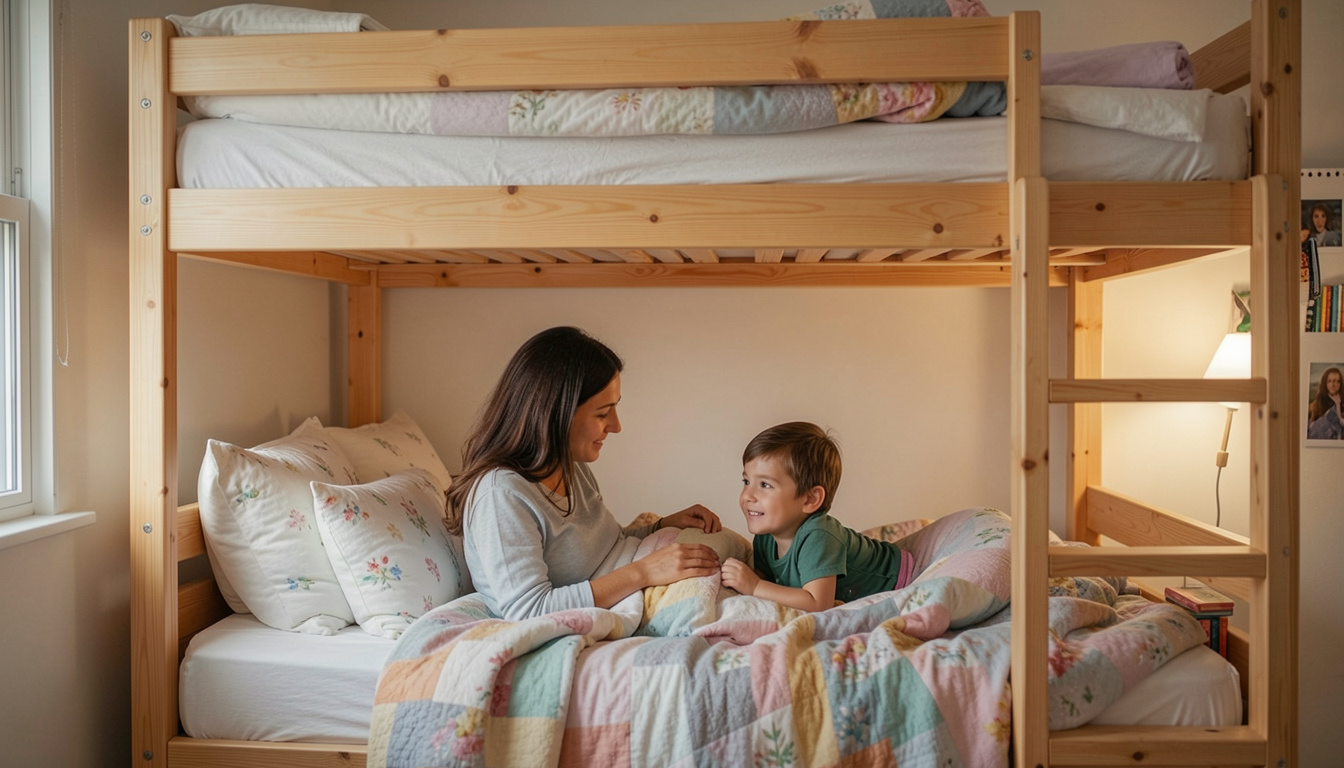
Safe bunk beds for kids have strong frames, full guardrails on the top bunk, and a sturdy, easy-to-climb ladder. Look for ASTM or CPSC safety certifications, follow age guidelines, and anchor the bed to the wall. With the right pick and setup, your kids stay safe and sleep happy.
Picture the moment your kids beg for safe bunk beds for kids. They love the idea of climbing up high and giggling at bedtime. You love the idea of saving floor space, but a tiny part of your brain worries about falls.I get it, because I had the same worry the night my son asked for “the cool top bed.” Bunk beds feel fun and a little scary at the same time. The good news? Safe bunk beds for kids absolutely exist, and they’re easier to find than you think.
This guide walks you through everything in plain, mom-to-mom talk. You’ll learn what makes a bunk bed safe, which features to check, and how to set one up the right way. By the end, you’ll feel calm and ready to shop without the stress.
Ready to make bedtime safer and comfier? Browse our Mom Kid Friendly picks and tips, then keep reading to choose the perfect bunk bed for your little ones.
What Makes a Bunk Bed Safe for Kids?
A safe bunk bed starts with strong bones and smart design. It should hold weight well, keep kids from falling, and have no risky gaps. These three things matter more than looks or price.
Let’s break down the big stuff every mom should check first. These are the kid-friendly basics that give you peace of mind. Think of this as your quick safety filter.
Must Read: Why Low Bunk Beds Are Becoming a Mom Favorite for Small Spaces
Which safety certifications should you look for?
Certifications tell you a bed passed real safety tests. They take the guesswork out of shopping. You don’t have to be an expert to trust them.
Look for these labels before you buy:
- ASTM F1427 – the main U.S. safety standard for bunk beds
- CPSC compliance – meets Consumer Product Safety Commission rules
- GREENGUARD Gold – low chemical emissions for healthier air
A bed with these labels has already cleared tough safety checks. That’s one less thing for you to stress about. Always check the product details or box for these stamps.
What are the right weight limits and age recommendations?
Weight limits keep the frame and slats from breaking. Most top bunks safely hold around 150 to 200 pounds. Always read the maker’s exact numbers before buying.
Age guidelines matter just as much as weight. Most safety experts say kids should be at least 6 years old for the top bunk. Younger kids can still use the bottom bunk safely.
So if you have a toddler, keep them on the lower level. Save the top bunk for the big-kid years. Your child gets the fun later, and you sleep better now.
How tall should guardrails and ladders be?
Guardrails are your top defense against falls. Safe guardrails should sit at least 5 inches above the mattress top. They should run along both sides of the top bunk.
The ladder should feel solid and easy to grip. Wide, flat steps beat thin, round rungs for little feet. A good ladder makes climbing safe instead of scary.
Top Safety Features to Check Before You Buy
Once the basics check out, look closer at the details. Small features can make a big difference in safety. Here’s what I always tell my mom friends to inspect.
These features separate a great bed from a risky one. Run through this list before you click “buy.” Your future self will thank you.
Must Read: Best Childrens Bunk Beds for Safe Space-Saving Rooms
Solid wood vs. metal: which frame is safer?
Both solid wood and metal can be safe and sturdy. Each has its own perks depending on your needs. The key is quality, not just the material.
Here’s a quick comparison:
- Solid wood – feels sturdy, lasts long, and rarely wobbles
- Metal – lighter and often cheaper, but check for loose joints
- Avoid – cheap particleboard that bends or sags over time
Choose solid wood if durability matters most to you. Pick metal if you want a lighter, budget-friendly option. Just make sure every joint feels tight and steady.
How do you spot dangerous guardrail and ladder gaps?
Gaps are sneaky hazards that many parents miss. Kids can get arms, legs, or heads stuck in them. This is called an entrapment risk, and it’s a big deal.
Follow this simple rule for safe gaps:
- Any opening should be smaller than 3.5 inches to prevent head entrapment
- Check spaces between guardrails and the bed frame
- Inspect gaps along the ladder and headboard
Measure these spaces yourself if you’re unsure. A small ruler does the trick in seconds. When in doubt, smaller gaps are always safer.
Angled vs. vertical ladders: which is better for kids?
Ladder style really matters for little climbers. The right ladder makes nightly trips up and down safer. The wrong one can cause slips.
Here’s the simple breakdown:
- Angled ladders – easier and safer for younger kids to climb
- Vertical ladders – save space but need steadier feet
- Built-in stairs – the safest option if you have the room
Pick an angled ladder or stairs for younger kids. Save vertical ladders for older, confident climbers. Comfort and grip should always come first.
Why do non-toxic finishes matter?
Kids touch, lean on, and sometimes chew on their beds. So the finish matters more than you’d think. You want materials that are safe to be around.
Look for these safer choices:
- Non-toxic, water-based paints with low VOCs
- GREENGUARD Gold certified finishes
- Lead-free and phthalate-free labels
These finishes keep your kid’s air and skin safe. They’re worth checking on every bed you consider. A quick label peek saves a lot of worry.
Best Safe Bunk Beds for Kids by Age Group
The right bunk bed changes as your kids grow. What works at 6 won’t fit at 12. Here’s how to match the bed to the age.
Think about your child’s size, age, and confidence. These groupings make shopping much simpler. Use them as a friendly starting point.
Safe bunk beds for toddlers and young kids (ages 4–6)
Little ones do best on the bottom bunk only. Their balance and coordination are still growing. Safety comes before the thrill of the top bed.
For this age, look for:
- Low-profile bunk beds that sit closer to the ground
- Full guardrails even on lower setups
- Rounded corners to protect tiny heads
Let your young child enjoy the bottom bunk for now. Save the top for when they turn 6. They’ll still feel like a big kid down below.
Best options for school-age kids (ages 6–12)
This is the sweet spot for classic bunk beds. Kids this age can safely use the top bunk. Just make sure the safety features are solid.
For school-age kids, prioritize:
- Twin-over-twin bunk beds for shared rooms
- Sturdy, full-length guardrails on top
- An easy-grip angled ladder or stairs
These beds grow with your kids for years. They’re great for siblings sharing a room too. Comfort and safety stay balanced at this stage.
Twin-over-full picks for older kids and siblings
Older kids and siblings often need more room. A twin-over-full bunk bed gives you flexible sleeping space. It works great for sleepovers too.
This setup offers:
- More space on the bottom for an older child
- Room for two younger siblings to share below
- A taller, sturdier frame for bigger kids
Choose twin-over-full if your kids are growing fast. It saves you from buying new beds later. One smart pick covers many ages.
Common Bunk Bed Hazards (and How to Avoid Them)
Knowing the risks helps you prevent them. Most bunk bed accidents come from a few common causes. The good news is they’re easy to avoid.
Let’s tackle each hazard one by one. A little prep keeps your kids safe and happy. None of this is hard once you know what to watch for.
How can you reduce fall risks?
Falls are the most common bunk bed injury. Most happen from the top bunk during sleep or play. The fix is simple and effective.
Reduce falls by doing this:
- Use full guardrails on all sides of the top bunk
- Add a soft rug below to cushion any tumble
- Keep a small nightlight nearby for late-night climbs
These small steps make a huge difference. They turn the top bunk into a safe zone. Your kids climb down without scary slips.
What are entrapment dangers, and how do you stop them?
Entrapment happens when kids get stuck in gaps. It’s serious but completely preventable. Awareness is your best tool here.
Stop entrapment risks by checking:
- Gaps smaller than 3.5 inches everywhere on the bed
- Snug guardrails with no wide openings
- A mattress that fits tightly with no side gaps
Do a quick gap check during setup. Then recheck it every few months. This habit keeps your kids safe long-term.
How much ceiling height and clearance do you need?
Ceiling height matters more than parents expect. Kids need room to sit up on the top bunk. Tight clearance can lead to bumped heads.
Aim for these clearances:
- At least 33 to 36 inches between the top mattress and ceiling
- Space for your child to sit up comfortably
- Clearance from ceiling fans or light fixtures
Measure your room before you buy. This step prevents a frustrating return. A quick measurement saves the day.
Bunk Bed Safety Rules Every Kid Should Know
A safe bed only works with safe habits. Kids need clear, simple rules they can remember. Make these part of your bedtime routine.
Keep the rules short and repeat them often. Kids follow rules better when they’re easy. A little reminder goes a long way.
Here are the must-know rules for your kids:
- No rough play or jumping on the top bunk
- Always use the ladder, never the guardrails, to climb
- Only one person on the top bunk at a time
- Keep toys and clutter off the ladder steps
- No hanging ropes, belts, or cords from the bed
Turn these into a fun bedtime checklist. Praise your kids when they follow them. Good habits stick when you keep it positive.
How to Set Up a Bunk Bed Safely at Home
A safe bed needs a safe setup. Even the best bunk bed fails if assembled wrong. Take your time with this part.
You don’t need to be handy to do it right. Just follow the steps and double-check your work. Here’s how to set things up safely.
What are the best assembly tips?
Proper assembly keeps the whole bed stable. Rushing leads to loose bolts and wobbly frames. Slow and steady wins here.
Follow these assembly tips:
- Read the full instruction manual before you start
- Tighten every bolt and screw completely
- Have a second person help with heavy pieces
Recheck all screws after a few weeks. Frames can loosen with daily use. A quick tighten keeps things solid.
Why should you anchor the bed to the wall?
Anchoring stops the bed from tipping over. Kids climb, lean, and bounce, which can shift a frame. Wall anchors add a strong layer of safety.
Use these anti-tip steps:
- Attach wall anchors or anti-tip straps to studs
- Place the bed against a solid wall
- Check that the frame doesn’t rock or sway
This one step prevents scary tipping accidents. It takes just a few minutes to do. Peace of mind is worth it.
What mattress size and thickness are safe?
The mattress matters for safety, not just comfort. A too-thick mattress lowers your guardrail protection. The right fit keeps kids secure.
Stick to these mattress guidelines:
- Keep the mattress no thicker than 6 inches for the top bunk
- Make sure it fits the frame snugly with no gaps
- Confirm the guardrail stays 5 inches above the mattress
Measure before you buy a new mattress. The right thickness keeps guardrails effective. Comfort and safety can absolutely coexist.
Must Read: Cool Childrens Bunk Beds Kids Actually Love
Frequently Asked Questions
What age is safe for kids to sleep in bunk beds?
Most safety experts recommend that children be at least 6 years old before sleeping on the top bunk. Younger kids can still use the bottom bunk safely while they develop better balance and coordination.
What safety certifications should I look for in bunk beds for kids?
Look for ASTM F1427 certification, CPSC compliance, and GREENGUARD Gold for low chemical emissions. These labels confirm the bed has passed rigorous safety testing, so you don’t have to guess whether it meets safety standards.
How do I prevent my child from falling off the top bunk?
Use full guardrails on all sides of the top bunk that sit at least 5 inches above the mattress. Adding a soft rug below and a nightlight for late-night climbs can further reduce fall risks.
What is the safest ladder type for bunk beds?
Angled ladders are the safest and easiest option for younger kids, while built-in stairs offer the most security if space allows. Vertical ladders save space but are better suited for older, more confident climbers.
How thick should a mattress be for the top bunk?
The top bunk mattress should be no thicker than 6 inches to ensure guardrails stay at least 5 inches above the mattress surface. A snug fit with no side gaps is equally important to prevent entrapment risks.
Why should I anchor a bunk bed to the wall?
Anchoring prevents the frame from tipping when kids climb, lean, or bounce. Using wall anchors or anti-tip straps attached to wall studs adds a critical layer of safety that takes just minutes to install.
What gaps should I check for on a bunk bed to keep kids safe?
Any opening on the bed — including guardrails, ladder spaces, and headboard gaps — should be smaller than 3.5 inches to prevent head entrapment. Do a gap check during setup and recheck every few months.
